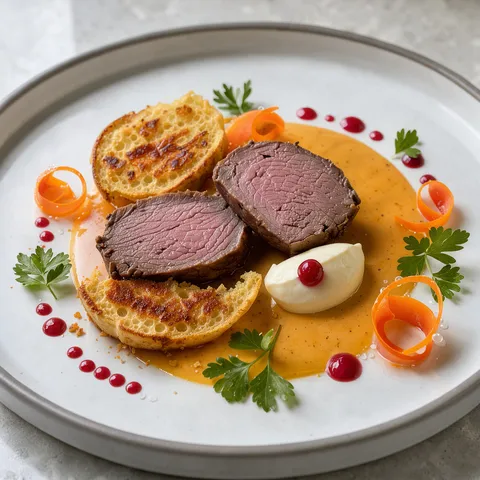
Svíčková 2.0
A Czech main course. Takes 1 hr 25 min, Serves 4. Difficulty: challenging.
At a glance
- Total time
- 1 hr 25 min
- Serves
- Serves 4
- Difficulty
- Challenging
- Cuisine
- Czech cuisine
- Dish type
- Main course
- Allergens
- Gluten, Milk, Eggs, Celery, Mustard, Sulphites
Ingredients
Beef
- 4 beef fillet medallions (160 g each, 4 cm thick)
- 1 tsp salt
- 1/2 tsp black pepper
- 1 tbsp sunflower oil
- 30 g butter
- 2 thyme sprigs
Root vegetable velouté
- 1 carrot (150 g)
- 150 g celeriac
- 1 parsley root (80 g)
- 1 shallot
- 1 tbsp sunflower oil
- 4 allspice berries
- 1 bay leaf
- 350 ml Brown Beef Stock (Basics)
- 120 ml whipping cream (35% fat)
- 1 tsp Homemade Dijon-Style Mustard (Basics)
- 1 tsp sugar
- 2 tsp cider vinegar
- salt
Crisp knedlík
- 100 g stale white bread (1 cm cubes)
- 1 egg
- 70 ml milk
- 15 g melted butter
- 1 tbsp chopped flat-leaf parsley
- 1/4 tsp nutmeg
- salt
- 20 g butter for searing
Lingonberry gastrique
- 120 g lingonberries (or cranberries)
- 40 g sugar
- 40 ml red wine vinegar
- 40 ml water
Carrot ribbons
- 1 slim carrot
- 60 ml cider vinegar
- 60 ml water
- 1 tbsp sugar
- 1/2 tsp salt
Lemon cream
- 100 g Crème Fraîche (Basics)
- finely grated zest of 1 lemon
- 1 tsp lemon juice
- a pinch of salt
To finish
- parsley shoots
- flaky salt
Equipment
- Oven
- Baking tray
- Baking paper
- Vegetable peeler
- Mixing bowls
- Cling film
- Saucepan
- Probe thermometer
- Fine sieve / chinois
- Squeezy bottle
- Blender
- Cast-iron frying pan
- Balloon whisk
- Chef's knife
- Piping bag (optional)
Method
- Roast the roots: Preheat the oven to 200°C. Cut the carrot, celeriac, parsley root and shallot into 1.5 cm dice, toss with the oil and salt and spread in a single layer on a tray lined with baking paper. Roast for 25-30 min, until the edges are deep caramel-coloured. The sweetness that the vegetables develop over hours in the classic comes here in half an hour from the high oven heat
- Pickle the carrot ribbons: While the roots are in the oven, peel the slim carrot into long, thin ribbons with a peeler. Bring the vinegar, water, sugar and salt to the boil, pour over the ribbons and leave for at least 20 min. These raw, sharp ribbons take over the role of the lemon slice on the classic plate and cut through the cream sauce
- Make the knedlík mixture: Mix the bread cubes with the milk, egg, melted butter, parsley, nutmeg and salt in a bowl and leave for 10 min. The bread should absorb all the liquid. Turn the mixture out onto cling film, roll it into a tight cylinder 4 cm in diameter and twist the ends like a sweet wrapper to seal. This yeast-free bread knedlík does away with the hour-long rise of the classic
- Poach the knedlík: Lower the wrapped cylinder into water just below boiling point (90°C) and poach for 20 min. It is ready when the cylinder has firmed up and springs back when pressed with a finger. Transfer to iced water and cool for 5 min. A cold knedlík slices neatly
- Cook the lingonberry gastrique: Melt the sugar dry in a small saucepan to a light caramel, then carefully add the vinegar and water (it will steam). Add the lingonberries and cook for 8-10 min, until the berries burst and the sauce coats the back of a spoon. Press through a fine sieve and pour into a squeeze bottle. The lingonberry jam of the classic becomes a glossy, sharp dot of sauce here
- Make the velouté: Put the roasted roots in a saucepan, add the stock, allspice and bay and simmer for 10 min. Remove the allspice and bay, add the cream and blend in a powerful blender for 2 min until completely smooth. Pass through a fine sieve, balance the sweet-sour flavour with the mustard, sugar and vinegar and season with salt. It should run off the spoon heavy and silky, with the density of the classic sauce but a much glossier surface
- Cook the fillet: Take the medallions out of the fridge 20 min before cooking, pat dry and rub with salt and pepper. Heat a cast-iron pan over high heat until smoking, add the oil and sear the medallions for 2 min on each side. Add the butter and thyme and spoon the foaming butter over the meat for 1 min. Transfer the pan to the 200°C oven and cook for 4-6 min, until the internal temperature reaches 52-54°C
- Rest: Rest the meat on a wire rack for 6 min. The internal temperature rises to 56°C and the meat slices without losing its juices. Keep the butter in the pan meanwhile
- Sear the knedlík: Unwrap the knedlík and cut it into 8 slices 1.5 cm thick. Fry them in the meat pan with the 20 g butter over medium-high heat for 1.5 min on each side, until deep golden and crisp. They should be soft inside with a crust outside, the opposite of the boiled knedlík in the classic
- Make the lemon cream: Whisk the crème fraîche with the lemon zest, lemon juice and salt to soft peaks and transfer to a piping bag or a small bowl
- Slice: Cut each medallion in half. The cut face should show a pink centre and a thin brown crust. Sprinkle the cut faces with flaky salt
- Plate: Spoon two spoonfuls of velouté into the centre of a warm plate and gently rotate the plate to form a round pool. Overlap two slices of knedlík on one side of the pool and place two fillet halves beside them, cut faces up. Put a quenelle of lemon cream on the fillet and add a drop of lingonberry gastrique on top of the cream
- Finish: Add three more drops of lingonberry gastrique to the velouté. Drain the pickled carrot ribbons, curl them over on themselves and place them beside the knedlík. Scatter over the parsley shoots and serve immediately
Chef's note
The four signature elements of the classic are kept: the creamy root vegetable sauce, knedlík, lingonberries and lemon cream. What changes is the technique: pink fillet instead of long-cooked loin (svíčková means fillet anyway), crisp knedlík instead of boiled, and sharp carrot ribbons instead of the lemon slice. If the velouté stands, a skin forms on the surface, so keep it covered over low heat until serving.
Frequently asked questions
- How is Svíčková 2.0 quicker than the classic?
- The vegetables that take hours are roasted in a 200°C oven in half an hour, while the meat is cooked as fillet medallions. The total time is 1 hour 25 minutes.
- What core temperature should the fillet medallions reach?
- Take them out of the oven at 52-54°C. After 6 minutes resting on a wire rack the core temperature rises to 56°C.
- How is the yeast-free dumpling made?
- Mix cubes of stale bread with milk, egg and butter and roll into a cylinder in cling film. Poach the cylinder in 90°C water for 20 minutes and chill, then slice and sear in a pan.
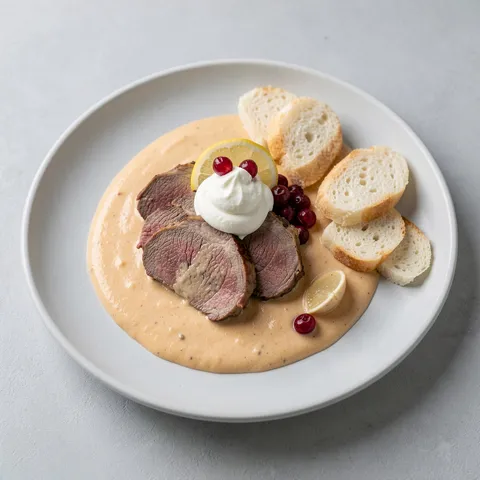 Beef in Root Vegetable Sauce2 hr 15 min · Main course
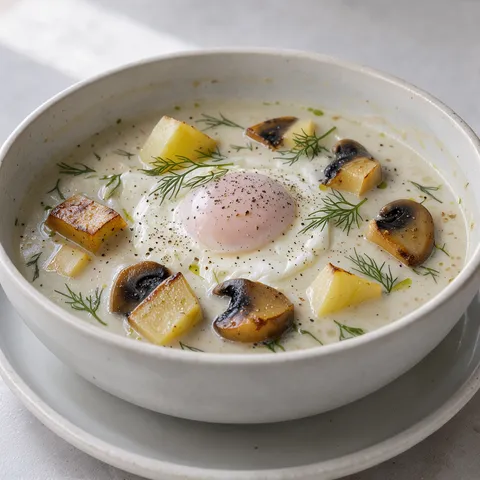 Potato, Mushroom and Dill Soup with a Poached Egg50 min · Soup
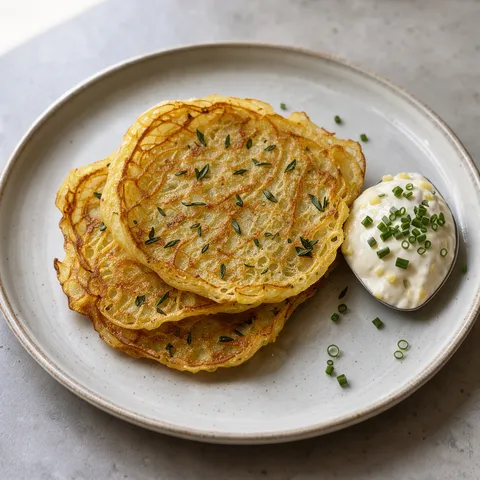 Czech Potato Pancakes with Marjoram and Garlic45 min · Starter
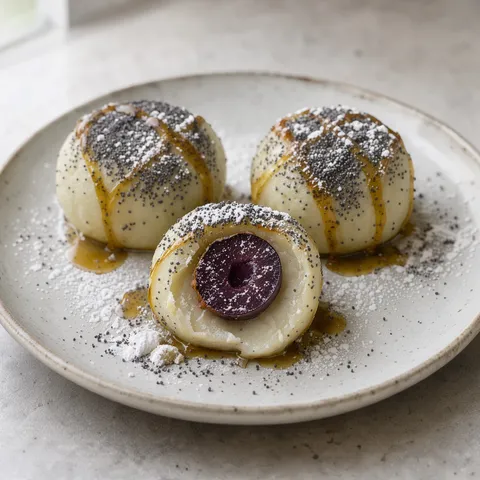 Plum Dumplings with Poppy Seeds1 hr 20 min · Dessert
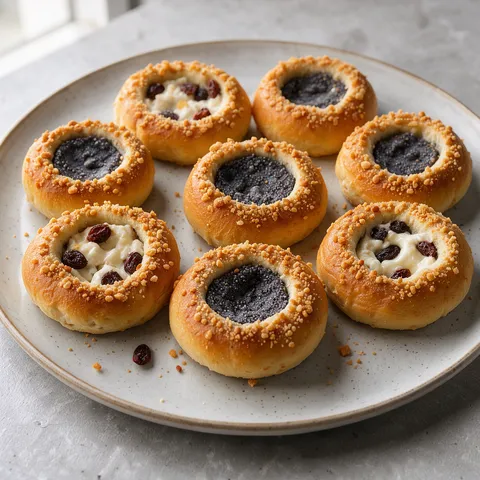 Moravian Buns with Fresh Curd Cheese and Poppy Seed2 hr 10 min · Bread & pastry
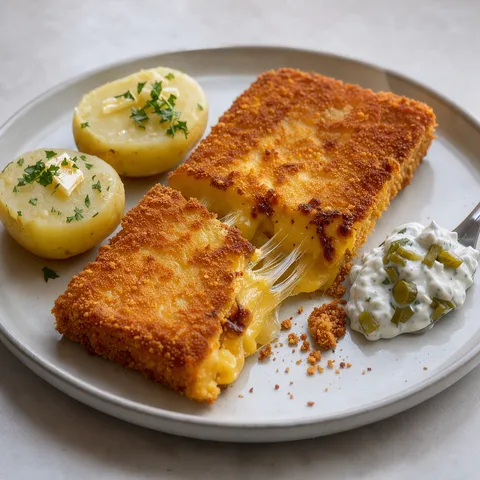 Czech Fried Breaded Cheese55 min · Main course
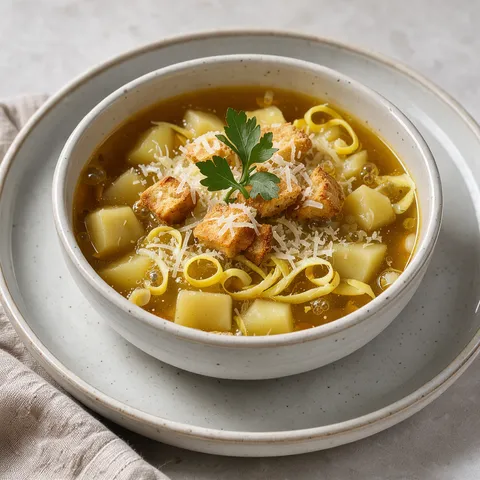 Czech Garlic Soup27 min · Soup