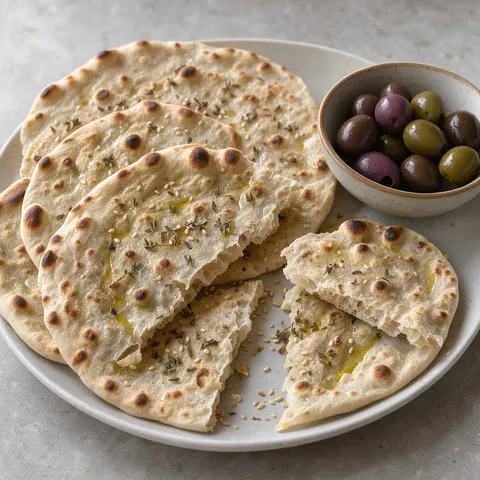
Sinai Bedouin Flatbread with Olive Oil and Za'atar Tab-Banna
An Egyptian bread & pastry. Takes 35 min · +37 min resting, Serves 4. Difficulty: medium.
At a glance
- Total time
- 35 min · +37 min resting
- Serves
- Serves 4
- Difficulty
- Medium
- Cuisine
- Egyptian cuisine
- Dish type
- Bread & pastry
- Allergens
- Gluten, Milk, Sesame
Ingredients
Dough
- 400 g plain flour
- 1 tsp salt
- 220 ml lukewarm water
- 1 tbsp olive oil
To serve
- 3 tbsp olive oil
- 2 tbsp dried oregano
- 1 tbsp sesame seeds
- 1 tsp sumac
- 1/2 tsp salt
- 4 tbsp thick strained yoghurt or olives (optional)
Equipment
- Mixing bowls
- Cast-iron frying pan
- Silicone spatula
- Tongs
- Rolling pin / oklava
Method
- Mix the dough: Put the flour and salt in a bowl. Make a well in the middle and add the olive oil and half the water. Add the remaining water a little at a time, mixing with your hand. When no dry flour is left, the dough has come together (~3 min)
- Knead: Knead the dough on a floured work surface for 6-8 min until smooth and elastic. Kneading develops the gluten. If the dough is slightly sticky, add 1 tbsp flour. It should form a firm ball in your hand (~8 min)
- Rest: Put the dough in a bowl and cover with a damp tea towel. Rest at room temperature for 30 min. Resting relaxes the gluten and the dough does not shrink back when rolled out (~30 min)
- Divide: Divide the dough into 4 equal pieces and shape each into a ball. Let the balls rest for another 5 min. This short pause makes the dough easy to roll out (~7 min)
- Roll out: Roll each ball with a rolling pin on a floured surface into a round 22 cm in diameter and 4 mm thick. If the edge and centre are the same thickness, it cooks evenly. Dust flour between the rolled breads so that they do not stick (~6 min)
- Heat the pan: Heat a cast-iron frying pan over high heat for 4 min until it begins to smoke lightly. Bedouin bread is cooked on a hot stone. A cast-iron pan is the closest home method. Do not add oil, as the bread cooks in a dry pan (~4 min)
- Cook: Cook the breads one at a time. Drop a rolled bread into the pan. Cook for 1.5 min until bubbles form on the surface and brown spots on the underside. Turn with a spatula and cook the other side for 1 min. If the bread puffs up, do not press it, as the steam cooks the inside. Cook the remaining breads one by one in the same way (~10 min)
- Oil the bread: Put the hot bread on a plate and brush the surface with olive oil. Sprinkle with the dried oregano, sumac, sesame seeds and salt. While hot, the oil sinks into the bread. Once it cools it stays on the surface. Oil each bread in the same way and keep warm by stacking and wrapping them (~3 min)
- Serve: Tear the breads and serve with yoghurt or olives. Eat hot, as it hardens when it cools (~1 min)
Chef's note
Tab-banna is the name of the bread of the Sinai Bedouins and is traditionally cooked on hot charcoal or stone. Here a cast-iron pan adaptation is used; the aroma is slightly different, but the texture is close. The oregano and olive oil are a serving suggestion and not necessarily traditional.
Frequently asked questions
- What is tab-banna?
- It is a flatbread that the Bedouin of Sinai make from flour, water and salt. Traditionally it is cooked on hot embers or a stone.
- Can I make tab-banna in a frying pan?
- Yes, it can be cooked dry in a cast iron or heavy-based pan. The pan must be thoroughly preheated.
- Is tab-banna the same as pitta?
- They are similar, but tab-banna is unleavened and a thinner, flatter bread. Pitta is thicker and usually yeasted.
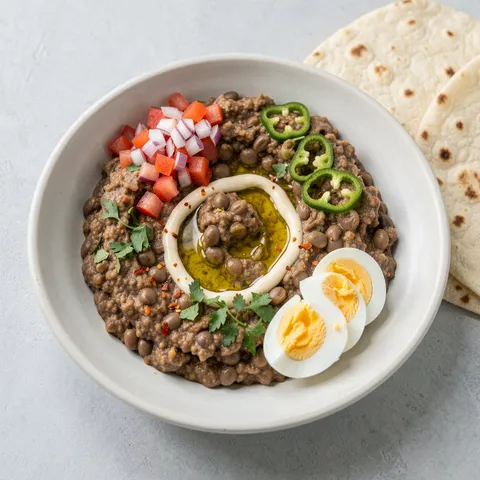 Egyptian Mashed Fava Beans2 hr · Meze
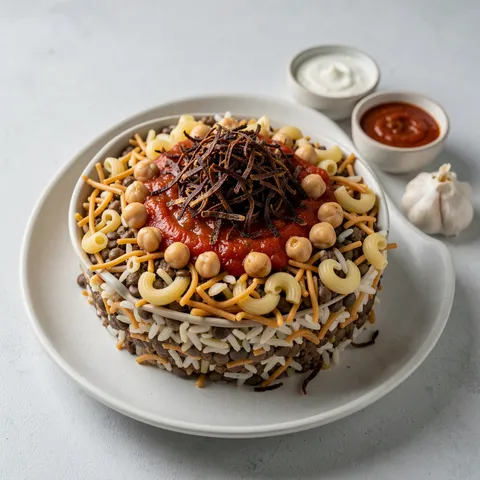 Koshari1 hr 30 min · Main course
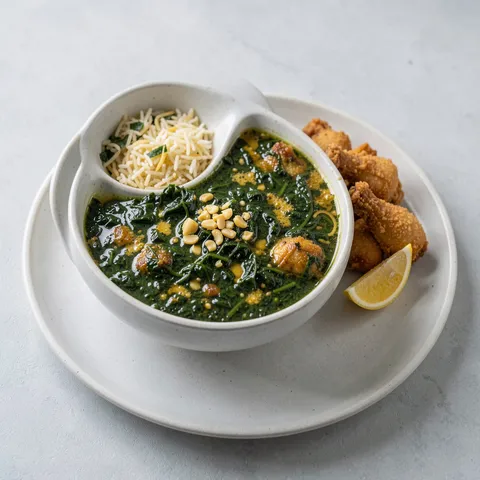 Molokhia1 hr 30 min · Main course
 Egyptian Baked Milk and Pastry Pudding1 hr · Dessert
 Egyptian Orzo Soup in Beef Stock1 hr 50 min · Soup
 Ta'ameya1 hr 10 min · Starter