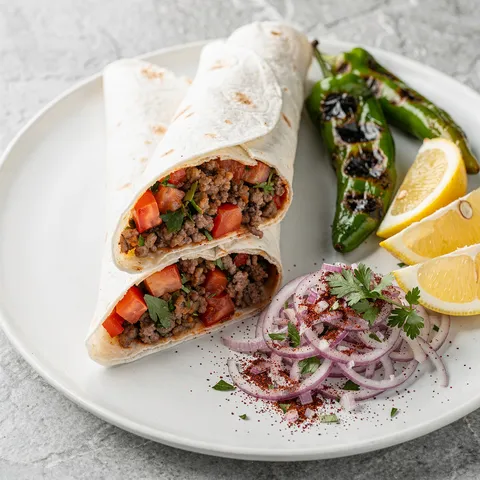
Spiced Beef Wraps Tantuni
A Turkish main course. Takes 1 hr 10 min, 4 servings (8 durum). Difficulty: medium.
At a glance
- Total time
- 1 hr 10 min
- Serves
- 4 servings (8 durum)
- Difficulty
- Medium
- Cuisine
- Turkish cuisine
- Dish type
- Main course
- Allergens
- Gluten, Milk
Ingredients
Lavash (makes 8)
- 300 g plain flour
- 180 ml lukewarm water
- 1 tsp salt
- 1 tbsp olive oil
Meat
- 600 g beef topside or sirloin (trimmed of sinew, cut into thin strips, then into very small cubes)
- 1.5 litres water
- 1 tsp salt
For frying
- 80 ml cottonseed oil or sunflower oil
- 1 tsp salt
- 1 tsp Urfa chilli flakes
- 1/2 tsp cumin
- 1/2 tsp black pepper
- 80 ml meat cooking liquid
Garnish
- 3 ripe tomatoes (very finely diced)
- 2 onions (thinly sliced into half-moons)
- 1 bunch flat-leaf parsley
- 2 tsp sumac
- 1 tsp Aleppo pepper
- 2 lemons
- 4 long green peppers (long green, charred, optional)
Equipment
- Mixing bowls
- Saucepan
- Colander
- Rolling pin / oklava
- Cast-iron frying pan
- Silicone spatula
- Chef's knife
- Chopping board
- Saj (optional)
Method
- Knead the lavash dough: Mix the flour and salt, add the lukewarm water and olive oil and knead for 6-7 min into a smooth, elastic dough. Cover and leave to rest for 20 min. The gluten relaxes and the dough rolls out thinly without tearing
- Boil the meat: Put the diced meat in a saucepan with the salted water, skim when it comes to the boil and simmer over medium heat for 15-20 min. The meat should be grey and tender but not falling apart. Drain in a colander, saving a bowl of the cooking liquid. Pre-boiling keeps tantuni meat tender rather than drying out on the saj
- Prepare the garnish: Rub the onion with the sumac, a pinch of salt and half the chopped parsley. Put the diced tomatoes in a separate bowl and keep the remaining parsley and the Aleppo pepper to hand
- Cook the lavash: Divide the dough into 8 balls and roll each one out into a 25 cm round, 1-2 mm thin. Heat a cast-iron pan or saj over medium-high heat and, without greasing, cook each lavash for 30-40 sec per side, until the surface bubbles and is speckled. Stack the cooked lavash in a folded cloth: the steam keeps them soft. Overcooked lavash cracks when rolled
- Fry the meat: Heat a large cast-iron pan or saj over high heat and pour in the cottonseed oil. Add the drained meat, sprinkle over the salt, Urfa chilli flakes, cumin and black pepper and fry for 4-5 min, turning constantly with a spatula. When the edges colour lightly, sprinkle in the cooking liquid a spoonful at a time: the meat glistens in the steam and the oil and liquid come together into that reddish sauce. The meat should be juicy and glossy, not dry
- Dip the lavash: Press each lavash into the oil in the pan for a few seconds and turn it over. The bread soaks up the spiced fat from the meat
- Roll: Spread 3-4 tbsp of meat down the middle of the lavash, top with tomato and sumac onion and squeeze over a few drops of lemon. Fold up the bottom edge, fold in the sides and roll up tightly. You can also make tantuni with half a lavash or in bread
- Plate: Cut the wraps in half on the diagonal and arrange on the plate with the cut sides showing. Add lemon wedges, the charred peppers and the rest of the sumac onion, and serve immediately
Chef's note
Tantuni, Mersin's street food, is cooked on a wide saj with raised edges: the meat fries in the oily pool in the centre and rests around the sides. Tantuni makers use the liquid and the oil at the same time. In a home pan the cooking liquid imitates this. In Mersin, tantuni is served with fermented turnip juice. Chicken tantuni is also made, using chicken breast in the same way with 10 min of boiling.
Frequently asked questions
- Why is the beef boiled first for the tantuni?
- Boiling first keeps the meat tender so it does not dry out on the griddle.
- My lavash breaks when I roll it. Why?
- Overcooked lavash cracks when rolled. Stack the cooked breads between cloths so the steam keeps them soft.
- Why is the boiling water sprinkled over the frying meat?
- The steam makes the meat glossy and the oil and water come together into a red sauce. The meat should stay juicy and shiny.
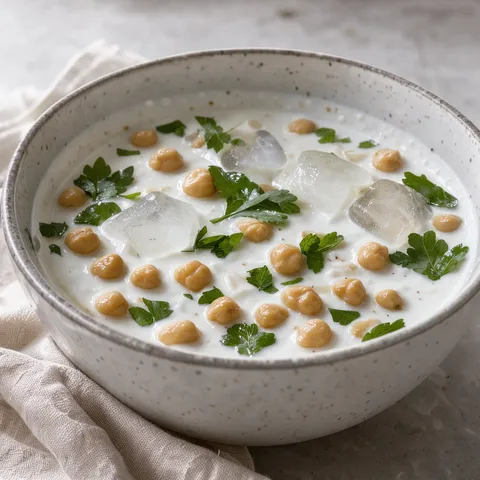 Chilled Wheat Yoghurt Soup1 hr · Soup
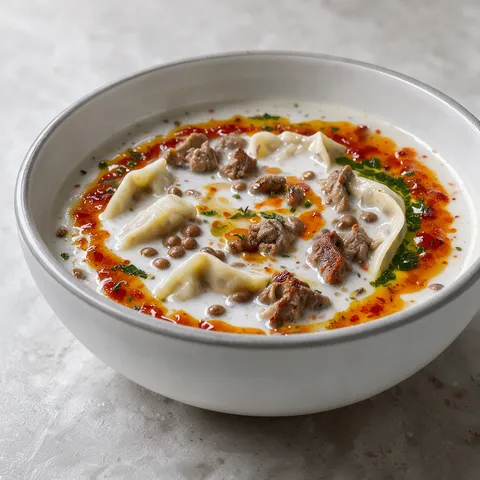 Noodle and Yoghurt Soup1 hr 10 min · Soup
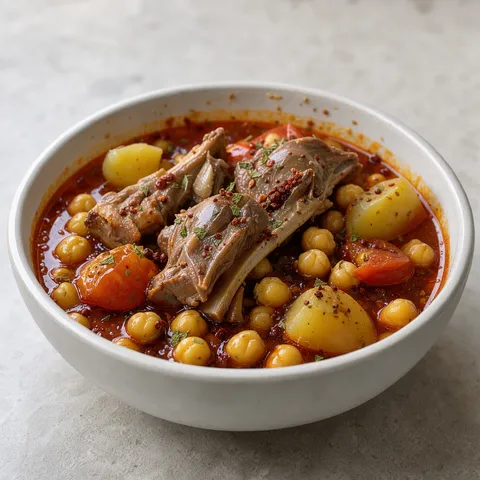 Lamb, Chickpea and Potato Stew1 hr 15 min · Soup
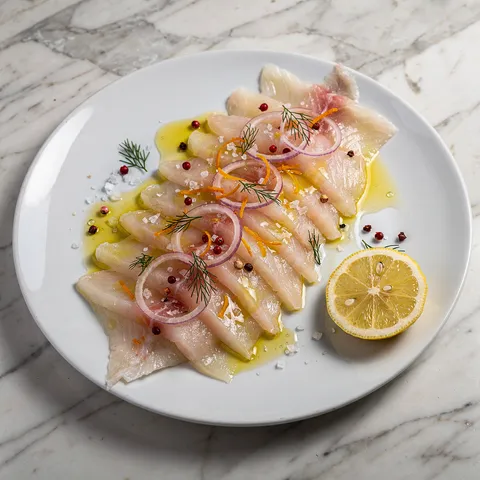 Marinated Sea Bass30 min · Meze
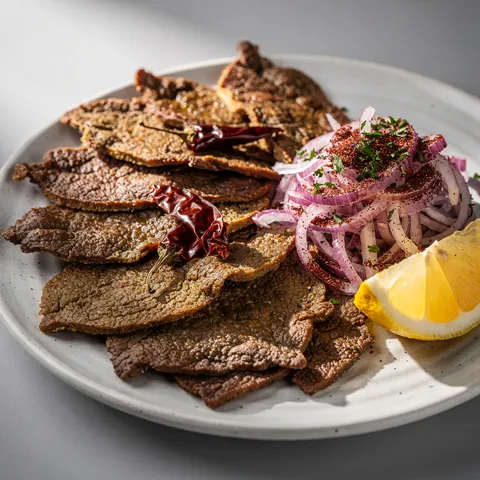 Crispy Fried Liver Slices25 min · Meze
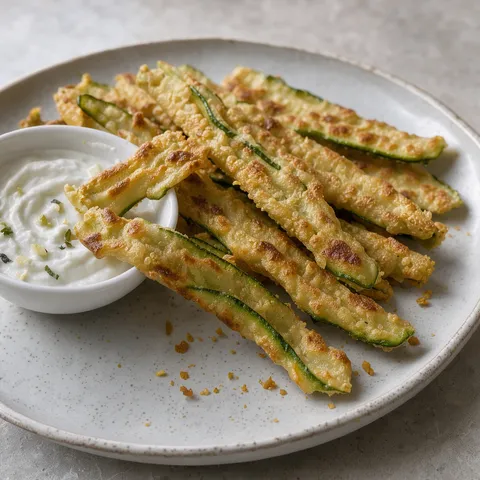 Courgette Crisps30 min · Meze