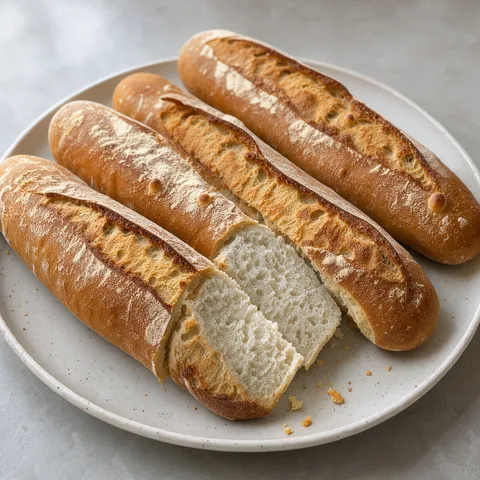
Gambian Crusty Long Bread Tapalapa
A Gambian bread & pastry. Takes 1 hr 5 min · +2 hr 20 min rising and resting, 4 pieces (about 28 cm). Difficulty: challenging.
At a glance
- Total time
- 1 hr 5 min · +2 hr 20 min rising and resting
- Serves
- 4 pieces (about 28 cm)
- Difficulty
- Challenging
- Cuisine
- Gambian cuisine
- Dish type
- Bread & pastry
- Allergens
- Gluten
Ingredients
- Dough (4 loaves, about 28 cm): 500 g strong white bread flour (type 550)
- 340 ml lukewarm water (about 35°C)
- 7 g fast-action dried yeast
- 5 g caster sugar
- 10 g salt
- 1 tbsp sunflower oil
Shaping
- 30 g flour (for dusting)
Steam
- 200 ml boiling water
Equipment
- Mixing bowls
- Wooden spoon / spatula
- Cling film
- Precision scales
- Baking tray
- Baking paper
- Oven
- Stand mixer (optional)
- Probe thermometer (optional)
- Bread knife (optional)
Method
- Activate the yeast: Add the sugar and yeast to 100 ml of the lukewarm water, stir and leave for 5 min. Foam should appear on the surface. If the water is above 40°C the yeast dies, and without a thermometer it should feel lukewarm on the inside of your wrist (5 min)
- Knead the dough: Mix the flour and salt in a large bowl and make a well in the centre. Add the yeast water, the remaining 240 ml water and the oil, and bring together first with a wooden spoon, then with your hand. Knead on an unfloured surface for 10-12 min, until smooth, elastic and slightly sticky. In a stand mixer with the dough hook, 8 min on medium speed is enough. A piece of dough stretched with your fingers should be thin enough to let light through (12 min)
- First prove: Put the dough in an oiled bowl, cover with cling film and prove in a warm place for 1 hr, until doubled in size (1 hr proving)
- Divide and pre-shape: Turn the dough onto a floured surface, press down with your palm to knock out the gas and divide into 4 equal pieces (about 210 g) using scales. Fold the edges of each piece into the centre to make a loose oval and arrange on the surface seam side down (8 min)
- Rest: Cover the ovals with a damp tea towel and rest for 15 min. The gluten relaxes, so the dough does not spring back when stretched (15 min resting)
- Shape: Flatten each oval slightly, fold the top third into the middle and press with the edge of your palm to seal. Fold the bottom third the same way and pinch the seam closed firmly with your thumb. Roll with your palms from the middle outwards to make a loaf 28 cm long with slightly pointed ends. Tightly rolled dough gives Tapalapa its tight, dense crumb (10 min)
- Second prove: Arrange the loaves seam side down on 2 baking trays lined with baking paper, 2 per tray, 6 cm apart (4 loaves will not fit on one tray), cover with a damp tea towel and prove for 45 min. Meanwhile, put an empty third tray on the bottom shelf of the oven for steam and preheat the oven to 240°C. The dough is ready when the dent you make with your finger fills back slowly (45 min proving)
- Slash and steam: Dust the loaves with flour. With a sharp bread knife, make a single 1 cm deep slash lengthways along the top of each loaf. Place the two trays on the middle and top shelves, pour the 200 ml boiling water into the hot tray on the bottom shelf and close the oven door immediately. The steam keeps the crust flexible in the early stage of baking and lets the bread open along the slash (5 min)
- Bake: Bake at 240°C for 10 min, then open the oven door once to release the steam, remove the bottom tray, reduce the heat to 220°C and swap the positions of the two trays. Bake for another 15 min, until the crust is deep golden and the loaf sounds hollow when tapped on the bottom. The internal temperature should reach 95°C (25 min)
- Cool: Cool the loaves for 20 min on a wire rack or propped against the edge of the tray. Bread cut while hot goes doughy inside. In Gambia, tapalapa is split lengthways and eaten filled with akara (black-eyed bean fritters), bean stew or omelette (20 min cooling)
Chef's note
Tapalapa is a baguette-like bread baked in ovens in Gambia and Senegal and usually described as having a tighter crumb. Traditional accounts also mix millet, maize or black-eyed bean flour into the dough, but only wheat flour is used here for the home oven. If you like, you can replace 50 g of the bread flour with wholemeal flour. The bread hardens the next day, and reheating it in a 200°C oven for 5 min makes the crust crisp again.
Frequently asked questions
- Why is the yeast woken up with water first?
- Foam shows the yeast is alive. Above 40°C the yeast dies, and without a thermometer the water should feel lukewarm on the inside of your wrist.
- How does the bread get a crisp crust?
- Pour boiling water into a hot tray on the bottom oven shelf to create steam. The steam keeps the crust flexible in the first minutes and lets the loaf open along the slash.
- Why isn't the hot bread cut straight away?
- Bread cut hot goes gummy inside. Cool the loaves for 20 minutes. In the Gambia the bread is split lengthways and eaten with akara, bean stew or omelette.
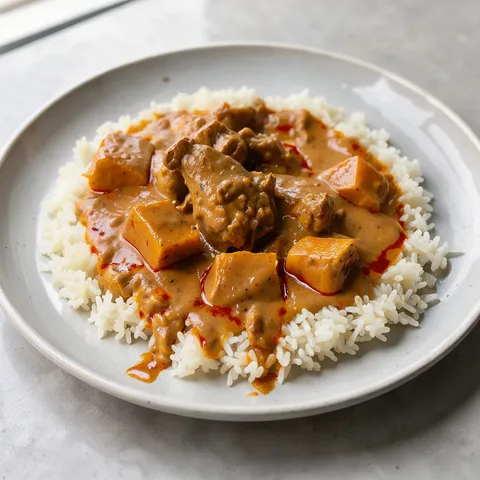 Gambian Peanut Chicken Stew1 hr 25 min · Main course
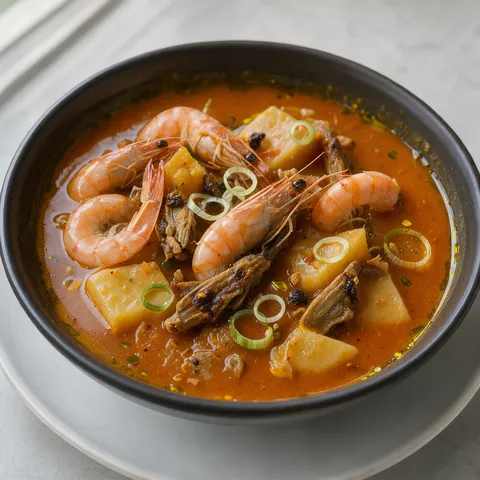 Gambian Cassava Seafood Soup1 hr 9 min · Soup
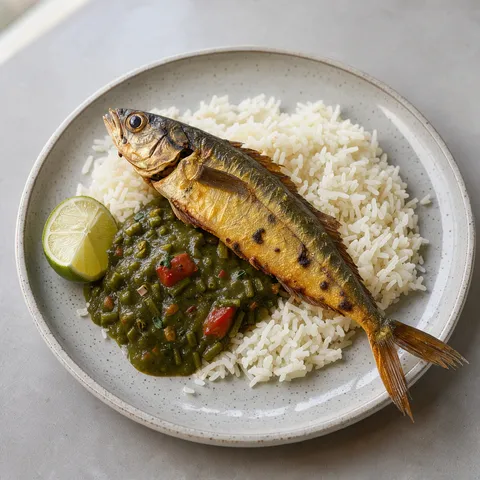 Gambian Sorrel and Okra Sauce1 hr 12 min · Main course
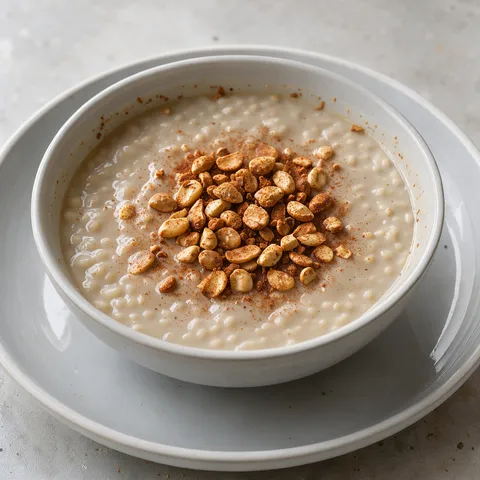 Gambian Peanut and Rice Porridge1 hr 3 min · Dessert
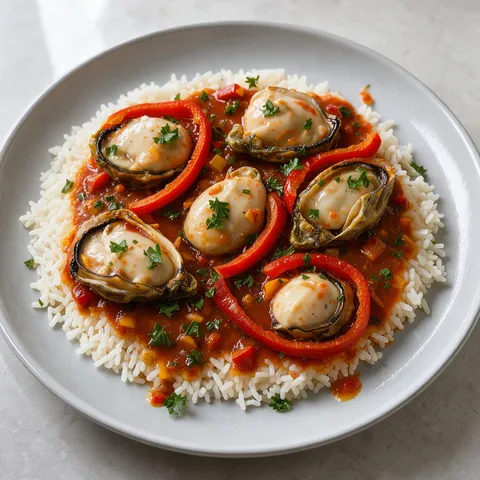 Gambian Oyster and Tomato Stew1 hr 9 min · Main course
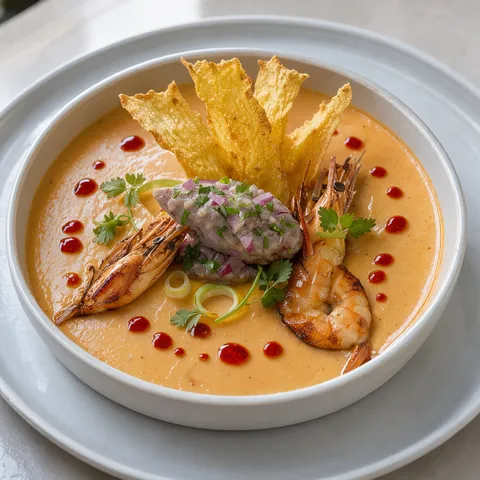 Ebbeh 2.01 hr 4 min · Starter