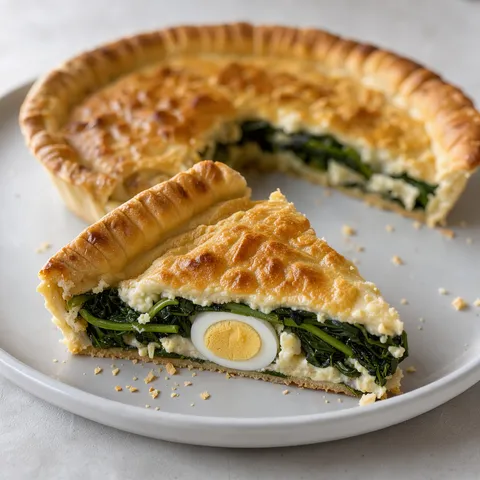
Uruguayan Chard and Egg Pie Torta Pascualina
An Uruguayan bread & pastry. Takes 2 hr 15 min, 26 cm tin, 8 slices. Difficulty: challenging.
At a glance
- Total time
- 2 hr 15 min
- Serves
- 26 cm tin, 8 slices
- Difficulty
- Challenging
- Cuisine
- Uruguayan cuisine
- Dish type
- Bread & pastry
- Allergens
- Gluten, Milk, Eggs
Ingredients
Dough
- 500 g plain flour
- 100 ml olive oil
- about 250 ml lukewarm water
- 1 tsp salt
- 1 tbsp white vinegar
Filling
- 1.2 kg chard (leaves and stalks)
- 2 tbsp olive oil
- 1 onion (finely diced)
- 2 garlic cloves (finely chopped)
- 250 g ricotta from Homemade Ricotta and Fresh Curd Cheese (Basics) or well-drained fresh curd cheese
- 80 g grated hard cheese (Parmesan type)
- 2 eggs (for the filling)
- 1/4 tsp nutmeg
- 1 tsp salt
- 1/2 tsp black pepper
Nests
- 6 eggs
- a pinch of salt
Glaze
- 1 egg yolk
- 1 tbsp milk
For the tin
- 1 tbsp olive oil
Equipment
- Mixing bowls
- Cling film
- Saucepan
- Frying pan
- Rolling pin / oklava
- Tart tin
- Pastry brush
- Oven
- Chef's knife
- Chopping board
Method
- Knead the dough: Put the flour and salt in a large bowl and make a well in the middle. Pour in the olive oil, vinegar and most of the lukewarm water, mix by gathering from the inside out with your fingers, and add the remaining water if needed. Knead on the work surface for 8 min, until smooth, soft and not sticking to the hand. Divide in two (one slightly larger), oil, wrap in cling film and rest for 30 min. The vinegar and the rest relax the gluten, so the dough rolls out paper-thin without tearing
- Blanch the chard: While the dough rests, separate the chard stalks from the leaves. Blanch the leaves in boiling salted water for 2 min, plunge into iced water, squeeze thoroughly in your hands to remove the water, then chop roughly. Chard that is not squeezed dry soaks the bottom crust of the pie and the dough stays raw (10 min in total)
- Sauté the stalks: Chop the chard stalks finely. Heat the olive oil in a pan and cook the onion and stalks for 10 min, until the stalks soften and the onion turns translucent, adding the garlic for the last 1 min. Take off the heat and let the pan cool slightly. The stalks add both sweetness and texture to the filling
- Mix the filling: In a bowl mix the chopped chard leaves, sautéed stalks, ricotta, grated cheese, the 2 eggs, nutmeg, salt and pepper for 5 min. Taste. As the cheese is salty, adjust the salt carefully
- Roll out the bottom crust: Preheat the oven to 190°C. Roll out the larger piece of dough on a floured surface to 2 mm thick, big enough to cover the base and sides of a 26 cm tin with 2 cm overhanging. Place in the greased tin and press well into the base (10 min in total)
- Fill and make the nests: Spread the filling in the tin and level it. With the back of a spoon make six evenly spaced wells, crack an egg into each well and sprinkle with a pinch of salt. When the eggs cook, each slice shows a cross-section of a whole egg, the signature of the dish (5 min in total)
- Cover with the top crust: Roll out the small piece of dough to 2 mm thick and lay it gently over the filling without breaking the eggs. Join the edges of the bottom and top dough, trim the excess and crimp the edge into a braid with your fingers. Beat the yolk with the milk and brush over the top, and make a small steam hole with the tip of a knife at a spot with no egg (10 min in total)
- Bake: Place the tin on the bottom shelf of the oven and bake at 190°C for 50 min, until the top is deep golden and the dough pulls slightly away from the edge of the tin. Baking on the bottom shelf browns the base too
- Rest: Rest the pie in its tin for 20 min. In a pie cut while hot the filling runs. As it cools the eggs and chard settle
- Plate: Unmould the pie and cut into 8 slices with a sharp knife, ideally with each slice passing through an egg. Lay a slice flat on the plate, so the green filling and the white-and-yellow ring of the egg show in the cross-section. Serve warm or at room temperature
Chef's note
The name pascualina comes from Easter (Pascua); it is the Rio de la Plata form of the torta pasqualina from the Ligurian coast of Italy. In Uruguay and Argentina it is found all year, especially at picnics and in bakery windows. In the Italian original the dough consists of dozens of thin layers; the Uruguayan home style needs only 2 layers. It can also be made with spinach instead of chard, but chard stalks give the filling a better texture.
Frequently asked questions
- Why do you squeeze the water out of the chard?
- Chard that is not squeezed dry soaks the bottom crust and leaves the pastry underbaked. Blanch the leaves, plunge them into iced water, then squeeze them hard in your hands.
- Why is vinegar added to the dough?
- Vinegar and resting relax the gluten. The dough rolls out paper-thin without tearing.
- Why does the pie rest in the tin?
- A pie cut while hot lets the filling run. After 20 minutes in the tin the eggs and chard settle into place.
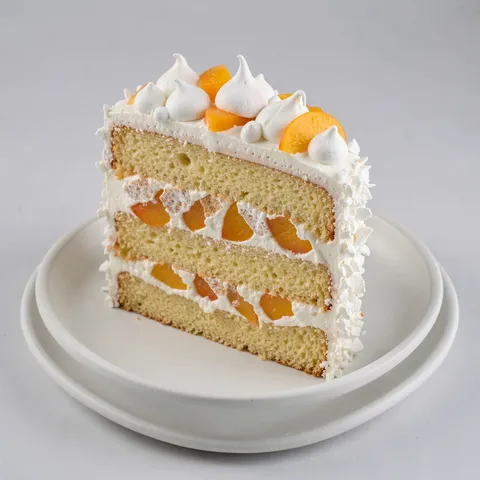 Meringue, Peach and Cream Cake3 hr 20 min · Dessert
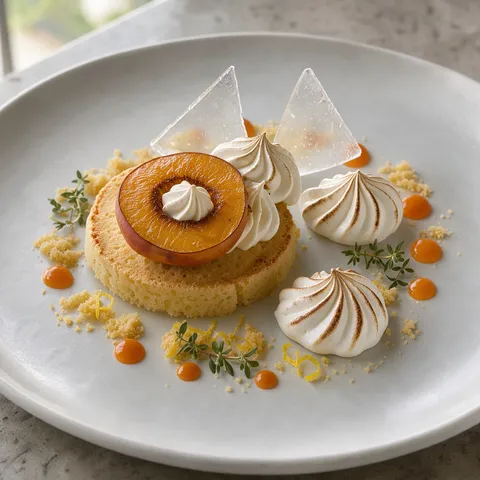 Chajá 2.01 hr 25 min · Dessert
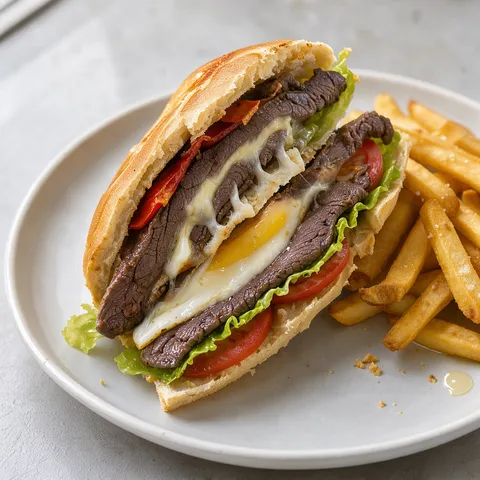 Uruguayan Steak Sandwich1 hr · Main course
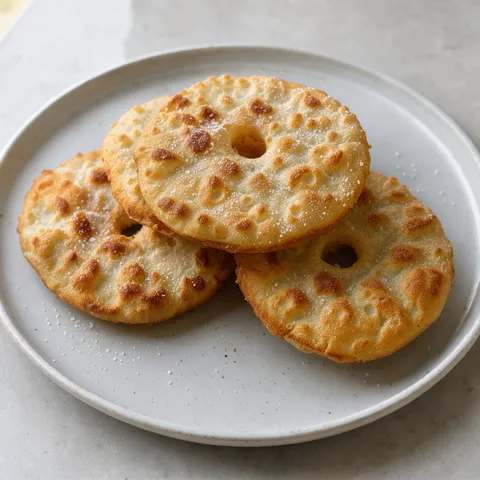 Uruguayan Rainy-Day Fried Bread1 hr 20 min · Bread & pastry
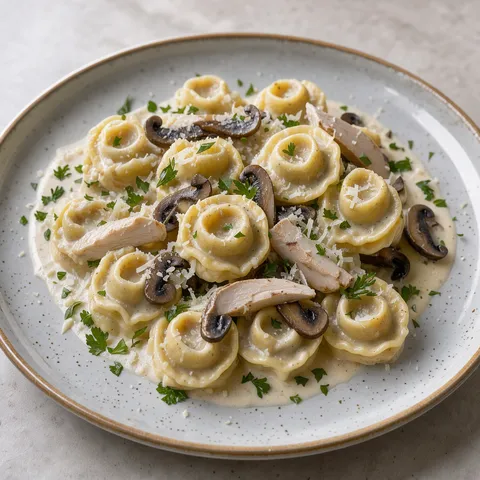 Cappelletti in Creamy Caruso Sauce1 hr 20 min · Main course
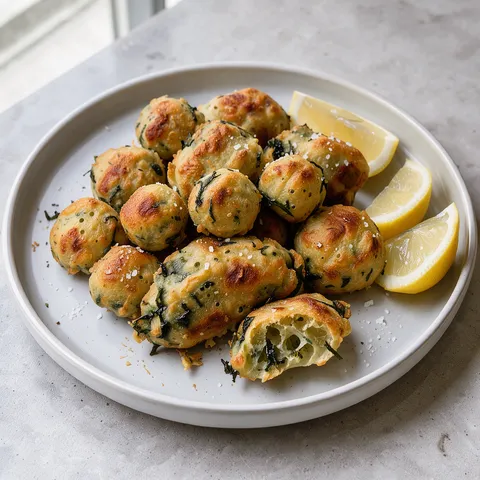 Rocha Coast Seaweed Fritters55 min · Meze