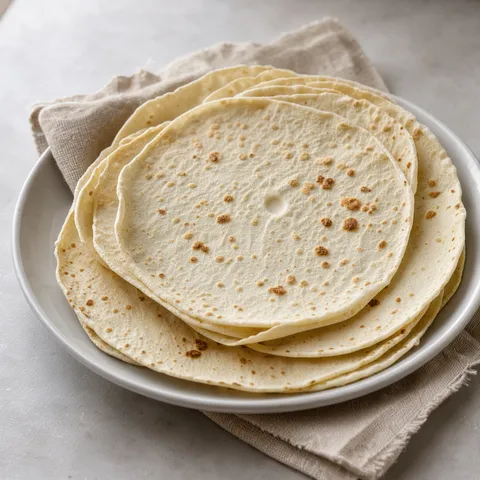
Corn Tortillas Tortillas de Maíz
A Mexican bread & pastry. Takes 1 hr 15 min, 4 servings (16 pieces, 14 cm). Difficulty: medium.
At a glance
- Total time
- 1 hr 15 min
- Serves
- 4 servings (16 pieces, 14 cm)
- Difficulty
- Medium
- Cuisine
- Mexican cuisine
- Dish type
- Bread & pastry
- Diet
- Gluten-free
- Allergens
- Contains none of the 14 listed allergens
Ingredients
Dough
- 250 g masa harina (nixtamalised maize flour, made from corn cooked in limewater and ground, available in Türkiye from shops selling imported products and online)
- 330-360 ml lukewarm water (about 40°C)
- 4 g salt
Cooking
- cast-iron pan
- saj (domed griddle) or heavy-based steel pan (instead of a comal)
Press
- tortilla press or 2 pieces of thick plastic bag and a heavy flat-based pan
Makes
- 16
- 14 cm across
- serves 4
Equipment
- Cast-iron frying pan
- Mixing bowls
Method
- Mix the dough: Mix the masa harina and salt in a large bowl. Add 330 ml of the water and knead by hand for 2-3 min. The dough should be as soft as play dough, not sticking to your hands but not looking dry either
- Test the consistency: Pinch off a piece the size of a walnut, roll it and flatten it in your palm. If the edges crack, the dough is dry: add a spoonful of water and knead again. If it sticks to your fingers, add a pinch of masa harina. Correct dough keeps smooth edges when pressed
- Rest: Cover the dough with a damp cloth and rest at room temperature for 30 min. During this time the flour absorbs the water completely, and the dough gains elasticity and does not crack as it cooks
- Heat the pan: Heat the cast-iron pan dry over medium-high heat for 5 min, without oiling. If a drop of water sprinkled on it sizzles and evaporates within 1-2 sec, the temperature is right. In a cold pan the tortilla dries out and turns hard, and in a pan that is too hot the outside burns before the inside cooks
- Divide into balls: Divide the dough into 16 equal pieces (about 35 g) and roll each into a smooth ball. Keep them covered with a cloth so they do not dry out and form a crust
- Press: Put a ball between two pieces of plastic. Press with the press, or a heavy flat-based pan, in a single even movement. Aim for 2 mm thick and 14 cm across. If the edges are too thin they tear when peeled off the plastic, so ease off a little
- Peel off the plastic: Slowly peel off the top plastic. Turn the tortilla over onto your palm together with the bottom plastic and peel that off too. Do not tug at the dough, or it loses its shape
- Cook the first side: Slide the tortilla from your palm into the pan in one movement. Cook for 30-40 sec. Turn when the edges begin to dry slightly and the tortilla lifts from the pan by itself. If you turn it early it sticks and tears
- Cook the second side: Cook for 50-60 sec, until light brown spots form here and there on the underside
- Puff: Turn the tortilla back onto its first side and hold for 15-20 sec. Meanwhile press lightly on the middle with a cloth or spatula. A well-cooked tortilla puffs up like a balloon, because the moisture inside turns to steam and separates the two layers. It can still be eaten if it does not puff, but it will be less soft
- Keep warm: Stack each cooked tortilla in a dish wrapped in a clean linen cloth and fold the cloth over. Once the tortillas have rested in their own steam for 10 min, they become completely soft and can be rolled
- Plate: Spread the linen cloth on a serving plate and fan the tortillas out, overlapping slightly. The spotted side of the top tortilla should show. Fold the cloth halfway over the tortillas from the edges and take to the table at once
Chef's note
Masa harina is flour that has been through nixtamalisation, in which the corn is cooked in limewater. The process loosens the hull, makes niacin (vitamin B3) available for absorption and makes the dough cohesive. This is why tortillas cannot be made with ordinary cornmeal or Black Sea cornmeal: the dough does not hold together. Tortillas that harden the next day are not thrown away. Cut into triangles and fried they become totopos, which are also the basis of sopa de tortilla and chilaquiles.
Frequently asked questions
- Why do corn tortillas crack at the edges?
- The edges crack if the dough is dry. Add a spoonful of water and knead again, and if the dough sticks to your fingers, add a pinch of masa harina.
- Why do tortillas puff up?
- In a well-cooked tortilla the moisture turns to steam and separates the two layers, so it puffs like a balloon. When the second side is cooked, flip it back onto the first side for 15-20 sec and press gently in the middle.
- What can I use if I don't have a tortilla press?
- Use 2 pieces of thick plastic bag and a heavy flat-bottomed pan. Aim for a thickness of 2 mm and a diameter of 14 cm.
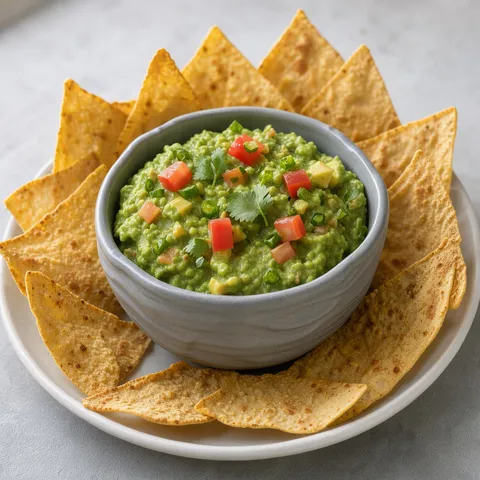 Guacamole25 min · Meze
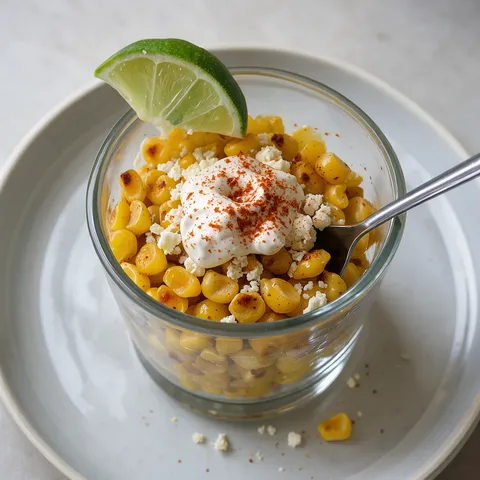 Mexican Corn in a Cup35 min · Meze
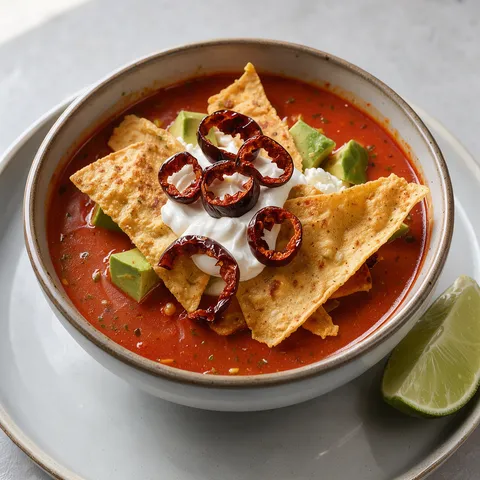 Mexican Tortilla Soup1 hr · Soup
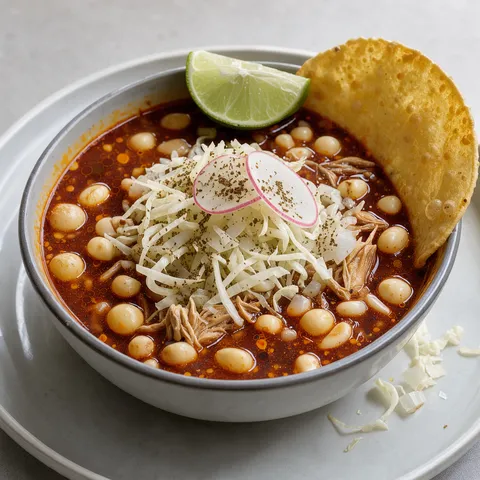 Red Chicken and Hominy Stew2 hr · Soup
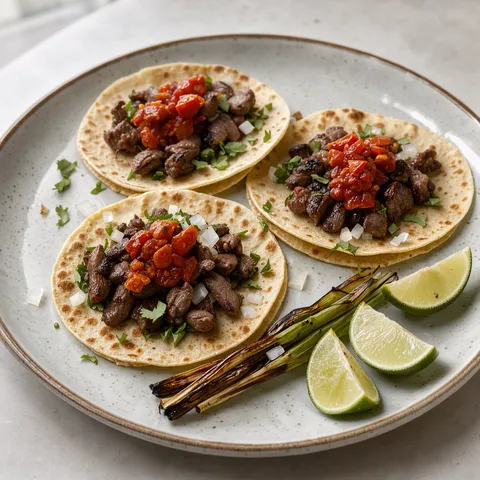 Chargrilled Beef Tacos1 hr · Main course
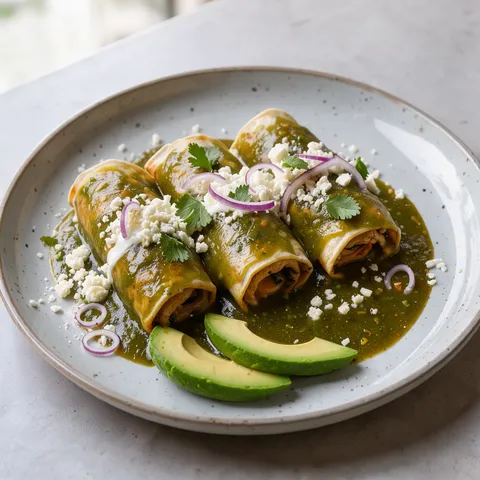 Chicken Enchiladas1 hr 15 min · Main course