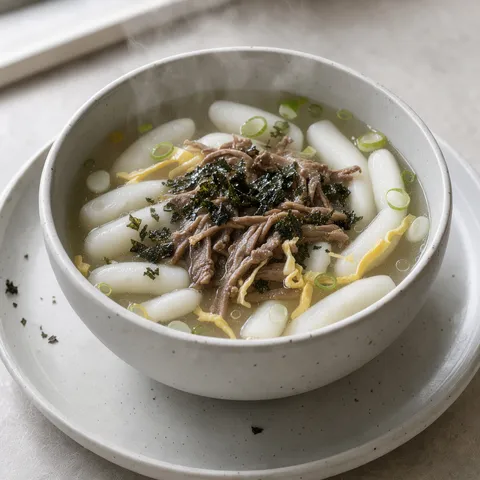
Tteokguk Korean Rice Cake Soup
A Korean soup. Takes 47 min, Serves 4. Difficulty: medium.
At a glance
- Total time
- 47 min
- Serves
- Serves 4
- Difficulty
- Medium
- Cuisine
- Korean cuisine
- Dish type
- Soup
- Allergens
- Gluten, Eggs, Sesame, Soya, Celery
Ingredients
Soup
- 200 g beef brisket or shin (boneless)
- 1.5 litres water
- 4 garlic cloves (2 crushed, 2 finely chopped)
- 2 tbsp soy sauce (soup soy sauce or regular)
- 1 tsp sesame oil
- 1 tsp salt
- 1/4 tsp white pepper
Rice cakes
- 400 g sliced rice cakes (garaetteok slices, tteok)
- 1 litre cold water (for soaking)
Egg (jidan)
- 2 eggs
- 1/4 tsp salt
- 1 tsp vegetable oil
To serve
- 2 spring onions (thin rings)
- 1/2 sheet nori (crumbled by hand)
- 1 tsp toasted sesame seeds
Equipment
- Pressure cooker
- Saucepan
- Frying pan
- Fine sieve / chinois
Method
- Blanch the beef and set up the cooker: Put the beef pieces in a small pan with cold water, bring to the boil and cook for 3 min, skimming, then drain and rinse. Transfer to the pressure cooker and add the 1.5 litres of fresh water and the 2 crushed garlic cloves. Blanching makes the stock clear and removes the smell, and clarity matters in Korean soups. (~6 min)
- Pressure-cook: Close the lid and, once the cooker reaches pressure, cook on low heat for 25 min. Take off the heat and release the pressure in 2 min by holding the cooker under cold water. The beef should be tender enough to pull apart in strands. The pressure cooker shortens the stock that otherwise takes hours. Time: 27 min, and the two steps below are done during this time
- Soak the rice cakes: Soak the slices in cold water for 20 min, or 30 min if they are hard. Soaked slices soften evenly and quickly in the soup, whereas hard slices cook on the outside and stay raw inside. This step runs in parallel
- Make the egg strips (jidan): Whisk the egg white and yolk separately in two bowls, each with a pinch of salt. Lightly oil a non-stick pan, pour in the white first as a thin layer and cook over low heat for 1 min, turn and cook for 20 sec more. Cook the yolk in the same way. Stack the two and slice into 3 mm strips. Cooking the white and yolk separately gives two colours, white and yellow, and the tradition rests on this. This step runs in parallel
- Shred the beef and strain: Remove the beef and shred it finely along the grain. Pass the soup through a fine sieve into a pan. Mix the beef with the soy sauce, chopped garlic, sesame oil and white pepper. Marinated beef gives up its flavour to the soup when it goes in. (~5 min)
- Cook the rice cakes: Bring the soup to the boil, add the drained rice cakes and cook for 5 min, until the slices swell and rise to the surface. Add half of the beef to the soup and adjust the salt. If it boils too hard the cakes fall apart, so keep it at a gentle bubble. (~6 min)
- Serve: Ladle the soup and rice cakes into bowls and serve hot with the remaining beef, jidan strips, nori, spring onions and sesame on top. (~3 min)
Chef's note
Tteokguk is the New Year (Seollal) soup in Korea, and the purity of the white rice cake stands for growing a year older in the new year. The traditional version uses long-simmered beef bone stock. The pressure cooker shortens this.
Frequently asked questions
- Why are the rice cakes soaked for Tteokguk?
- Soaked slices soften evenly and quickly in the soup. Slices that stay hard can stay raw in the middle while the outside cooks.
- What if the rice cakes fall apart in the soup?
- If the soup boils too hard, the cakes fall apart, so a gentle simmer is enough.
- Why are the egg white and yolk cooked separately for the jidan?
- Cooking them separately gives two colours, white and yellow, which is the tradition. Lay the two layers on top of each other and cut them into strips.
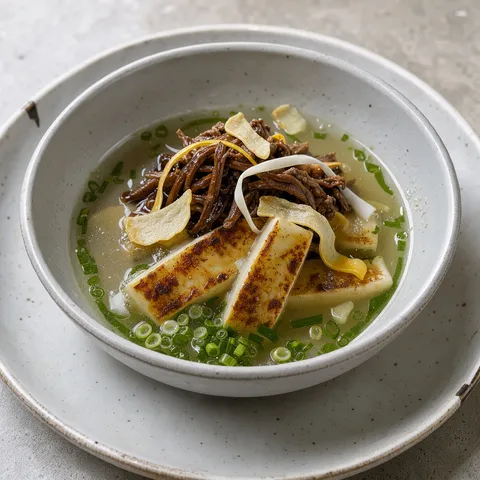 Tteokguk 2.01 hr 3 min · Soup
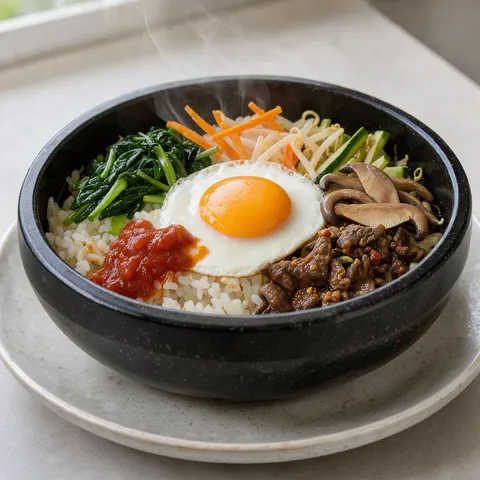 Bibimbap1 hr 15 min · Main course
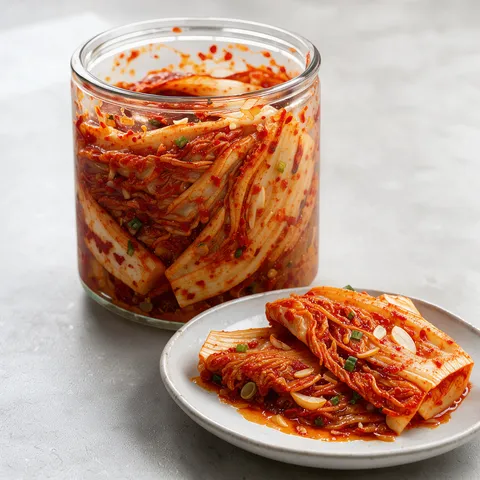 Kimchi3 hr · Side dish
 Bulgogi30 min · Main course
 Korean Braised Short Ribs1 hr 30 min · Main course
 Korean Glass Noodles with Vegetables45 min · Main course
 Kimchi Stew40 min · Soup