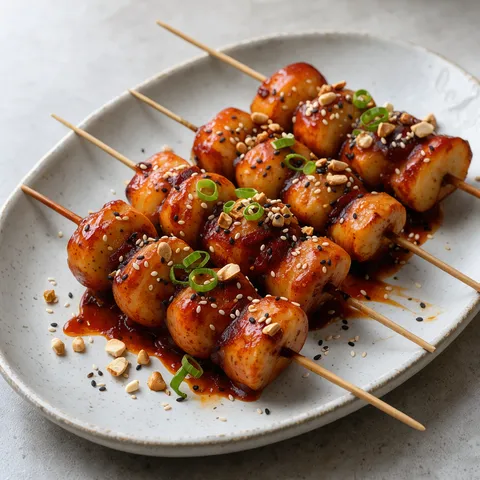
Korean Street Rice Cake Skewers Tteokkochi
A Korean meze. Takes 35 min, Makes 24. Difficulty: easy.
At a glance
- Total time
- 35 min
- Serves
- Makes 24
- Difficulty
- Easy
- Cuisine
- Korean cuisine
- Dish type
- Meze
- Diet
- Vegetarian
- Allergens
- Gluten, Tree nuts, Sesame, Soya
Ingredients
- Rice cakes (24 skewers, 2 pieces per skewer, about 14 g per piece): 670 g cylinder tteok (fresh Korean rice cake, 2 cm in diameter, cut into 4 cm pieces)
- 1 litre boiling water (for boiling)
Skewers
- 24 bamboo skewers of 18 cm
Frying
- 2 tbsp neutral oil
Glaze (about 5 g per skewer)
- 120 g gochujang glaze (Basics)
- 1 tbsp water
To finish
- 1 tbsp toasted sesame seeds
- 1 tbsp finely chopped spring onion
- 1 tbsp crushed peanuts
Equipment
- Saucepan
- Colander
- Frying pan
- Mixing bowls
- Pastry brush (optional)
Method
- Soften the rice cakes: If the tteok has come straight from the fridge and is hard, drop it into boiling water and boil for 2 min. The tteok should be glossy and soft all over and elastic enough to spring back when pressed. Boiling gels the starch on the surface and stops it breaking when threaded onto the skewer. Drain in a colander and pat dry without dipping in iced water.
- Thread the skewers: Cut the tteok into 48 pieces of 4 cm each (for 24 skewers). Thread 2 pieces onto each bamboo skewer with a 1 cm gap between them. Softened tteok threads easily, while hard tteok cracks and bursts in hot oil. Leave 6 cm free for the handle of each skewer.
- Heat the glaze: In a small pan, mix the gochujang glaze with 1 tbsp water and heat over medium heat for 2 min, until it just reaches the boil. The glaze should be pourable and thick enough to coat the back of a spoon. If it is too thick, add 1 tbsp more water, because a thick glaze clumps without clinging to the tteok. Take off the heat and keep warm.
- Fry the tteok: Heat a large frying pan over medium-high heat and add the oil. Fry the skewers in three batches of 8, turning, for 2 min on each side (4 min in total). They are done when the tteok is golden and lightly blistered on the surface, crisp at the edges and soft inside. If the pan is crowded the tteok steams and does not brown. The crisp edge of the fried tteok holds the glaze.
- Glaze: Turn the fried skewers in the hot glaze in the pan or a bowl so that each skewer is coated with 5 g glaze (2.5 g per piece). You can also brush it on. The glaze should cling to the tteok and form a glossy film. If excess glaze runs to the bottom, the tteok softens, so use only a thin layer on each skewer.
- Garnish: Garnish the glazed skewers at once on a plate with sesame seeds, crushed peanuts and spring onion. The sesame must be sprinkled while the glaze is hot, as it will not stick once it cools. Tteok hardens as it cools, so the first 10 min are when it is softest.
- Serve: Serve the skewers arranged in the same direction on a flat ceramic plate. Each skewer has two pieces of tteok. A warmed plate helps keep the glaze and tteok hot.
Chef's note
Serve hot. 2 skewers per person, 100 people × 2 = 200 skewers. As the recipe makes 24 skewers, the multiplier is 200/24 = 8.33, in practice 8.5 times (5.7 kg tteok (rice cake), 1 kg gochujang glaze). Tteokkochi are rice cake skewers sold on Korean streets. Tteok is fresh rice cake traditionally bought from Korean grocers and is not made at home. If fresh tteok is not available, frozen tteok can be used and boiled 4 min longer. The glaze can be made 1 week ahead and stored, then heated before use. Boiled skewers can be prepared 4 hr ahead and stored on a tray under cling film. Fry no more than 10 min before serving. 200 skewers need about 5.6 kg of tteok net, and 5.7 kg is prepared at 8.5 times the recipe, allowing for rounding, and they take about 40 min in 3 pans.
Frequently asked questions
- What should I do if the tteok is hard before skewering?
- If it is straight from the fridge and hard, boil it in boiling water for 2 minutes. Softened tteok slides onto the skewer easily, while hard tteok cracks.
- What if the gochujang glaze is too thick?
- Thick glaze clumps on the tteok without sticking. It should coat the back of a spoon and still pour. If it is too thick, add 1 tbsp water.
- Why does Tteokkochi go hard as it cools?
- Tteok stiffens as it cools, so the first 10 minutes are when it is softest. Sprinkle the sesame seeds while the glaze is still hot.
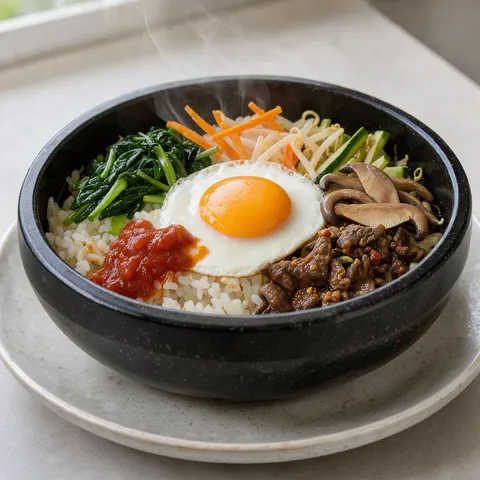 Bibimbap1 hr 15 min · Main course
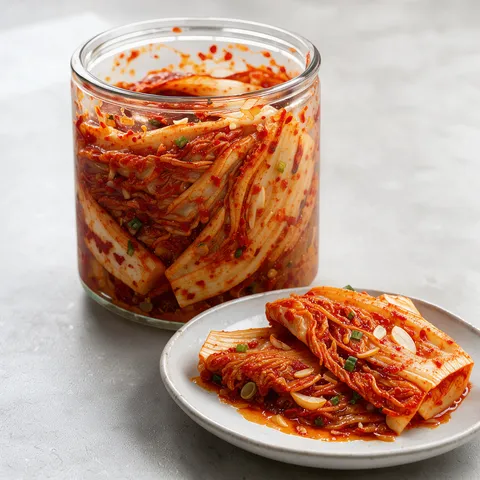 Kimchi3 hr · Side dish
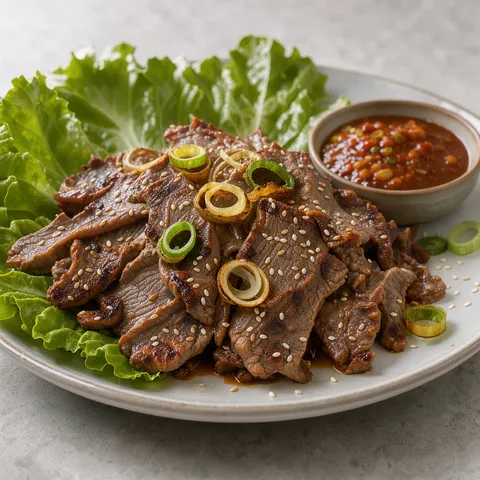 Bulgogi30 min · Main course
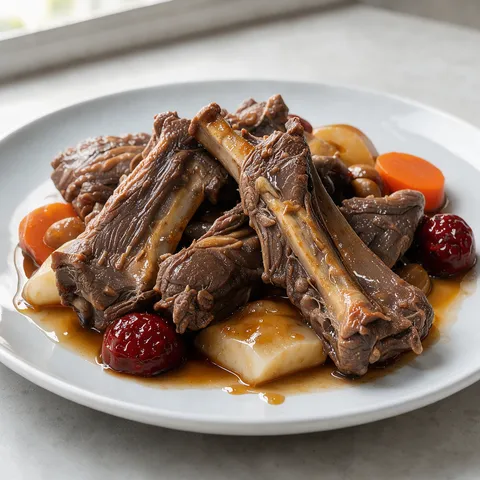 Korean Braised Short Ribs1 hr 30 min · Main course
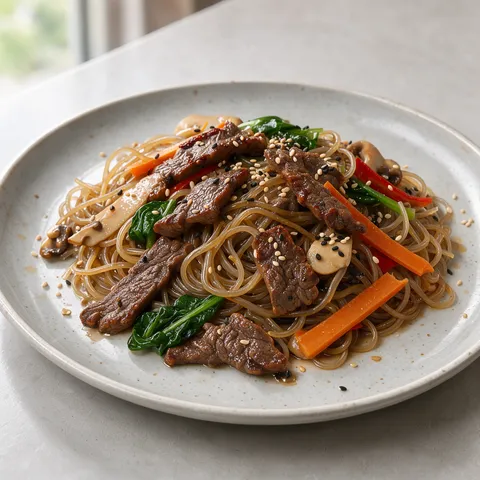 Korean Glass Noodles with Vegetables45 min · Main course
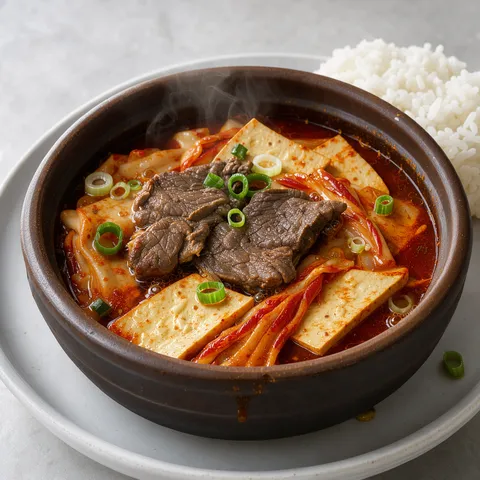 Kimchi Stew40 min · Soup