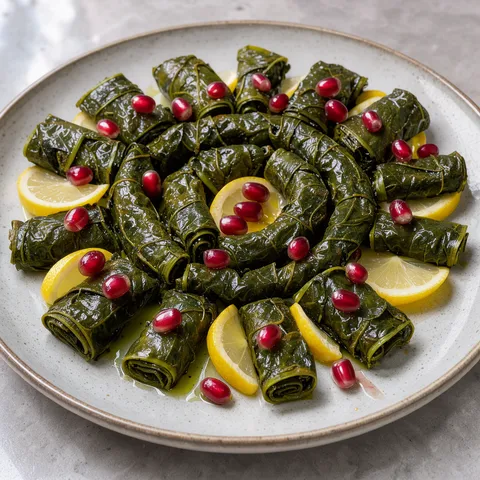
Stuffed Chard Rolls with Lemon and Pomegranate Molasses Warak Silq
A Syrian main course. Takes 1 hr 16 min · +10 min resting, Serves 4. Difficulty: medium.
At a glance
- Total time
- 1 hr 16 min · +10 min resting
- Serves
- Serves 4
- Difficulty
- Medium
- Cuisine
- Syrian cuisine
- Dish type
- Main course
- Diet
- Vegetarian, Vegan, Gluten-free
- Allergens
- Contains none of the 14 listed allergens
Ingredients
Rolls
- 20 large chard leaves (about 500 g)
Filling
- 150 g rice (washed)
- 3 ripe tomatoes (grated)
- 1 large onion (finely chopped)
- 1 bunch flat-leaf parsley (finely chopped)
- 1/2 bunch mint (finely chopped)
- 4 tbsp olive oil
- 1 tsp salt
- 1/2 tsp black pepper
- 1 tsp seven-spice
- 1 tbsp pomegranate molasses
Cooking
- 3 tbsp olive oil
- juice of 2 lemons
- 1 tbsp pomegranate molasses
- 1 tsp salt
- 400 ml hot water
- 2 garlic cloves (crushed)
- 1 potato (cut into thick rounds for the base)
To serve
- 1 lemon (sliced)
Equipment
- Saucepan
- Ladle
- Kitchen scissors
- Mixing bowls
Method
- Boil the leaves: Bring salted water to the boil in a large pan and dip the chard leaves into the boiling water in batches of 5-6, lifting them out with a slotted spoon when they turn bright green and soft. Unboiled chard breaks when rolled, but if you boil it too long it falls apart. Stop the cooking in cold water and trim the thick vein at the stalk end of each leaf thin with scissors (~8 min)
- Make the filling: Mix the rice, tomatoes, onion, parsley, mint, olive oil, salt, black pepper, seven-spice and pomegranate molasses by hand in a bowl. The filling should look dry because the rice absorbs liquid as it cooks, and if it is too wet, the rolls swell and burst (~10 min)
- Roll: Lay a leaf on the board with the vein side up, put a dessertspoon of filling at the bottom edge, close the bottom end, fold the sides in and roll up firmly but loosely enough for the rice to swell. If you roll too tightly, they burst when cooked, and if loosely, they unroll (~15 min)
- Layer the pot: Arrange the potato rounds on the bottom of a heavy-based pan, which prevents burning, then pack the rolls upright and tight on top and scatter the crushed garlic around them. Packing the rolls tightly stops them from opening as they cook (~5 min)
- Cook: Pour the olive oil, lemon juice, pomegranate molasses, salt and hot water over the rolls. Press an upturned plate on top to hold the rolls in place, cover with the lid and cook over low heat until the rice and leaves are soft. Cut one roll open to check how tender the rice is (~35 min)
- Rest (waiting): Turn off the heat and let the rolls rest without lifting the lid. The rice absorbs the remaining liquid and the rolls hold together, but if they are served hot, they fall apart (~10 min)
- Plate: Invert a plate over the pot and turn it over to release the rolls whole, or lift the rolls out one by one with a spoon. Put lemon slices alongside and drizzle a spoonful of the cooking liquid over the rolls. Serve warm or at room temperature (~3 min)
Chef's note
In Damascus, chard rolls are part of the olive oil table together with stuffed vine leaves, and they are eaten cold. The chard leaf carries the sourness of both the rice and the pomegranate molasses. When chard is used instead of vine leaves, the rolls are longer because the leaves are wider. The recipe is meat-free.
Frequently asked questions
- Should chard leaves be blanched before rolling?
- Yes, blanch briefly and refresh in cold water. Raw leaves tear when rolled and overcooked ones fall apart.
- Why do the rolls burst?
- They are too wet inside or rolled too tightly. The rice swells as it cooks, so do not roll too tightly and keep the filling dry.
- Should I serve the rolls hot or cold?
- Serve them warm or at room temperature, and they also keep in the fridge. Eaten cold, the pomegranate molasses and lemon stand out more.
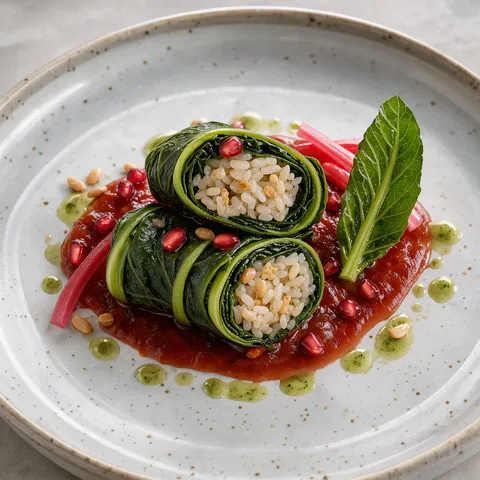 Stuffed Chard Rolls with Lemon and Pomegranate Molasses 2.01 hr 17 min · Main course
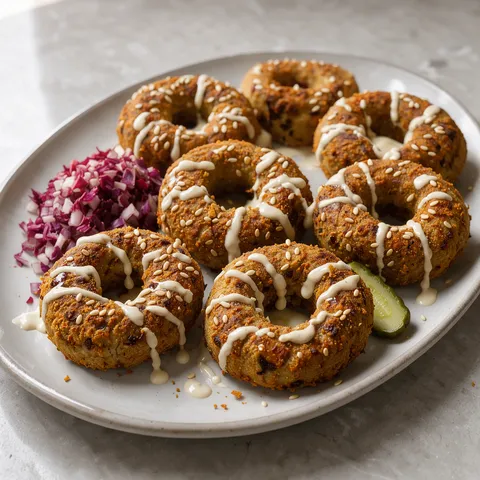 Syrian Falafel Rings with Tahini and Sumac Onions49 min · Meze
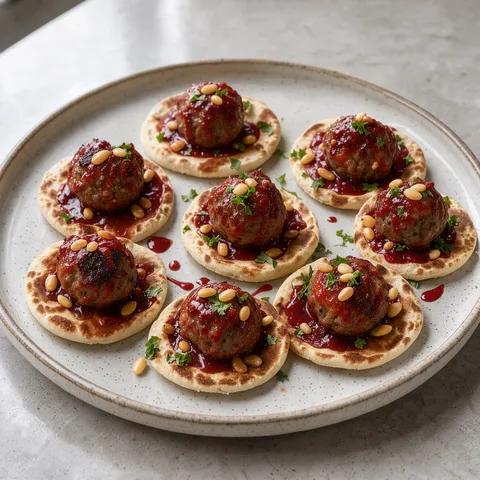 Aleppo Sour Cherry Lamb Kofte1 hr · Meze
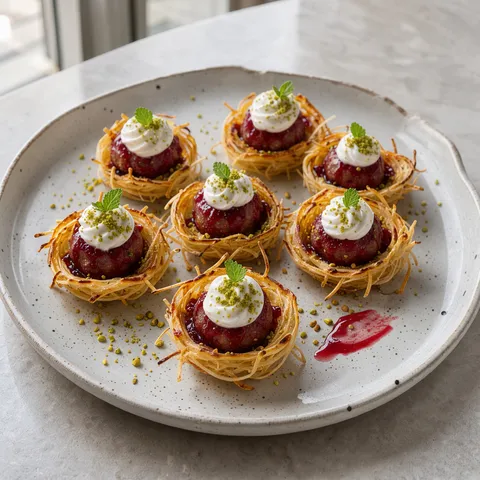 Kebab Karaz 2.01 hr 18 min · Meze
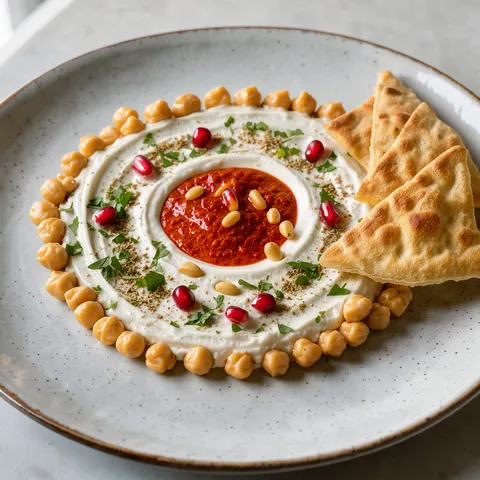 Damascus-Style Chickpea Fatteh1 hr 50 min · Starter
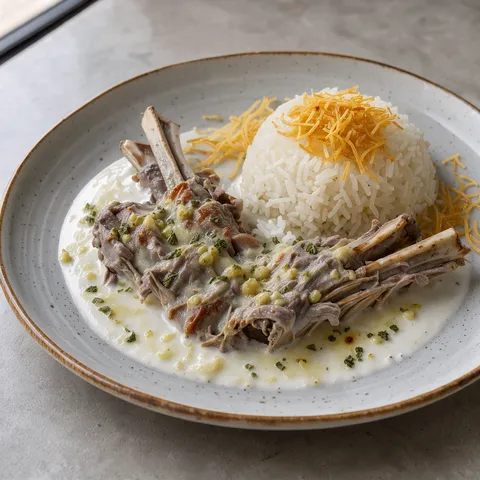 Damascus-Style Lamb in Yoghurt Sauce2 hr 15 min · Main course
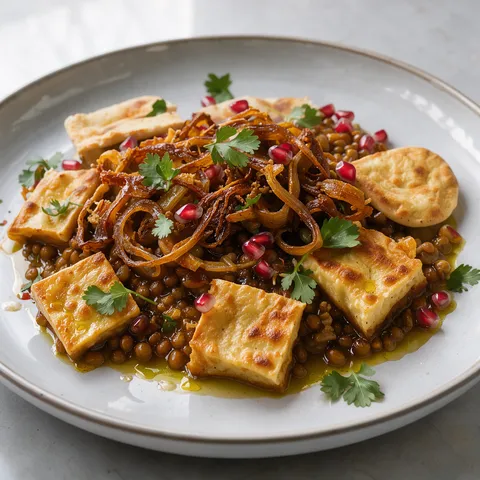 Lentils with Tamarind and Dough Squares1 hr 30 min · Main course