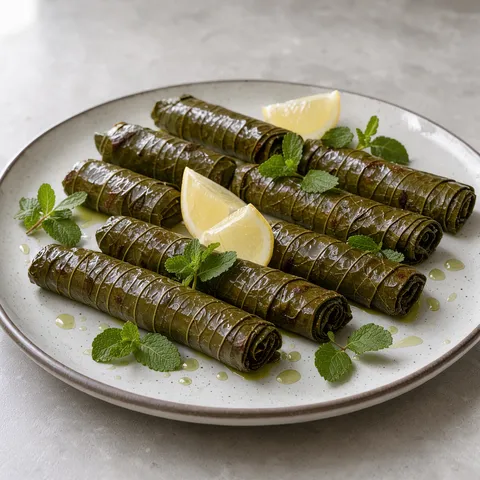
Damascus Vegan Stuffed Vine Leaves Yalanji
A Syrian meze. Takes 1 hr 42 min, Serves 4. Difficulty: medium.
At a glance
- Total time
- 1 hr 42 min
- Serves
- Serves 4
- Difficulty
- Medium
- Cuisine
- Syrian cuisine
- Dish type
- Meze
- Diet
- Vegetarian, Vegan, Gluten-free
- Allergens
- Contains none of the 14 listed allergens
Ingredients
Leaves
- 50 brined vine leaves (about 250 g)
Filling
- 150 g rice (rinsed)
- 4 small tomatoes (finely diced)
- 1 large onion (finely chopped)
- 100 g flat-leaf parsley (finely chopped)
- 30 g fresh mint (finely chopped)
- 80 ml olive oil
- 1 tbsp pomegranate molasses
- 1 tsp seven-spice
- 1 tsp salt
- 1/2 tsp black pepper
For cooking
- 1 tomato (sliced)
- 400 ml hot water
- 3 tbsp lemon juice
- 2 tbsp pomegranate molasses
- 3 tbsp olive oil
To serve
- lemon wedges
- fresh mint
Equipment
- Heavy-based saucepan
- Colander
- Mixing bowls
- Chef's knife
- Chopping board
- Kitchen scissors
- Pressure cooker (optional)
Method
- Prepare the leaves: Boil the brined leaves in boiling water for 3 min, transfer to cold water and drain in a colander. Blanching removes the excess salt and makes the leaves pliable, so they do not tear when rolled. Cut off the leaf stalks with scissors or a knife and lay the leaves out on the worktop, shiny side down
- Prepare the filling: Mix the rice, tomatoes, onion, parsley and mint in a bowl. Add the oil, pomegranate molasses, salt, black pepper and seven-spice and knead by hand for 2 min. Leave the rice raw, as it swells inside the leaf as it cooks. The juice of the tomato is enough to cook the rice, so the mixture looks a little wet
- Roll: Put a filling of 2 tsp to 1 tbsp (about 12-15 g, depending on the size of the leaf) at the stalk end of the leaf, fold in both sides and roll into a finger-thick roll, tightly but loosely enough for the rice to swell. The filling should be completely enclosed in the leaf. Yalanji rolled too tightly splits and falls apart when the rice swells
- Layer: Line the base of a heavy-based pan with tomato slices and leftover leaves to prevent burning. Pack the rolls tightly, seam side down, leaning against each other. Put an upturned plate on top so the rolls do not open as they boil
- Cook: Mix the hot water, lemon juice, pomegranate molasses and olive oil and pour over the rolls. The liquid should come to just below the rolls. Once it boils, lower the heat, cover and cook for 40 min. The rice and leaves should be completely soft. In a pressure cooker this time is 15 min
- Rest: Take the pan off the heat and leave for 10 min without lifting the plate. If opened while hot, the leaves open their mouths, while rested rolls keep their shape
- Serve: Arrange the rolls on a wide plate, drizzle with the cooking liquid left in the pan and serve at room temperature with lemon wedges and fresh mint. Yalanji is also eaten cold, and tastes even better the next day
Chef's note
Yalanji means 'liar' in Arabic, because it is the meat-free, olive-oil version of the meat-stuffed vine leaf roll. In Damascus and Aleppo homes it is made sour with pomegranate molasses and lemon. Because tomato and mint also go into the filling, it differs markedly from the Turkish olive-oil stuffed vine leaves. If you find fresh vine leaves, the blanching time is 1 min. It is completely vegan. Brined leaves are traditionally bought ready-made.
Frequently asked questions
- Why do my yalanji vine leaves tear or fall apart?
- If rolled too tightly, the rice swells and splits the leaf. Roll them about as thick as a finger and loose enough for the rice to expand.
- Can yalanji be eaten cold or kept until the next day?
- Yes, it is good cold. It tastes even better the next day, served at room temperature with lemon slices and fresh mint.
- How long does it take in a pressure cooker?
- About 15 minutes in a pressure cooker. In a normal pot, cook for 40 minutes until the rice and leaves are completely soft.
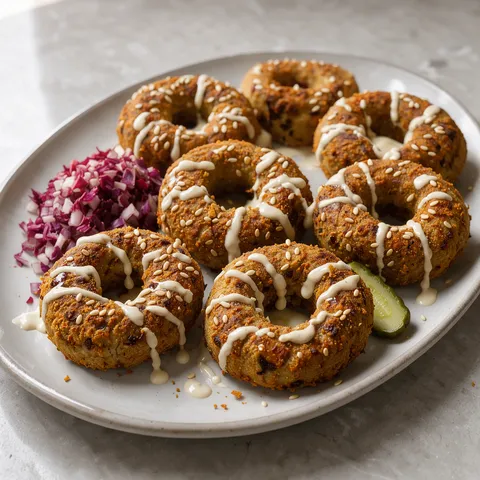 Syrian Falafel Rings with Tahini and Sumac Onions49 min · Meze
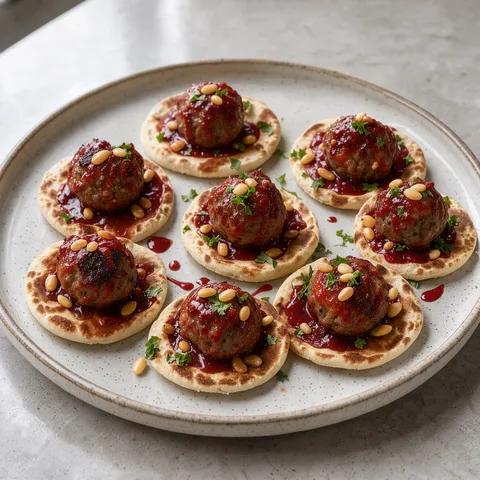 Aleppo Sour Cherry Lamb Kofte1 hr · Meze
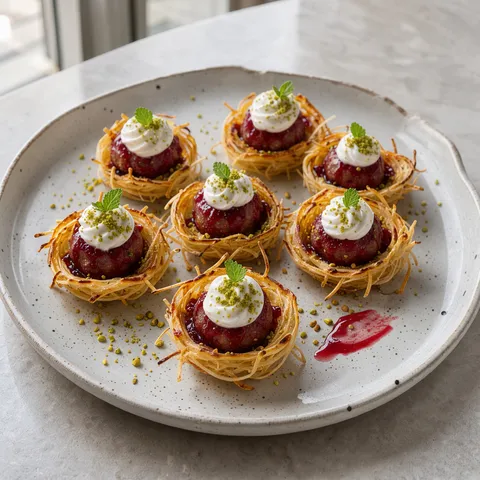 Kebab Karaz 2.01 hr 18 min · Meze
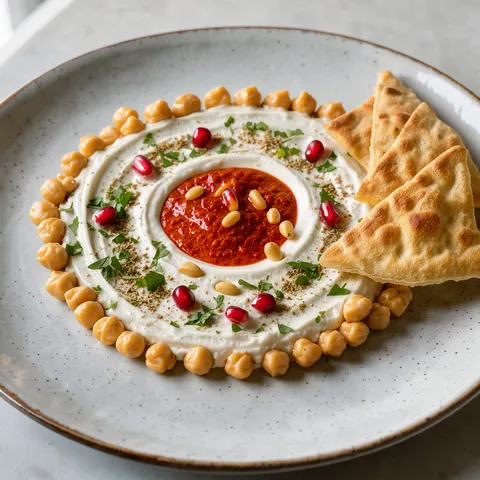 Damascus-Style Chickpea Fatteh1 hr 50 min · Starter
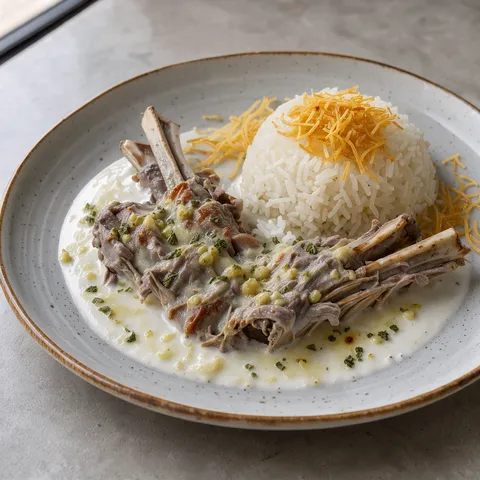 Damascus-Style Lamb in Yoghurt Sauce2 hr 15 min · Main course
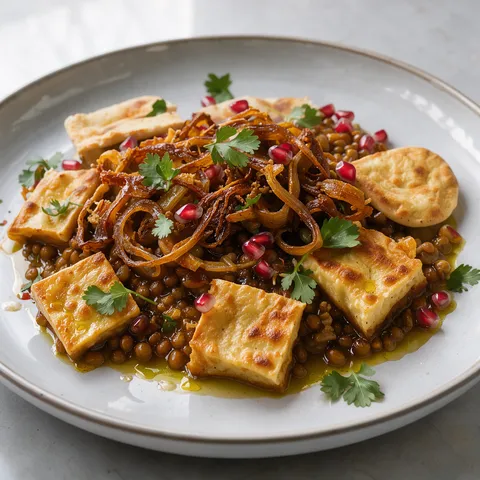 Lentils with Tamarind and Dough Squares1 hr 30 min · Main course