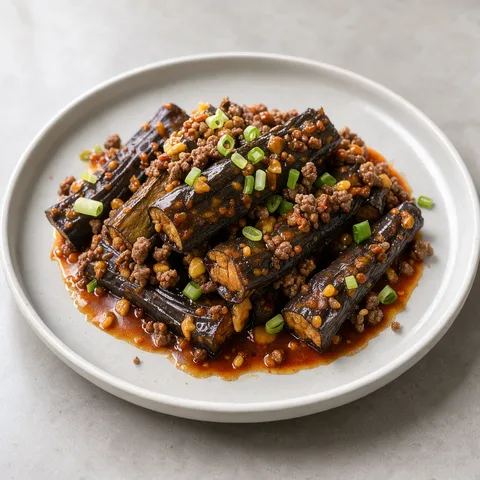
Sichuan Fish-Fragrant Aubergine Yu Xiang Qie Zi
A Chinese main course. Takes 45 min, Serves 4. Difficulty: medium.
At a glance
- Total time
- 45 min
- Serves
- Serves 4
- Difficulty
- Medium
- Cuisine
- Chinese cuisine
- Dish type
- Main course
- Allergens
- Gluten, Fish, Soya
Ingredients
Aubergine
- 3 long aubergines (about 700 g, cut into finger-thick batons 6 cm long)
- 1 tsp salt
- 2 tbsp cornflour (for coating)
- 200 ml sunflower oil (about 3 mm deep in a 28 cm pan)
Meat
- 200 g beef mince (about 20% fat)
- 1 tsp light soy sauce
- 1 tsp cornflour
Aromatics
- 1 tbsp doubanjiang (chilli bean paste)
- 4 garlic cloves (finely chopped)
- 2 cm fresh ginger (finely chopped)
- 3 spring onions (white and green parts separated, finely sliced)
Fish-fragrant sauce
- 2 tbsp light soy sauce
- 1 tbsp Chinkiang black rice vinegar
- 1 tbsp sugar
- 1 tsp cornflour
- 150 ml water
- 1/4 tsp salt
Equipment
- Chopping board
- Chef's knife
- Mixing bowls
- Frying pan
- Colander
- Silicone spatula
- Probe thermometer (optional)
Method
- Cut and salt the aubergine: Cut the aubergines into finger-thick batons 6 cm long. Put them in a large bowl, mix with 1 tsp salt and leave for 15 min. The salt draws water from the cells, so the aubergine does not soak up oil like a sponge when fried and turns soft without falling apart. Pat each baton dry with kitchen paper, dust lightly with the 2 tbsp cornflour without clumps and shake off the excess
- Prepare the mince: Mix the beef mince with 1 tsp soy sauce and 1 tsp cornflour in a small bowl with a fork for 1 min and keep it in the fridge while the aubergine rests. The cornflour stops the mince clumping as it fries and keeps it in small, separate pieces
- Mix the sauce: Whisk the 2 tbsp soy sauce, black vinegar, sugar, 1 tsp cornflour, 150 ml water and 1/4 tsp salt in a bowl until the sugar dissolves. The sweet, sour and salty balance is the base of the Sichuan sauce that gives this dish its "fish-fragrant" name. The cornflour sinks to the bottom, so stir again just before pouring it into the pan
- Line up the aromatics: Line up the garlic, ginger, spring onion whites and doubanjiang in separate small dishes beside the hob. If the doubanjiang is chunky, chop it finely with a knife. The frying stage moves in seconds: everything should be within reach
- Fry the aubergine: Put the 200 ml oil in the 28 cm wide pan and heat over medium-high heat to about 175°C: a baton dipped in should sizzle at once. Fry the aubergine in three batches, each for 4-5 min, turning now and then, until golden on all sides and soft enough to squash easily when pressed. Lift onto kitchen paper with a slotted spoon. After each batch, wait 30 sec for the oil to come back up to heat: in cold oil the aubergine soaks up oil and turns heavy
- Fry the mince and paste: Leave about 2 tbsp oil in the pan and pour the rest into a container. Add the mince over high heat and fry for 3-4 min, breaking it up with a spatula, until the liquid has evaporated and the edges are lightly browned. Reduce to medium heat, add the doubanjiang and stir-fry for 30 sec, until the oil turns red. Add the garlic, ginger and spring onion whites and stir-fry for 20-30 sec until fragrant. Doubanjiang burns easily and turns bitter: if the smell turns harsh, reduce the heat at once
- Combine: Stir the sauce once more and pour it into the pan. Within 30 sec it will boil, turn glossy and thicken enough to coat the back of a spoon. Add the aubergine and toss gently with a spatula for 1-2 min without squashing, until the sauce coats the batons and is absorbed. Taste, and add a pinch of salt or a few drops of vinegar if needed
- Serve: Take off the heat, scatter with the spring onion greens and serve hot at once, with plain rice alongside. If it waits, the aubergine soaks up the sauce and shrivels
Chef's note
Yu xiang means "fish fragrance", yet there is no fish in the dish: the chilli, garlic, ginger and soy-vinegar balance used for fish dishes in Sichuan is applied to aubergine. The original recipe usually uses pork mince; here it is made with beef mince. To make it meat-free, leave out the mince and the soy and cornflour marinade and add 2 tbsp finely chopped shiitake. Doubanjiang is traditionally bought ready-made and is available in Asian shops: if unavailable, use 1 tbsp hot pepper paste with 1/2 tsp Aleppo pepper and a pinch of salt. If Chinkiang vinegar is unavailable, use a mix of 1.5 tbsp cider vinegar and 1/2 tbsp balsamic. If you prefer not to deep-fry, steam the aubergine batons without cornflour for 10 min and combine with the sauce in the same way: the result is lighter.
Frequently asked questions
- Is there fish in fish-fragrant aubergine?
- No, there is no fish in the recipe. The name comes from the Sichuan sauce built on a balance of sweet, sour and salty, made with soy, black vinegar, sugar and cornflour.
- Why is the aubergine salted so that it doesn't soak up too much oil when frying?
- Leave the batons with 1 tsp of salt for 15 minutes. The salt draws the water out of the cells, so the aubergine doesn't soak up oil like a sponge and gets a soft but intact texture.
- Why is the mince mixed with cornflour and soy?
- The cornflour stops the mince clumping into large lumps as it fries and keeps it in small, separate grains. The mixture sits in the fridge while the aubergine rests.
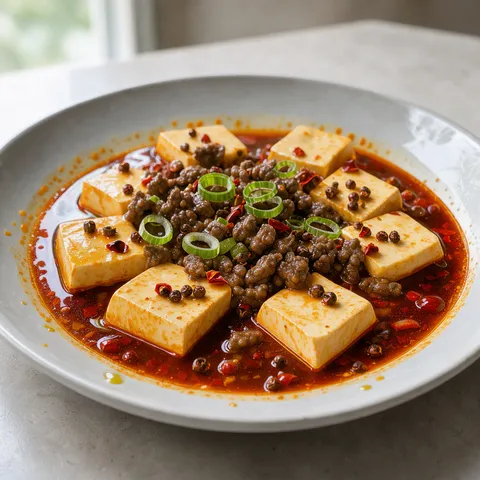 Mapo Tofu35 min · Main course
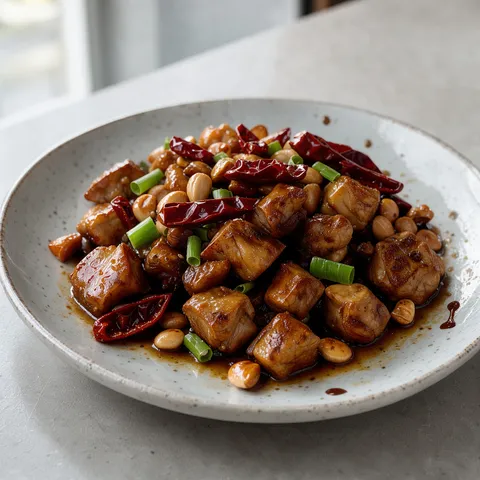 Kung Pao Chicken30 min · Main course
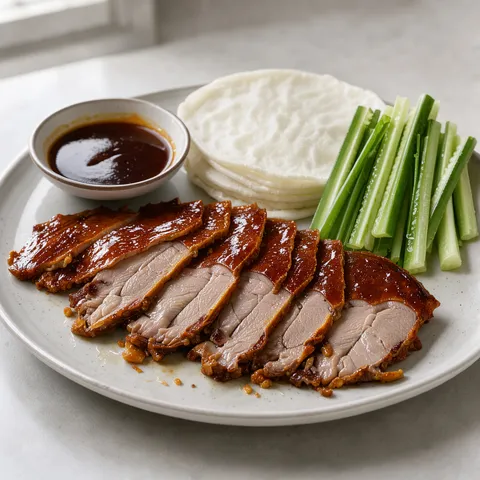 Peking Duck2 hr · Main course
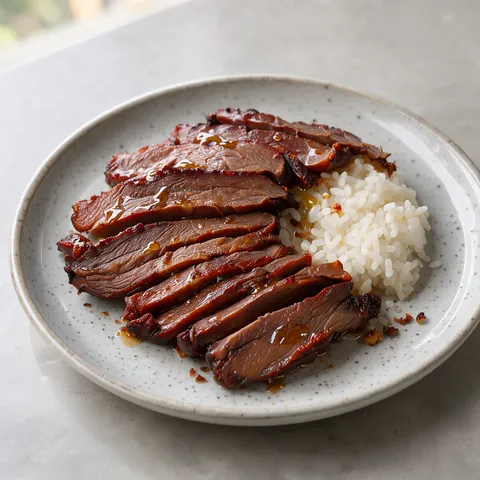 Char Siu1 hr · Main course
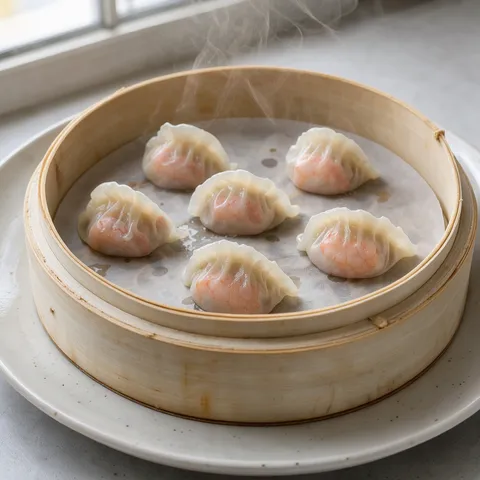 Crystal Prawn Dumplings1 hr 30 min · Starter
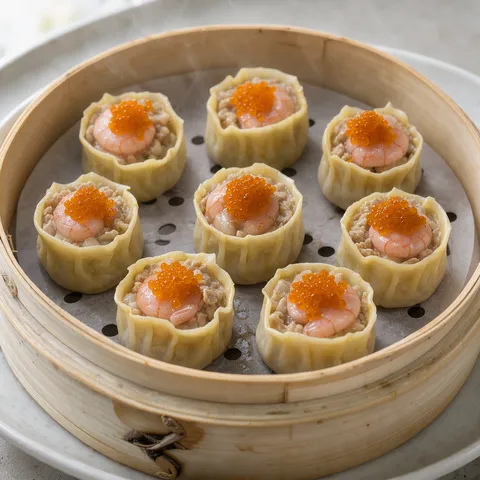 Open-Topped Dumplings50 min · Starter