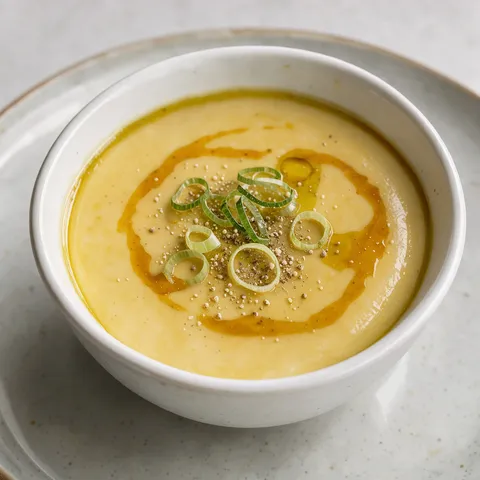
Zheng Shui Dan Silky Steamed Egg with Soy
A Chinese main course. Takes 25 min, Serves 4. Difficulty: medium.
At a glance
- Total time
- 25 min
- Serves
- Serves 4
- Difficulty
- Medium
- Cuisine
- Chinese cuisine
- Dish type
- Main course
- Allergens
- Gluten, Milk, Eggs, Sesame, Soya
Ingredients
Egg custard
- 4 eggs (about 220 g)
- 300 ml lukewarm water (about 50°C)
- 3/4 tsp salt
Soy oil
- 2 tbsp light soy sauce
- 1 tbsp vegetable oil
- 2 spring onions (thin rings)
- 1 tsp sesame oil
To serve
- steamed rice (on the side)
- a pinch of white pepper
Equipment
- Balloon whisk
- Mixing bowls
- Fine sieve / chinois
- Cling film
- Saucepan
- Steamer basket
- Frying pan
Method
- Beat the egg: Beat the eggs in a large bowl with a whisk for 2 min without making foam, stirring the fork from the bottom of the bowl. White and yolk should be thoroughly mixed but no foam should collect on the surface, because foam leaves a surface full of holes once cooked (~2 min)
- Add the water: Dissolve the salt in the lukewarm water and pour slowly onto the egg, stirring in the same direction for 2 min. When the ratio of egg to water is 1 to 1.5, the custard stays silky and not like a flan. The liquid must be lukewarm, as cold water lengthens the cooking time and spoils the texture (~2 min)
- Strain: Strain the mixture through a fine sieve into a jug and skim the bubbles off the surface with a spoon. Straining removes the stringy parts of the egg white and gives a smooth texture. If foam remains at this stage, the surface comes out bubbly once cooked (~2 min)
- Divide between bowls: Divide the strained mixture evenly between 4 small heatproof bowls and cover each bowl with cling film. Prick the film with a needle in 3 places, which stops dripping steam and keeps the surface smooth (~2 min)
- Set up the steamer: Put 3 cm water in a large saucepan, set in a steaming rack or an upturned plate and bring the water to the boil. Once boiling, reduce the heat to medium-low, as very strong steam makes holes in the surface. Arrange the bowls on the rack and leave the lid slightly ajar (~3 min)
- Steam: Steam the bowls for 10 min. The centre of the egg custard should wobble slightly when touched with a spoon but no liquid should come out, and the edges should be firm. If it cooks too firm, the surface is full of holes like a sponge, and even 60 sec more spoils the consistency (~10 min)
- Make the soy oil: Put the spring onion rings in a small bowl. Heat the oil in a small frying pan, pour it over the spring onions and add the soy sauce when the sizzling stops. Hot oil releases the aroma of the spring onion and combines with the soy to make a glossy sauce (~2 min)
- Plate: Carefully lift off the cling film, opening it from the edge of the bowl to release the steam. Drizzle half a tablespoon of the soy oil over each bowl and add the white pepper and a drop of sesame oil. Serve hot with plain rice on the side (~2 min)
Chef's note
Zheng shui dan is a quick, light dish of Cantonese homes. The consistency is softest when the ratio of egg to liquid is 1 to 1.5, and more water thins the custard. Homemade chicken stock is also used in place of water, but here water was chosen to keep it vegetarian.
Frequently asked questions
- Why does steamed egg come out with holes?
- If the heat is too high or foam is left on the surface, the egg turns out pitted. Covering with cling film and leaving the lid slightly ajar gives a smooth surface.
- Can I use milk instead of water?
- Yes, but the texture is heavier and more like a flan. The Cantonese style uses water or a light chicken stock.
- Can I make Zheng Shui Dan ahead?
- It is at its best in the first 10 minutes after cooking. It firms up as it cools and the surface sweats, so you can reheat it by steaming for 2 minutes if needed.
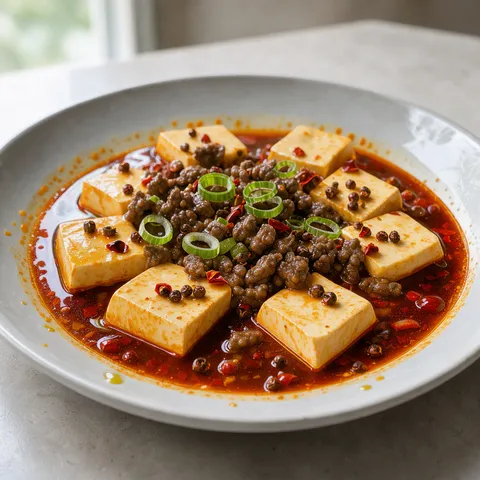 Mapo Tofu35 min · Main course
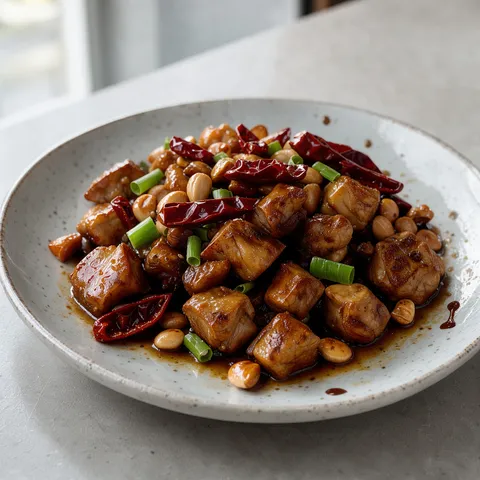 Kung Pao Chicken30 min · Main course
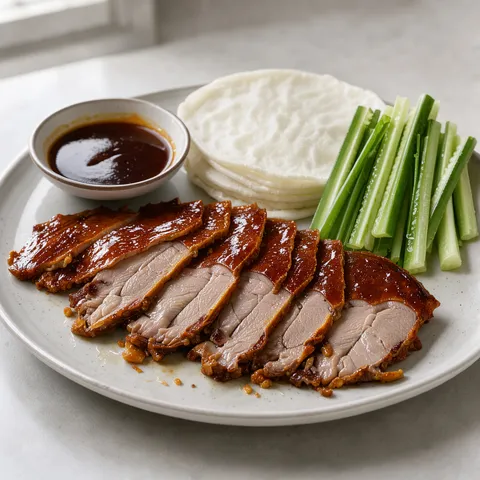 Peking Duck2 hr · Main course
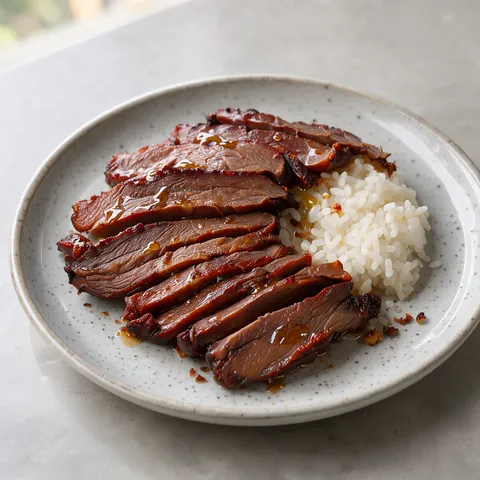 Char Siu1 hr · Main course
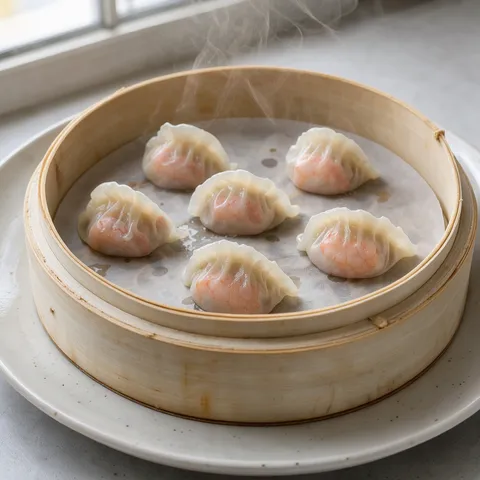 Crystal Prawn Dumplings1 hr 30 min · Starter
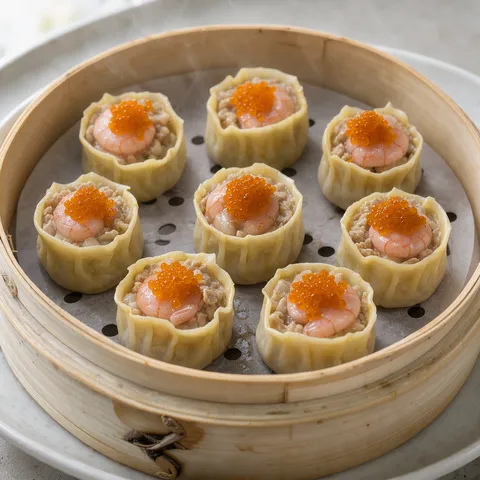 Open-Topped Dumplings50 min · Starter