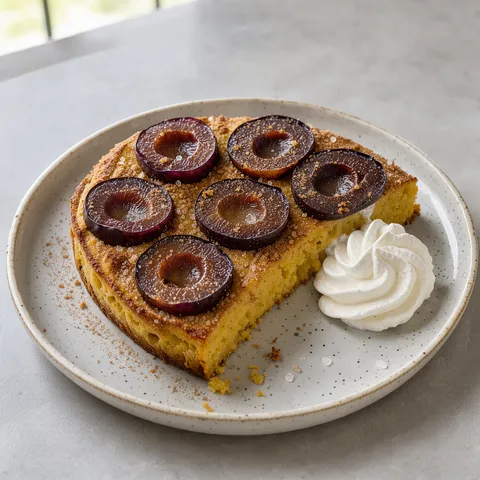
Zwetschgenkuchen German Almond Cinnamon Plum Cake
A German patisserie. Takes 1 hr 45 min, 26 cm tin, 8 slices. Difficulty: medium.
At a glance
- Total time
- 1 hr 45 min
- Serves
- 26 cm tin, 8 slices
- Difficulty
- Medium
- Cuisine
- German cuisine
- Dish type
- Patisserie
- Diet
- Vegetarian
- Allergens
- Gluten, Milk, Eggs
Ingredients
Cake
- 150 g soft butter
- 150 g caster sugar
- 3 eggs (at room temperature)
- 200 g plain flour
- 2 tsp baking powder
- 80 ml milk
- finely grated zest of 1 lemon
- 1 tsp vanilla extract
- a pinch of salt
Plums
- 700 g German plums (Zwetschgen) or dark plums
- 3 tbsp ground almonds
- 2 tbsp caster sugar
- 1 tsp cinnamon
For the tin
- 20 g butter
- 1 tbsp dried breadcrumbs
To serve
- 150 ml double cream (whipped)
Equipment
- Mixing bowls
- Cake tin
- Oven
- Hand mixer
- Silicone spatula
- Baking paper
Method
- Prepare the tin and plums: Preheat the oven to 180°C. Grease a 26 cm springform tin, dust with breadcrumbs and line the base with baking paper. Wash the plums, halve them, remove the stones and cut two small notches in the edge of each half. The notches help the plum settle into the batter as it bakes and release its juice slowly (~12 min)
- Cream the butter: Beat the soft butter, sugar, salt, vanilla and lemon zest with a mixer for 4 min, until pale and fluffy. The butter filled with air keeps the cake soft. Add the eggs one at a time and beat each for 30 sec, and if the mixture curdles add 1 tbsp flour (~7 min)
- Fold in the flour: Sift the flour and baking powder and add in two batches, alternating with the milk, folding with a spatula only until combined. The batter should fall slowly from the spoon, and overmixing makes the cake tough and dense (~3 min)
- Fill the tin: Transfer the batter to the tin and level the top with a spatula. Sprinkle a thin layer of ground almonds over the surface. The ground almonds absorb the plum juice and keep the batter moist under the plums (~3 min)
- Arrange the plums: Arrange the plum halves cut-side up in tight rings from the outside to the centre and press lightly into the batter. Mix the sugar and cinnamon and sprinkle over the plums. Leave no gaps between them, as they shrink while baking (~5 min)
- Bake: Place the tin on the lower-middle shelf and bake at 180°C for 50 min, until a skewer inserted in the middle comes out clean and the edges come away from the tin. Do not open the oven door for the first 35 min, or the cake will collapse. The plum juice should bubble at the edges and thicken (~50 min)
- Rest: Cool the cake in the tin for 20 min, then release the ring. During this time the plum juice settles and does not run when you slice (~20 min)
- Slice and plate: Whip the cream to soft peaks. Cut the cake into 8 slices with a sharp knife, put each slice on a plate and add a spoonful of cream alongside (~5 min)
Chef's note
Zwetschgenkuchen is a classic plum dessert baked in Germany in September and October. Unlike the yeasted tray version, Zwetschgendatschi, this version is baked in a round tin with a buttery Rührteig cake batter and has no rising time. The ground almonds absorb the plum juice and keep the cake moist but not raw. If you cannot find German plums, use firm, tart dark plums. The cake is delicious the next day too, but the cream should be whipped just before serving.
Frequently asked questions
- Why are the plum halves scored?
- Scoring helps the plums settle into the batter as it bakes and lets them release their juice slowly.
- Why does the butter cake turn out dense and tough?
- Overworking the batter once the flour goes in makes the cake tough. Add the flour and milk alternately and fold only until combined.
- Why are ground almonds sprinkled over the batter?
- Ground almonds soak up the plum juice and keep the batter underneath the plums moist.
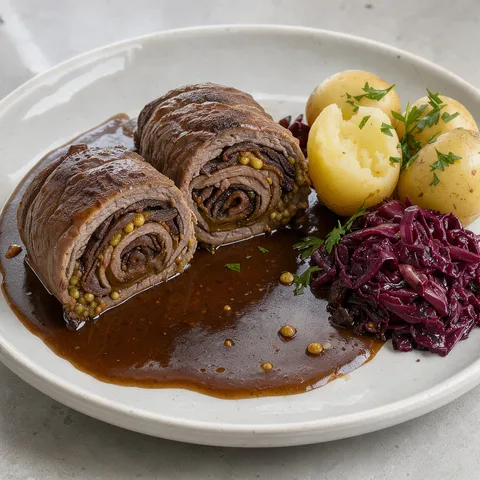 German Beef Roulades2 hr 30 min · Main course
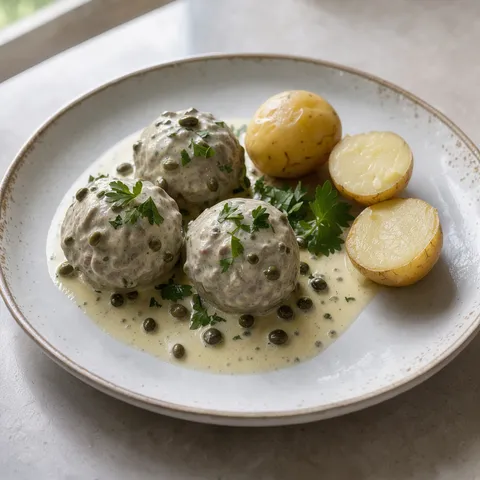 Meatballs in Caper Sauce1 hr 05 min · Main course
 Swabian Cheese Noodles55 min · Main course
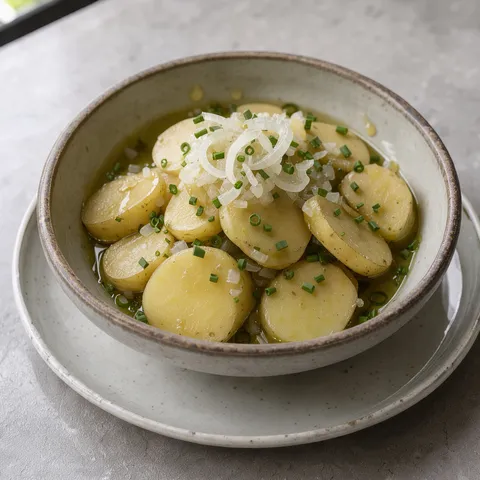 Swabian Potato Salad1 hr · Side dish
 Bavarian Pretzels1 hr 55 min · Bread & pastry
 Käsespätzle 2.01 hr 20 min · Main course