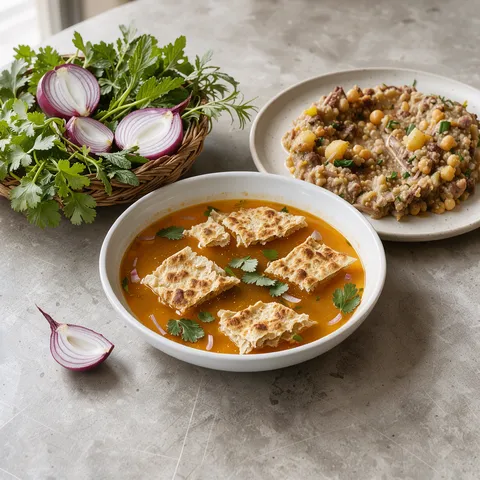
Dizi, Persian Lamb, Chickpea and Potato Stew Abgoosht
An Iranian main course. Takes 3 hr 25 min (pressure cooker: ~2 hr) · +8 hr pulse soaking, Serves 4. Difficulty: challenging.
At a glance
- Total time
- 3 hr 25 min (pressure cooker: ~2 hr) · +8 hr pulse soaking
- Serves
- Serves 4
- Difficulty
- Challenging
- Cuisine
- Iranian cuisine
- Dish type
- Main course
- Allergens
- Gluten, Milk
Ingredients
Meat and pulses
- 1 kg lamb on the bone (shank and neck, mixed)
- 100 g dried chickpeas
- 100 g dried white beans (both soaked overnight)
- 1 large onion (about 200 g, quartered)
- 2 litres cold water (for the pressure cooker version you need a pressure cooker of at least 7 litres)
- 50 g lamb tail fat (optional)
Cooking
- 4 medium potatoes (about 600 g)
- 2 medium tomatoes
- 1 tbsp tomato paste
- 2 dried limes
- 1 tsp turmeric
- 1/2 tsp cinnamon
- 1.5 tsp salt
- 1/2 tsp black pepper
Mash
- 1/2 tsp cinnamon
To serve
- 4 Lavash (Basics)
- 1 red onion
- 1 bunch mixed fresh herbs (mint, tarragon, purple basil, chives)
Equipment
- Saucepan
- Ladle
- Colander
- Potato masher
- Mixing bowls
- Chef's knife
- Chopping board
- Vegetable peeler
- Pressure cooker (optional)
Method
- Prepare the pulses: Drain the chickpeas and beans soaked overnight and rinse with cold water. The soaking water carries the sugars that make pulses hard to digest, so it is discarded. This step takes 5 min
- Boil the meat: Put the meat, chickpeas, beans, onion, tail fat if using, and cold water in a saucepan of at least 5 litres, which should be no more than two-thirds full. Bring to the boil over medium heat and skim off the foam that rises to the surface with a ladle for 15 min. Abgoosht that is not skimmed turns cloudy
- Slow-cook: Turn the heat down to the lowest setting and simmer gently with the lid ajar for 2 hr. Move on to the next step when the meat begins to come away from the bone and the chickpeas crush between your fingers. In a pressure cooker, use one of at least 7 litres and fill it no more than half full, as pulses foam (the meat, pulses and water come to about 3 litres). Cook at high pressure for 40 min and let the pressure release naturally for 10 min
- Add the vegetables: Peel and halve the potatoes and quarter the tomatoes. Pierce the dried limes with the tip of a knife. Add the potatoes, tomatoes, tomato paste, dried limes, turmeric, 1/2 tsp cinnamon, salt and pepper to the pan. If cooking on the hob, cook over low heat for 40 min, until a knife slides easily into the potatoes. If using a pressure cooker, add the vegetables only once the pressure has fully released (do not bring it back to pressure, as it will be more than half full) and cook without pressure, lid ajar, over low heat for 20 min
- Separate the liquid: Lift all the solids into a large bowl with a slotted spoon, keeping the liquid hot in the pan. Take out the bones and pick the meat off them, then squeeze the dried limes and discard them. Check the liquid for salt. It should be clear, orange and slightly sour. This step takes 10 min
- Make the mash: Mash the meat, potatoes, chickpeas, beans and tail fat with the remaining 1/2 tsp cinnamon using a potato masher. Moisten with a few spoonfuls of hot water. The mash should be fibrous and spreadable rather than smooth, and in Iran it is called goosht koobideh. Adjust the salt. This step takes 10 min
- Prepare the tilit: Tear the lavash into bite-sized pieces and divide them between four bowls. Pour the hot liquid over the bread and let it soak for 2 min. Quarter the red onion, and wash the herbs and pick off the leaves
- Set the table: Put a bowl of bread and liquid in front of each person, to be eaten first. Place the plate of goosht koobideh, the basket of fresh herbs and the red onion in the centre. The mash is spread on the remaining lavash and eaten with a piece of raw onion and a pinch of herbs. This step takes 5 min
Chef's note
Abgoosht is one of the oldest everyday dishes of Iran, and the name dizi comes from the stone or earthenware pots in which it is traditionally cooked and served. The liquid is eaten first with bread, then the mash separately, and this two-stage meal is the identity of the dish. Tail fat is part of the traditional taste. If you prefer, leave it out and add 1 tbsp butter to the mash. A stone pot is not essential, as any heavy-based saucepan does the job.
Frequently asked questions
- Why discard the soaking water for abgoosht?
- The soaking water carries sugars that make the pulses harder to digest, so drain the chickpeas and beans after their overnight soak and rinse them in cold water.
- Can I cook abgoosht in a pressure cooker?
- Yes. You need a pressure cooker of at least 7 litres, and since pulses foam, fill it no more than halfway. Cook at high pressure for 40 minutes and let the pressure drop naturally for 10 minutes. Add the vegetables once the pressure has dropped.
- How are the abgoosht mash and broth served?
- Drink the broth first with bread. The mash is made by crushing the meat, potatoes, chickpeas and beans with cinnamon, and it should be fibrous and spreadable. Spread it on lavash and eat with raw onion and fresh herbs.
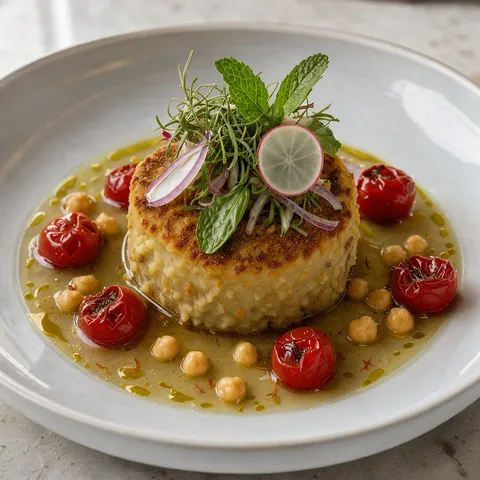 Abgoosht 2.01 hr 25 min · Main course
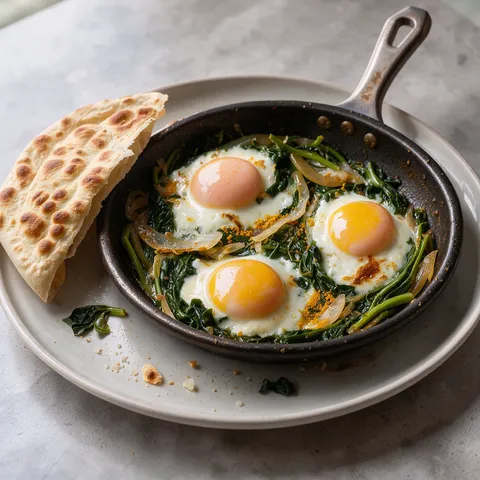 Iranian Spinach and Egg Skillet27 min · Main course
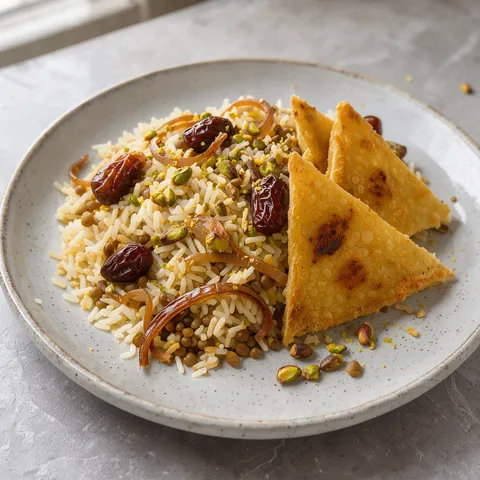 Iranian Lentil and Date Rice1 hr 43 min · Main course
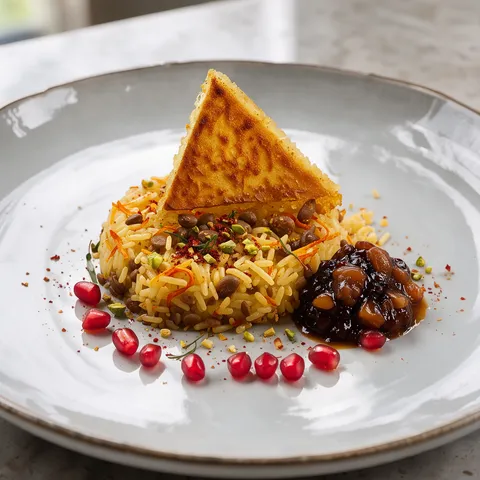 Adas Polo 2.01 hr 17 min · Main course
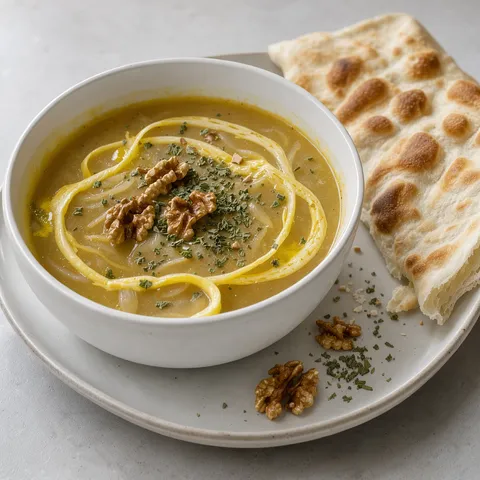 Iranian Onion and Fenugreek Soup27 min · Soup
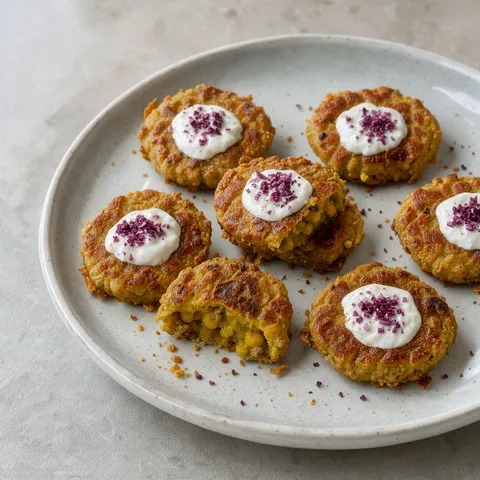 Gilan Chickpea and Beef Patties1 hr 32 min · Meze
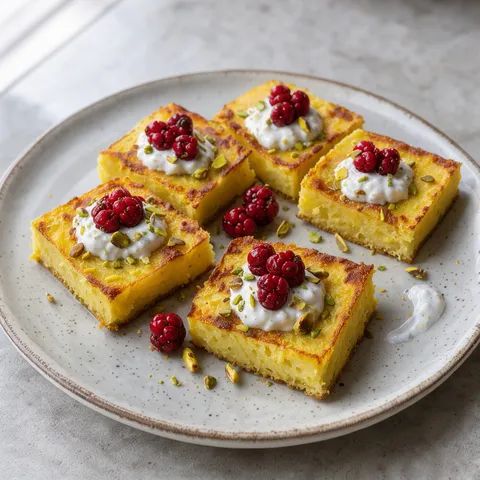 Iranian Potato Squares 5×5 cm1 hr 21 min · Meze