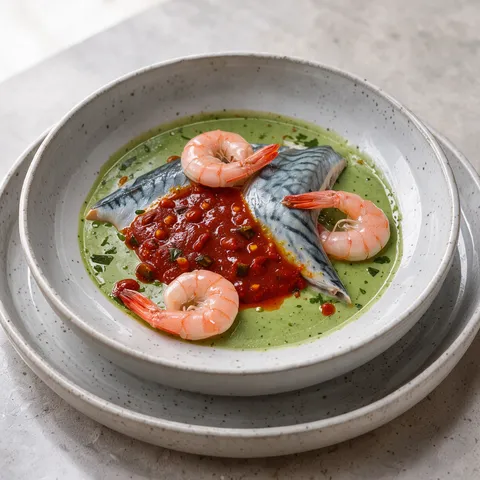
Beninese Molokhia and Fish Sauce Ademè Dessi
A Beninese soup. Takes 55 min, Serves 4. Difficulty: medium.
At a glance
- Total time
- 55 min
- Serves
- Serves 4
- Difficulty
- Medium
- Cuisine
- Beninese cuisine
- Dish type
- Soup
- Diet
- Gluten-free
- Allergens
- Fish, Crustaceans
Ingredients
Fish
- 2 mackerel (about 500 g in total, cleaned, each cut into 4 pieces)
- 1/2 tsp salt
- juice of 1/2 lemon
Leaves
- 400 g frozen chopped molokhia leaves (defrosted, or 500 g fresh molokhia leaves)
- 600 ml water
- 1/4 tsp bicarbonate of soda (in place of kanwa)
- 1/4 tsp salt
Aromatic paste
- 2 garlic cloves
- 2 cm fresh ginger
- 1 red chilli
Red sauce
- 4 tbsp sunflower oil
- 1 tsp sweet paprika (in place of palm oil)
- 1 onion (finely chopped)
- 3 ripe tomatoes (grated)
- 400 ml water
- 1/2 tsp salt
- 1/4 tsp black pepper
- 200 g raw peeled prawns
Equipment
- Mixing bowls
- Chef's knife
- Chopping board
- Pestle and mortar
- Saucepan
- Box grater
- Probe thermometer
- Balloon whisk
- Ladle
Method
- Salt the fish: Rub the mackerel pieces with the salt and lemon juice in a bowl and leave in the fridge for 15 min. Acid and salt firm up the flesh of oily fish so that it does not fall apart in the sauce
- Prepare the leaves: If you are using fresh molokhia, strip the leaves from the stalks, wash them and chop very finely on a chopping board with a chef's knife. Defrost frozen leaves in a bowl. In Benin ademè leaves are prepared with the same fine chop. The finer the leaves are chopped, the more fluid and slippery the sauce
- Pound the paste: In a mortar, pound the garlic, ginger, chilli and a pinch of the salt set aside for the sauce to a rough paste
- Build the base of the red sauce: Grate the tomatoes on the coarse side of the grater and discard the skins. In a medium pan, heat the oil over medium heat and soften the onion for 6 min, add the paste and stir for 1 min. Lower the heat, add the paprika and stir for 30 sec. Add the grated tomatoes and cook for 10 min, until the liquid has been absorbed and the oil separates
- Thin the sauce: Add the 400 ml water, the salt and black pepper and bring to the boil, then simmer over low heat for 5 min
- Cook the fish: Lay the fish pieces in the sauce and cook, covered, at a heat where the surface only trembles slightly, for 8 min. Add the prawns and cook for 2 min, until pink and curled. The thickest piece of fish should reach 63°C on a thermometer. Take off the heat and keep warm, covered
- Cook the leaves: On the second hob ring, bring 600 ml water to the boil in a small pan, add the bicarbonate of soda and salt, stir in the molokhia and cook over medium heat for 6-8 min. Then whisk vigorously for 1 min. The bicarbonate keeps the colour of the leaves bright and releases the mucilage, and whisking breaks up the fibres to make a fluid, slippery sauce. It is said that a whisk made of thin twigs is traditionally used for this
- Adjust the consistency: The leaf sauce should run off the spoon in a long ribbon. If it is too thick, add 2-3 tbsp hot water, and taste and adjust the salt. Do not overcook the leaf sauce, or its colour turns olive green
- Serve: Ladle the green ademè into each bowl first, put a ladleful of the red sauce on top, with two pieces of fish and the prawns. The green and red sauces should stay in separate layers in the bowl and mix on the spoon. Serve with akassa, maize porridge or rice
Chef's note
Ademè dessi is a dish from southern Togo and Benin in which a slippery green sauce made from molokhia leaves is served with a red fish sauce. It differs from the Molokhia (Egyptian Jute Leaf Soup with Chicken) recipe on this site in that the leaves are turned into a slippery sauce with bicarbonate and served in layers with a separately cooked hot tomato and fish sauce, which in the original recipe uses palm oil, rather than with chicken stock. The original recipe uses kanwa (a natural mineral salt) and palm oil; here it is made with bicarbonate of soda and sunflower oil with sweet paprika.
Frequently asked questions
- What does the bicarbonate of soda do in ademè dessi?
- It keeps the colour of the leaves bright and releases the slime. Whisking afterwards breaks up the fibres and makes the sauce flow.
- What happens if the ademè leaf sauce is overcooked?
- If the leaf sauce is overcooked its colour turns olive green.
- What consistency should the ademè leaf sauce have?
- It should run off the spoon in a long thread. If it is too thick, add 2-3 tbsp hot water.
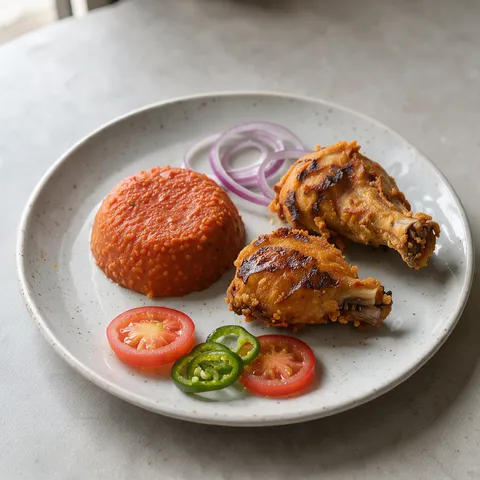 Red Porridge with Fried Chicken1 hr 20 min · Main course
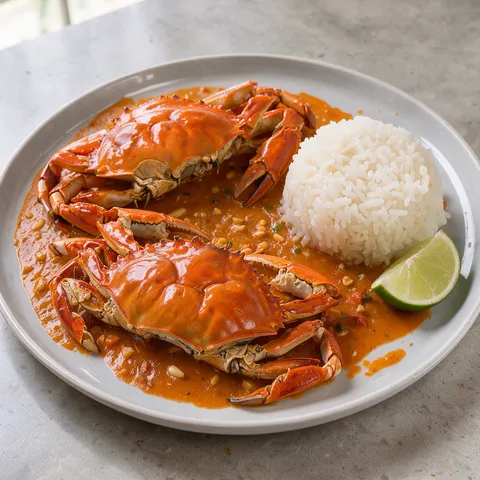 Beninese Crab Sauce with Rice1 hr 15 min · Main course
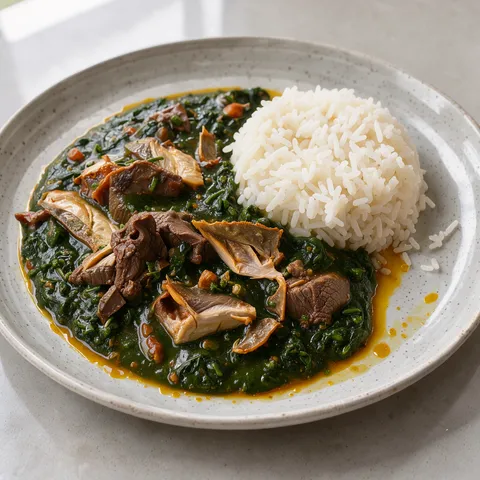 Beninese Spinach Stew with Rice1 hr 10 min · Main course
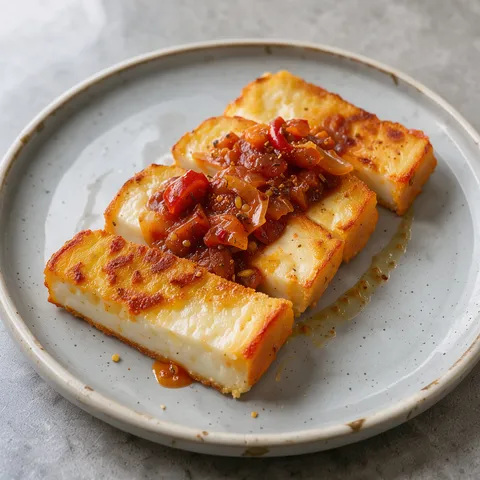 Fried Cheese, Hot Tomato Sauce1 hr 35 min · Meze
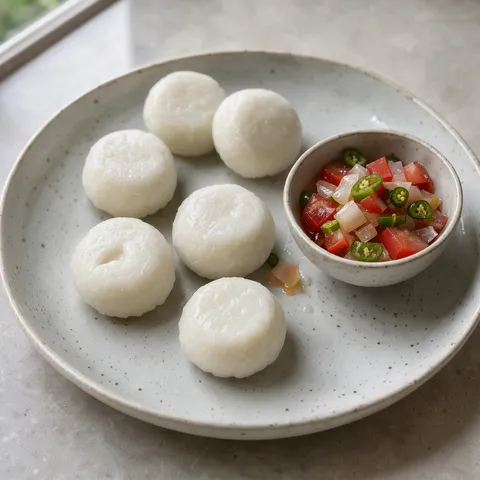 Steamed Rice Breads, Moyo Sauce1 hr 20 min · Bread & pastry
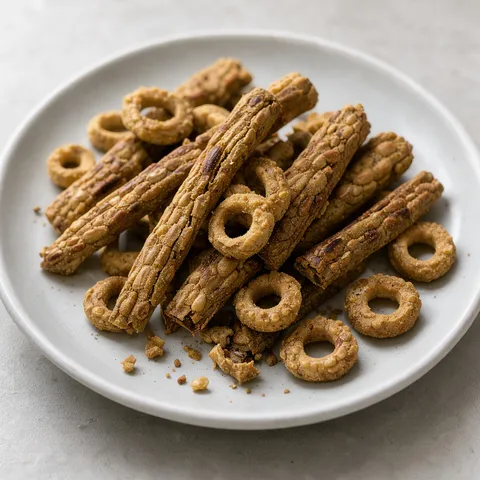 Beninese Fried Peanut Sticks1 hr 40 min · Meze