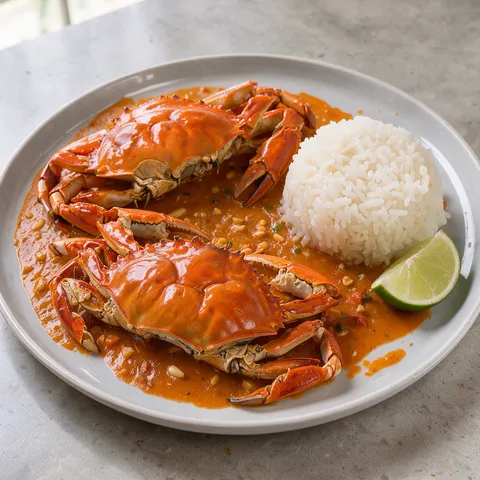
Beninese Crab Sauce with Rice Ago Glain
A Beninese main course. Takes 1 hr 15 min, Serves 4. Difficulty: medium.
At a glance
- Total time
- 1 hr 15 min
- Serves
- Serves 4
- Difficulty
- Medium
- Cuisine
- Beninese cuisine
- Dish type
- Main course
- Diet
- Vegetarian, Vegan, Gluten-free
- Allergens
- Crustaceans, Peanuts
Ingredients
Crab
- 8 medium blue crabs (about 1.6 kg in total, live or very fresh)
Peanut paste
- 60 g roasted unsalted peanuts (skinned)
- 4 tbsp water
Aromatic paste
- 4 garlic cloves
- 3 cm fresh ginger (peeled)
- 2 red chillies
Sauce
- 4 tbsp sunflower oil
- 1 tsp sweet paprika (in place of palm oil)
- 2 onions (finely chopped)
- 4 ripe tomatoes (grated)
- 1 tbsp tomato paste
- 300 ml water
- 1 bay leaf
- 1 tsp salt
- 1/2 tsp black pepper
- juice of 1 lemon
Rice
- 300 g long-grain rice (washed)
- 600 ml water
- 1 tbsp sunflower oil
- 1/2 tsp salt
Equipment
- Chef's knife
- Chopping board
- Food processor
- Pestle and mortar
- Wooden spoon / spatula
- Box grater
- Saucepan
- Mixing bowls
- Ladle
Method
- Stun and clean the crabs: Put the live crabs in the freezer for 15 min. The cold leaves them motionless. Then scrub the shells under cold running water with a brush to remove the mud. Turn each crab over, pull off the triangular flap under the belly, lift off the back shell with your thumb, and remove and discard the grey, feathery gills from the body. Keep the back shells. They add flavour to the sauce
- Cut up: On a chopping board, cut each body in half with a chef's knife. Crack the large claws once with the back of the knife, without crushing them. Cracked shells let the sauce in and make the meat easy to get out at the table
- Make the peanut paste: Blend the peanuts and 4 tbsp water in a food processor for 2 min, scraping down the sides occasionally, until a smooth paste. This binds the sauce just as well as ready-made peanut butter, without its sugar and additives
- Pound the paste: In a mortar, pound the garlic, ginger, chillies and a pinch of the salt set aside for the sauce for 2 min, to a rough paste. In Benin cooking, sauces are built on these freshly crushed aromatics
- Cook the onion: Grate the tomatoes on the coarse side of the grater and discard the skins. In a large 6 litre pan, heat the oil over medium heat, add the onion and cook for 7 min, stirring with a wooden spoon, until soft and golden. Add the paste and stir for 2 min, until its sharp smell softens. Lower the heat, add the paprika and stir for 30 sec. If the paprika burns it turns bitter
- Cook the tomato: Add the grated tomatoes and tomato paste and cook over medium heat for 10 min, until the sauce thickens and the oil separates at the edges. If this stage is skipped, the sauce tastes of raw tomato and stays watery
- Start the rice: Meanwhile, on the second hob ring, heat the oil in a medium saucepan, fry the rice for 2 min, then add the 600 ml hot water and the salt. Once it comes to the boil, cover and cook over the lowest heat for 15 min, then turn off the heat and leave to steam for 10 min
- Cook the crabs: Add the crab pieces and back shells to the sauce and turn for 2 min, until coated. Add the 300 ml water, the bay leaf and 1 tsp salt, cover and cook over medium-low heat for 12 min, turning once. The shells should turn bright orange-red and the meat in the claws should be opaque white
- Bind with the peanut: Loosen the peanut paste with a ladleful of sauce in a bowl, fold it into the pan, stir gently and cook uncovered for 5 min. The sauce should thicken and coat the crab pieces like velvet
- Finish with lemon: Add the lemon juice and black pepper, taste and adjust the salt, and remove the bay leaf and back shells. The lemon cuts through the richness of the peanut. The characteristic sour-hot balance of ago glain comes from here
- Serve: Put rice on each plate with two crabs beside it and spoon over plenty of sauce. Put a knife on the table for cracking the claws with the back of the blade, and bowls of lemon water for washing hands
Chef's note
Ago glain is described as a crab dish of Fon cooking (Dahomey) in Benin. The original recipe uses lagoon crabs and palm oil; here it is made with blue crabs, which are plentiful on the Turkish coast, and with sunflower oil with sweet paprika. In some families part of the crab meat is picked out and stuffed back into the shells. In Benin it is also eaten with akassa (firm maize porridge) or cornmeal porridge instead of rice.
Frequently asked questions
- How do I prepare live crabs for ago glain?
- Keep the live crabs in the freezer for 15 minutes, as the cold leaves them still. Then scrub them with a brush and clean them.
- Why make the peanut paste at home for ago glain?
- Homemade paste binds just as well without the sugar and additives of shop-bought paste.
- What does the lemon do in ago glain?
- Lemon cuts the richness of the peanut. The characteristic sour and hot balance of ago glain comes from here.
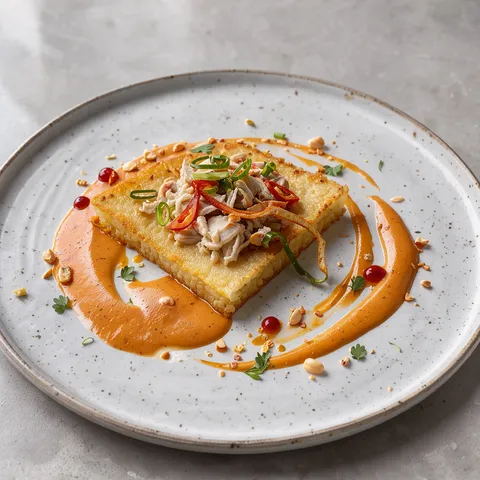 Ago Glain 2.01 hr 30 min · Main course
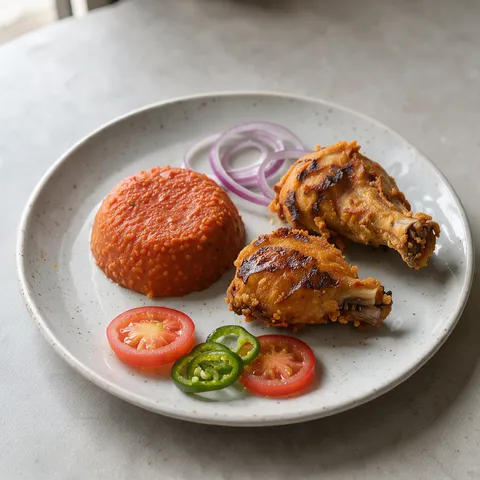 Red Porridge with Fried Chicken1 hr 20 min · Main course
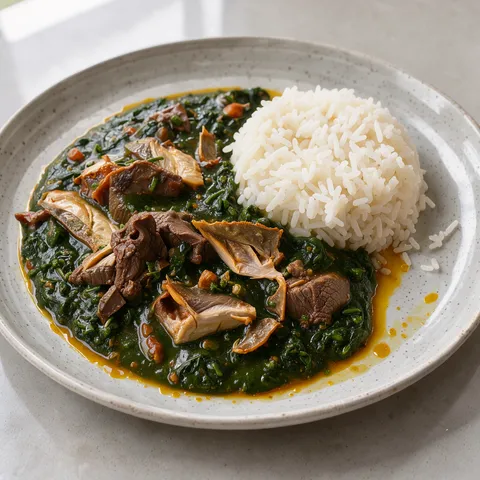 Beninese Spinach Stew with Rice1 hr 10 min · Main course
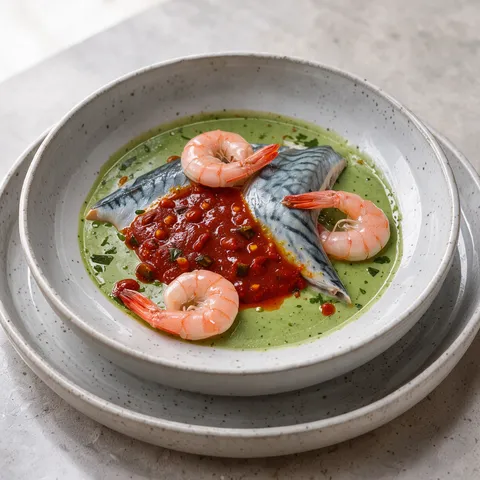 Beninese Molokhia and Fish Sauce55 min · Soup
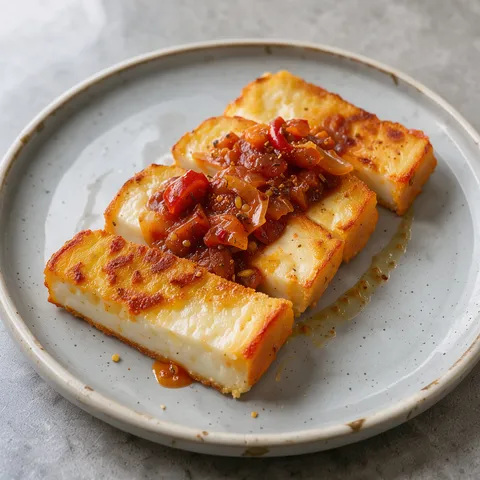 Fried Cheese, Hot Tomato Sauce1 hr 35 min · Meze
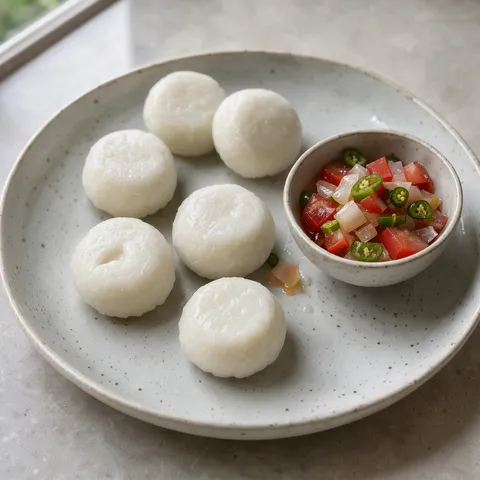 Steamed Rice Breads, Moyo Sauce1 hr 20 min · Bread & pastry
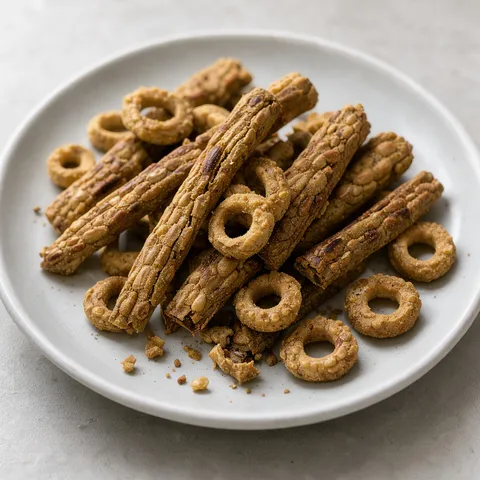 Beninese Fried Peanut Sticks1 hr 40 min · Meze