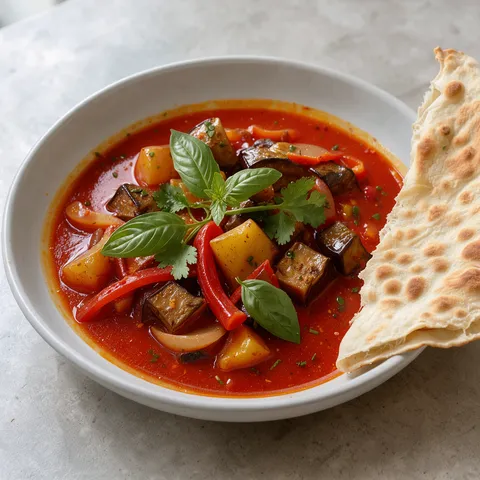
Georgian Aubergine and Pepper Stew Ajapsandali
A Georgian main course. Takes 1 hr 7 min · +15 min resting, Serves 4. Difficulty: medium.
At a glance
- Total time
- 1 hr 7 min · +15 min resting
- Serves
- Serves 4
- Difficulty
- Medium
- Cuisine
- Georgian cuisine
- Dish type
- Main course
- Diet
- Gluten-free
- Allergens
- Contains none of the 14 listed allergens
Ingredients
Vegetables
- 2 aubergines (about 600 g)
- 2 medium potatoes (300 g)
- 2 onions
- 2 red peppers
- 1 hot green chilli
- 4 ripe tomatoes (600 g)
- 4 garlic cloves
Oil and spices
- 80 ml sunflower oil
- 2 tsp salt (1 tsp for the aubergine)
- 1/2 tsp black pepper
Herbs
- 1/2 bunch coriander
- 1/2 bunch basil (purple basil is even better)
Equipment
- Cast-iron frying pan
- Heavy-based saucepan
- Box grater
- Colander
- Saucepan
- Pressure cooker (optional)
Method
- Chop the vegetables (10 min): Cut the aubergines into 3 cm cubes. Peel the potatoes and cut into 1.5 cm cubes, slice the onions into half-rings, cut the peppers into 2 cm pieces and the chilli into thin rings. Grate the tomatoes and discard the skins. Finely chop the garlic.
- Salt the aubergine (resting, 15 min, not counted in the time): Toss the aubergine cubes with 1 tsp salt in a colander and leave for 15 min. The salt draws out the bitter liquid. Then pat thoroughly dry with kitchen paper, because wet aubergine does not brown in oil but steams and turns spongy.
- Fry the aubergine (12 min): Heat 4 tbsp oil in a wide cast-iron pan over medium-high heat. Fry the aubergine in two batches, without overcrowding, for 5-6 min until golden, and drain the oil off in a colander. Aubergine absorbs oil quickly, and if you make do without adding extra oil the dish will not be heavy.
- Fry the onion and potato (10 min): Heat the remaining oil in a heavy-based pan and stir the onion for 4 min, until half translucent. Add the potato and fry for 6 min more, until the edges take on a little colour. The onion should not brown, so the dish stays sweet and soft.
- Add the peppers (4 min): Add the red peppers and chilli to the pan and stir for 4 min. They are done when the peppers turn slightly glossy and the colour deepens. Add the rest of the salt and the black pepper at this stage.
- Add the tomatoes and garlic (6 min): Fold in the grated tomatoes and garlic and cook for 6 min over medium heat. The juice of the tomato should boil down and thicken, and a trace should be left when a spoon is drawn across the bottom of the pan.
- Combine and cook (20 min): Return the aubergine to the pan and mix gently. Cook covered over low heat for 20 min, turning gently twice during this time. A knife tip should go into the potato without resistance. So that the aubergine does not turn to mush, do not stir often but shake the pan to mix.
- Add the herbs and rest (5 min): Add the chopped coriander and basil, turn off the heat and rest covered for 5 min. Ajapsandali is best lukewarm or at room temperature, and the flavour settles further the next day.
Chef's note
Ajapsandali is the vegetable stew of Georgian summer, meat-free and able to be a main dish at vegetarian tables. Frying the aubergine separately stops the vegetables turning to mush in their own juice. In a pressure cooker all the steps stay the same, and 8 min is enough for the cooking instead of 20 min, but the aubergine breaks up more.
Frequently asked questions
- Why salt and dry the aubergine?
- Salt draws out the bitter juices. Dry the aubergine thoroughly with kitchen paper, because wet aubergine steams rather than fries in oil and turns spongy.
- How do you stop the aubergine turning to mush?
- Don't stir it often. Shake the pan to mix instead. Once combined, cook covered over a low heat for 20 minutes, turning gently twice.
- Can you eat Ajapsandali the next day?
- The recipe says it tastes best warm or at room temperature, and that the flavour settles even more by the next day.
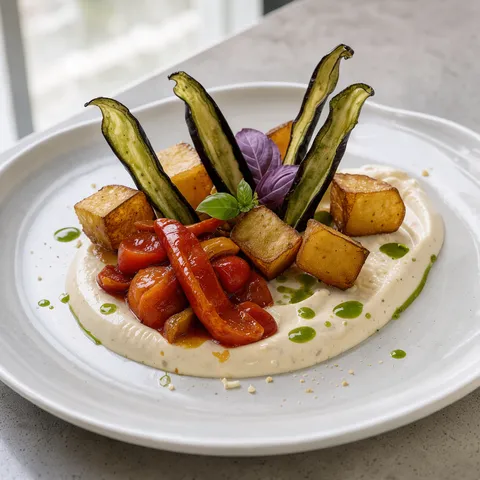 Ajapsandali 2.01 hr 23 min · Main course
 Mini Imeruli Khachapuri1 hr · Meze
 Georgian Cinnamon Raisin Bread1 hr 7 min · Breakfast
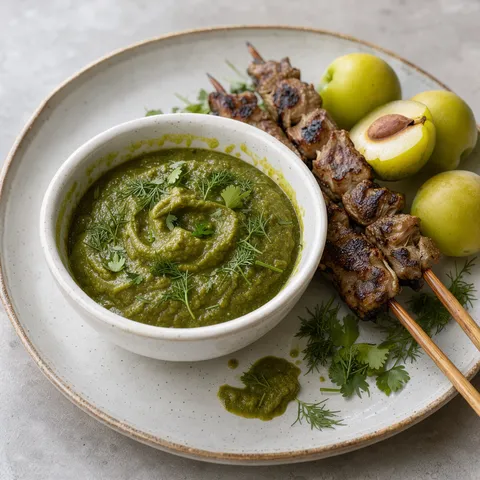 Georgian Sour Plum Sauce52 min · Sauce
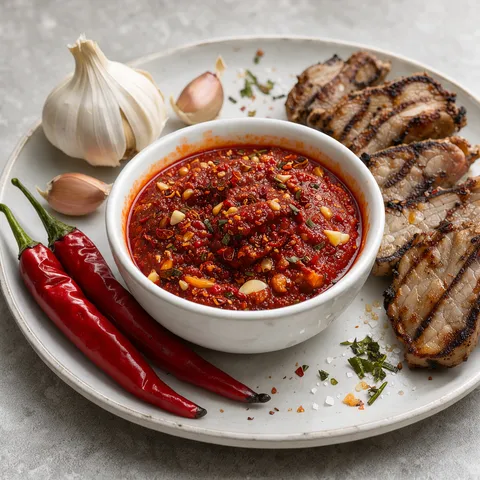 Abkhazian Chilli Garlic Paste26 min · Sauce
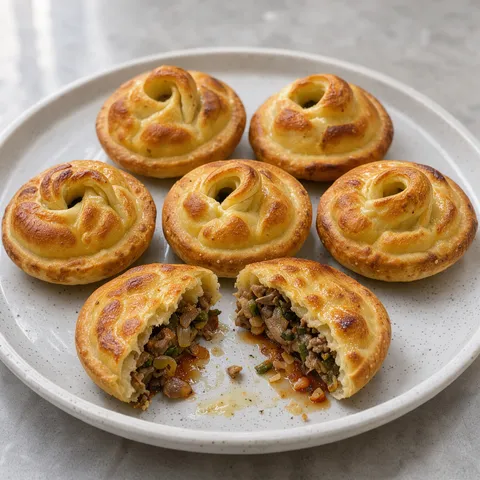 Svan Lamb and Beef Pastries 5.5 cm1 hr 37 min · Meze
 Khachapuri Adjaruli2 hr 15 min · Bread & pastry