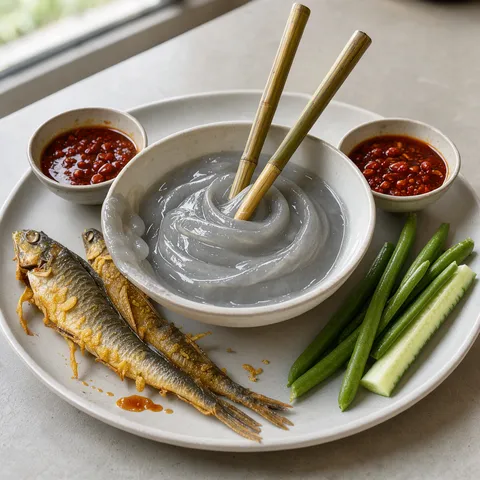
Bruneian Sago Starch Porridge Ambuyat
A Bruneian main course. Takes 1 hr, Serves 4. Difficulty: medium.
At a glance
- Total time
- 1 hr
- Serves
- Serves 4
- Difficulty
- Medium
- Cuisine
- Bruneian cuisine
- Dish type
- Main course
- Diet
- Gluten-free
- Allergens
- Fish, Crustaceans
Ingredients
Cacah (sour-spicy sauce)
- 40 g tamarind
- 150 ml hot water
- 1 tsp shrimp paste (belacan)
- 4 red chillies
- 3 shallots
- 1 garlic clove
- 1 tsp caster sugar
- 1/2 tsp salt
- juice of 1 lime
Turmeric fish
- 600 g small whole fish (6-8 horse mackerel or small mackerel, cleaned)
- 1 tsp ground turmeric
- 1 tsp salt
- 300 ml sunflower oil
Greens
- 150 g thin green beans
- 1 litre water
- 1/2 tsp salt (for boiling)
- 1 cucumber (cut into sticks)
Ambuyat
- 200 g sago starch (or tapioca starch if unavailable)
- 200 ml cold water
- about 1.2 litres boiling water
Equipment
- Mixing bowls
- Fine sieve / chinois
- Frying pan
- Pestle and mortar
- Silicone spatula
- Colander
- Saucepan
- Chef's knife
- Chopping board
- Wooden spoon / spatula
Method
- Make the tamarind liquid: Leave the tamarind in 150 ml hot water for 10 min, mash with your fingers and strain through a fine sieve, pressing, discarding the seeds and fibres. About 120 ml of dark, sour liquid remains
- Toast the belacan: Wrap the shrimp paste in a small piece of aluminium foil and toast in a dry pan over medium heat for 1 min on each side. The smell sharpens and the colour darkens, and untoasted belacan tastes raw and harsh
- Make the cacah: Pound the chillies, shallots, garlic and toasted belacan in a mortar for 3-4 min into a coarse paste. Add the tamarind liquid, sugar, salt and lime juice and mix. The sauce should be sour, hot, salty and slightly sweet, as it carries the neutral taste of ambuyat. Divide among small bowls
- Prepare the fish: Wash and dry the fish and make 2 diagonal cuts down to the bone on both sides. Rub inside and out with the turmeric and salt and leave for 10 min. The turmeric forms a golden crust in frying
- Fry the fish: Heat 300 ml oil (about 5 mm deep) in a 28 cm frying pan over medium-high heat to 175°C. Fry the fish in three batches of 2-3 fish. Fry for 3-4 min on each side, until the crust is deep golden and crisp, and do not move them for the first 3 min so the skin does not stick to the pan. Turn with a spatula, then lift out with a slotted spoon onto kitchen paper
- Prepare the greens: Bring the 1 litre water to the boil with the 1/2 tsp salt in a small saucepan, boil the beans for 3 min and drain. Cut the cucumber into 8 cm sticks. In a Bruneian meal, fresh or boiled greens are always served alongside ambuyat
- Dissolve the starch: In a large heatproof bowl, stir the sago starch with the 200 ml cold water until no lumps remain. It should be a white, milk-like liquid. Bring the 1.2 litres water to a rolling boil in a kettle or pan, and it must be properly boiling
- Cook the ambuyat: Pour the boiling water over the starch in a thin stream while stirring quickly in one direction with a wooden spoon. Within seconds the mixture turns from white to a translucent greyish colour and becomes sticky and stretchy. About 1 litre of water may be enough, so stop when the whole mixture is translucent. If any parts stay white, the water was not hot enough, so add a few more spoonfuls of boiling water and stir
- Serve: Put the ambuyat in a warmed serving bowl and bring to the table immediately. Wind a mouthful around candas (two-pronged bamboo forks) or chopsticks, dip it in the cacah and swallow without chewing. The fish and greens are served alongside
Chef's note
Ambuyat is called Brunei's national dish. It is made from starch extracted from the trunk of the sago palm and is loved for its texture and the sauces served with it rather than its flavour. Traditionally, cacah is made with a sour fruit called binjai, and tamarind and lime are used here. Sago starch is sold in Asian grocers, and tapioca starch gives a slightly more elastic and translucent result. Belacan is sold in the same aisle. Ambuyat stiffens as it cools and must be eaten as soon as it is made.
Frequently asked questions
- Can ambuyat be made without sago starch?
- According to the recipe, you can use tapioca starch. First mix it smooth with cold water, then pour boiling water over it.
- Why isn't my ambuyat turning translucent?
- If there are patches that stay white, the water isn't hot enough. Add a few more spoonfuls of boiling water and stir quickly, and the whole mixture turns translucent.
- How is ambuyat eaten?
- Twist a bite-sized portion around candas or chopsticks, dip it in the cacah and swallow it without chewing. It is served with the turmeric fish and greens.
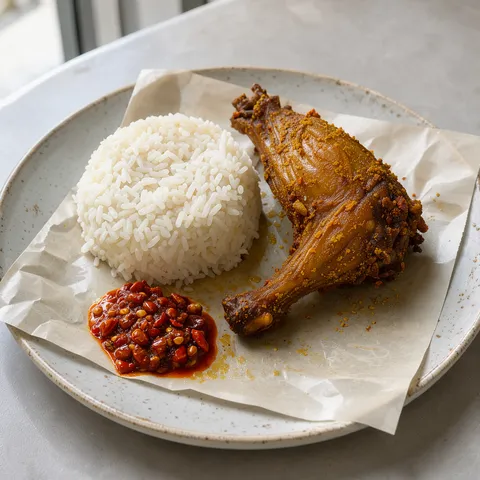 Bruneian Fried Chicken and Rice1 hr 10 min · Main course
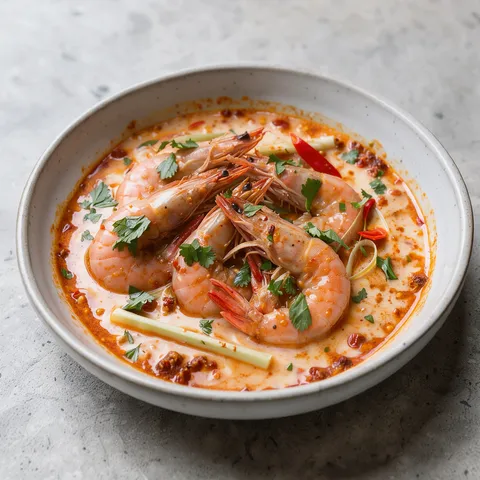 Bruneian Coconut Prawns45 min · Main course
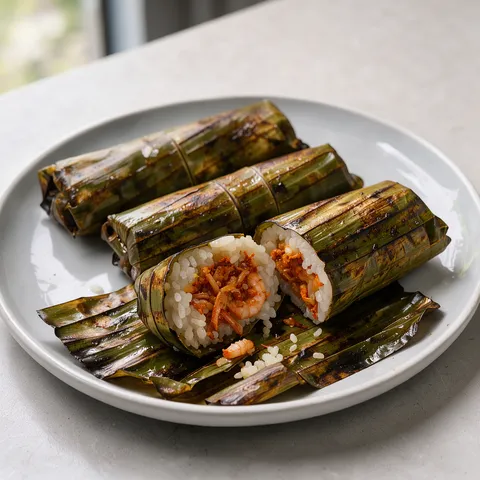 Bruneian Prawn-Filled Sticky Rice Rolls1 hr 40 min · Meze
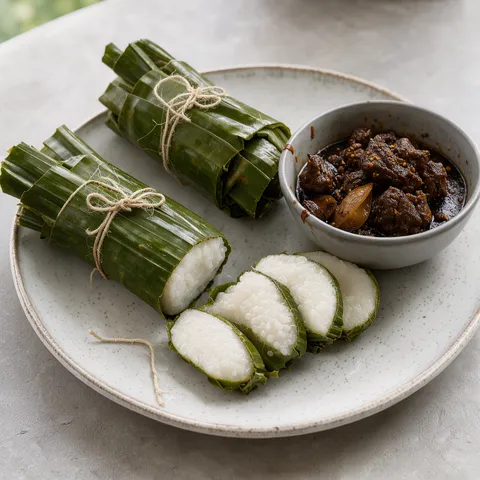 Bruneian Leaf-Wrapped Sticky Rice2 hr · Side dish
 Bruneian Fried Rice Flour Rings1 hr 30 min · Dessert
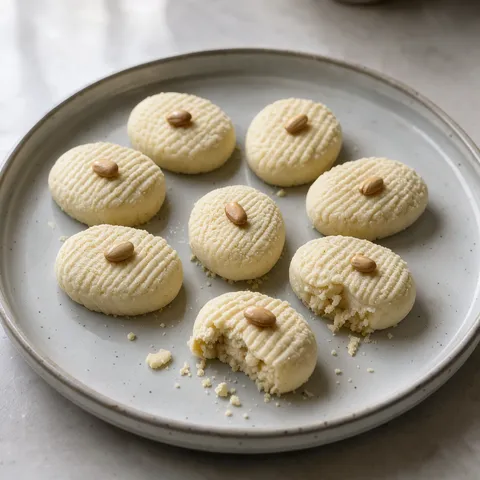 Bruneian Toasted Flour Eid Biscuits1 hr 20 min · Dessert