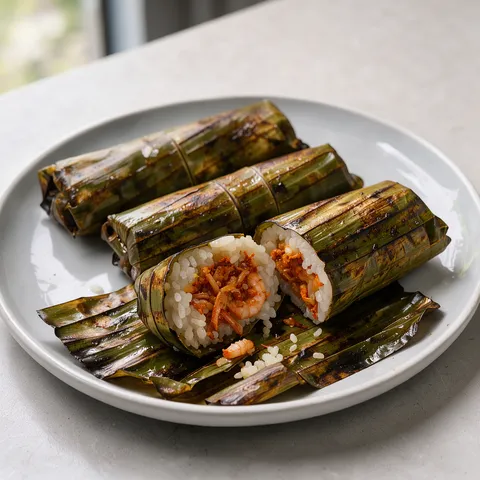
Bruneian Prawn-Filled Sticky Rice Rolls Pulut Panggang
A Bruneian meze. Takes 1 hr 40 min · +4 hr soaking, Serves 4. Difficulty: medium.
At a glance
- Total time
- 1 hr 40 min · +4 hr soaking
- Serves
- Serves 4
- Difficulty
- Medium
- Cuisine
- Bruneian cuisine
- Dish type
- Meze
- Diet
- Gluten-free
- Allergens
- Milk, Crustaceans, Tree nuts
Ingredients
Rice
- 400 g glutinous rice
- 250 ml coconut milk
- 1 tsp salt
- 1 tsp caster sugar
Filling
- 150 g raw prawns (peeled)
- 40 g desiccated coconut
- 3 shallots (about 60 g)
- 2 garlic cloves
- 2 red chillies
- 1 lemongrass stalk (white lower part)
- 1 tsp coriander seeds
- 1/2 tsp ground turmeric
- 2 tsp caster sugar
- 1/2 tsp salt
- 2 tbsp sunflower oil
Wrapping
- 1 pack banana leaves (about 16 pieces of 18×20 cm)
- cocktail sticks
Equipment
- Mixing bowls
- Steamer basket
- Muslin
- Saucepan
- Wooden spoon / spatula
- Pestle and mortar
- Chopping board
- Chef's knife
- Frying pan
- Griddle pan
- Charcoal barbecue (optional)
Method
- Soak the rice: Wash the glutinous rice in a bowl until the water runs clear and soak in cold water for at least 4 hr. Soaking lets the rice steam through completely, and if you skip it the grains stay hard in the centre
- Steam the rice: Drain the rice, line the steamer basket with a damp muslin cloth, spread the rice 2 cm thick and poke a few holes in it with your finger. Steam over boiling water with the lid on for 25 min. The grains should be glossy and translucent
- Combine with the coconut milk: Heat the coconut milk, salt and sugar in a pan, stirring without boiling until the sugar dissolves. Put the hot rice in a bowl, pour in the milk, stir with a wooden spoon, cover and leave for 10 min. The rice absorbs all the milk and turns sticky
- Make the filling paste: Pound the coriander seeds in a mortar, chop the shallots, garlic, chillies and lemongrass, add them and pound to a coarse paste. Chop the prawns very finely on a chopping board with a chef's knife
- Fry the filling: First toast the coconut in a dry pan over medium heat for 3 min until light golden and remove. In the same pan heat the oil, fry the paste for 3 min until fragrant, add the prawns and cook for 3 min, until the bits separate and dry out. Add the coconut, turmeric, sugar and salt and stir for 2 min more. The filling should be dry and crumbly, as any moisture left makes the roll watery inside
- Soften the banana leaves: Wipe the leaves with warm water and pass each side over a hob flame or a hot pan for 3-4 sec. When the leaf turns glossy and darker it is soft and does not tear when wrapping
- Wrap the rolls: Press 2 tbsp (about 40 g) of rice into a 10×6 cm rectangle on a leaf, put 1 full tbsp (about 12 g) of filling lengthways in the middle and press another 1 tbsp (about 20 g) of rice over it to close. Wrap the leaf tightly, fold the ends under and secure with a cocktail stick. You get about 16 rolls
- Char: Heat a griddle pan over medium heat for 3 min, or work over barbecue coals. Char the rolls, turning, for 3-4 min on each side, 12-15 min in total, until the leaves are charred in places and fragrant. The rice forms a light crust on the outside. Serve warm or at room temperature
Chef's note
Pulut panggang is sticky rice eaten at tea time in Brunei, filled with spiced prawns and charred in a banana leaf. Banana leaves are sold frozen in Asian grocers. If you cannot find them, wrap the rolls tightly in foil and cook on a griddle pan over medium heat for 12-15 min, turning. In Brunei the filling is mostly made with dried prawns, and fresh prawns are used here. The 16 rolls serve 4.
Frequently asked questions
- Why is the glutinous rice soaked for 4 hours?
- Soaking lets the rice cook through in the steamer. If skipped, the grains stay hard in the middle.
- Why does the banana leaf tear when wrapping?
- The leaf tears if it isn't softened. Pass each side over a flame or a hot pan for 3-4 seconds.
- Why is it important for the filling to be dry?
- The filling should be dry and crumbly, because if any moisture remains, the roll turns watery inside.
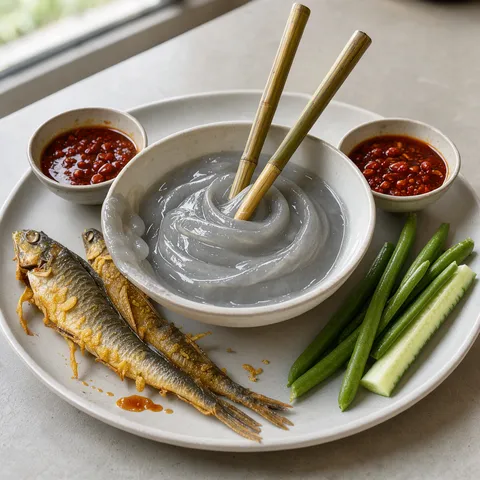 Bruneian Sago Starch Porridge1 hr · Main course
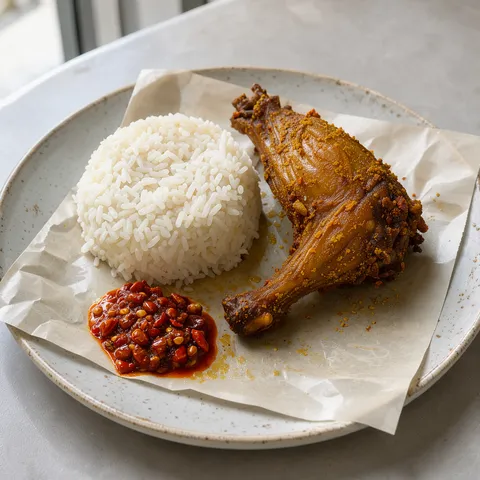 Bruneian Fried Chicken and Rice1 hr 10 min · Main course
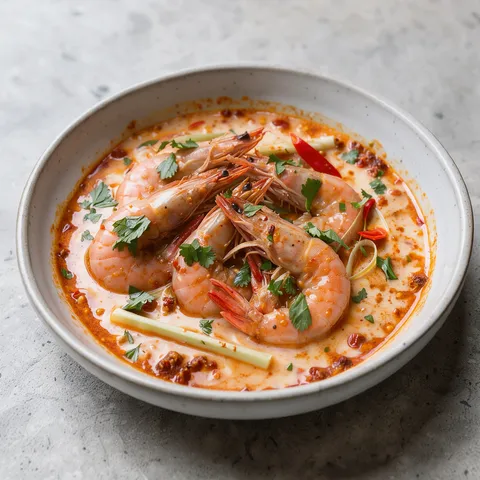 Bruneian Coconut Prawns45 min · Main course
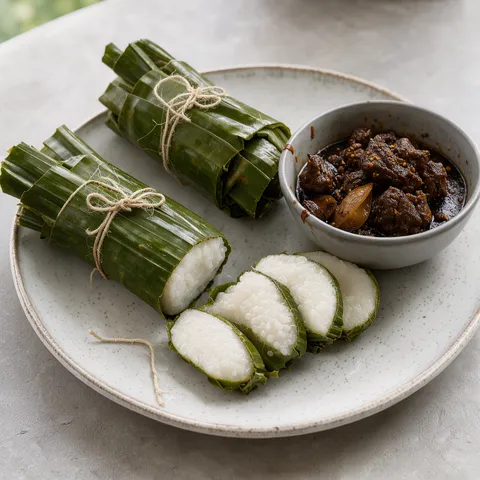 Bruneian Leaf-Wrapped Sticky Rice2 hr · Side dish
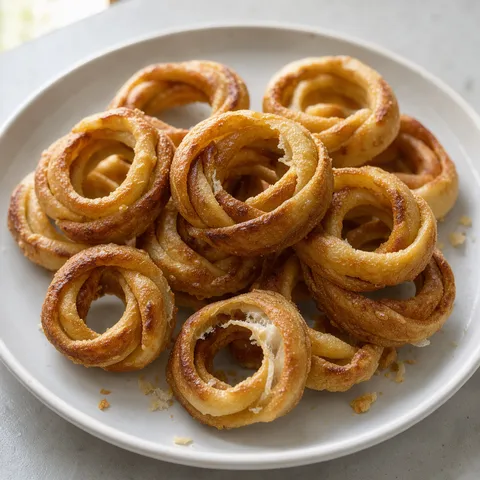 Bruneian Fried Rice Flour Rings1 hr 30 min · Dessert
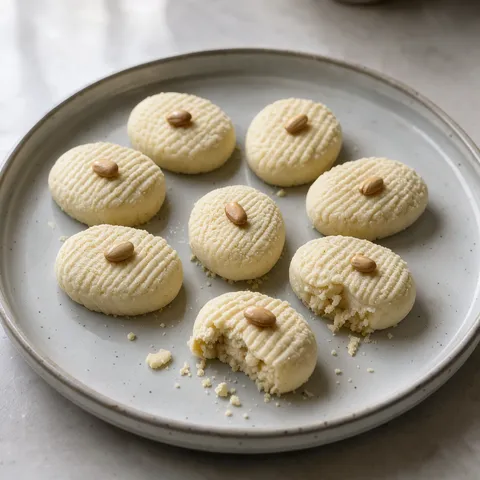 Bruneian Toasted Flour Eid Biscuits1 hr 20 min · Dessert