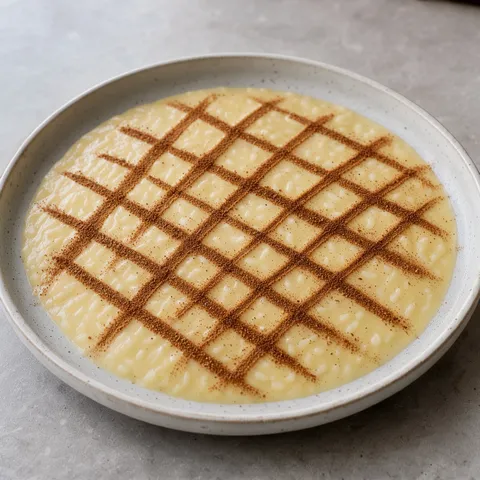
Portuguese Lemon and Cinnamon Rice Pudding Arroz Doce
A Portuguese dessert. Takes 1 hr 10 min · +1 hr cooling, Serves 4. Difficulty: medium.
At a glance
- Total time
- 1 hr 10 min · +1 hr cooling
- Serves
- Serves 4
- Difficulty
- Medium
- Cuisine
- Portuguese cuisine
- Dish type
- Dessert
- Diet
- Gluten-free
- Allergens
- Milk, Eggs
Ingredients
Rice
- 150 g short- or medium-grain rice (carolino in Portugal, or baldo or osmancik if unavailable)
- 350 ml water
- a pinch of salt
- pared zest of 1 lemon (without the white pith, in thick strips)
- 1 cinnamon stick
Milk
- 750 ml whole milk (lukewarm)
Flavouring
- 150 g caster sugar
- 3 egg yolks
- 15 g butter (optional)
To decorate
- 2 tsp ground cinnamon
Equipment
- Heavy-based saucepan
- Wooden spoon / spatula
- Ladle
- Mixing bowls
- Balloon whisk
- Vegetable peeler
Method
- Cook the rice in water: Don't rinse the rice: the starch on its surface makes the pudding creamy. Bring the water, salt, lemon zest and cinnamon stick to the boil in a heavy-based pan and add the rice. Cook over medium-low heat for 10-12 min, stirring occasionally, until the rice has absorbed almost all the water and the grains have swollen. Starting with water opens up the grains: if the milk goes straight onto the rice, the grains soften slowly and the milk catches on the bottom
- Add the milk gradually: Add a ladleful of the warm milk (about 150 ml) and stir constantly until it is absorbed, then add another ladleful, as for risotto. Cook like this for 25-30 min, until the rice is completely soft and the mixture is loose but creamy. Keep the heat low: the milk should not boil over or catch on the bottom
- Stir in the sugar: Add the sugar and cook for another 5 min, stirring. The sugar goes in last because, added early, it slows the softening of the rice. Remove the lemon zest and cinnamon stick
- Temper the yolks: Turn off the heat. Beat the yolks in a bowl and gradually stir in 2 ladlefuls of the hot milky rice. This way the yolks warm slowly and don't cook into lumps (3 min)
- Thicken: Add the tempered yolks to the pan, turn the heat to the lowest setting and stir non-stop for 2-3 min. The mixture thickens and turns glossy and pale yellow. Don't let it boil, or the egg will curdle. Stir in the butter, if using
- Divide: Pour the pudding into shallow bowls or onto a large, flat porcelain dish and smooth the surface with the back of a spoon. Leave to cool slightly for 10 min so a thin skin forms on the surface
- Draw a cinnamon pattern: Sprinkle the ground cinnamon in a thin line from between your thumb and forefinger to draw a criss-cross lattice over the surface: in Portuguese homes, names or hearts are sometimes drawn too. On the skinned surface the cinnamon doesn't sink, so the lines stay sharp. Wait until it reaches room temperature (about 1 hr) before serving (5 min)
Chef's note
Arroz doce is the dessert of festive, wedding and Christmas tables in Portugal and varies from region to region: in the north (Minho) it is enriched with egg yolks, while in some regions it is made more simply. It differs from Turkish sutlac (rice pudding) in starting the cooking with water, in the lemon zest, in its thick consistency from the yolks and in the pattern drawn in cinnamon. It thickens in the fridge, and the Portuguese usually eat it at room temperature.
Frequently asked questions
- Why is the rice cooked in water first for arroz doce?
- Starting with water opens up the grain. If the milk goes straight onto the rice, the grains soften slowly and the milk catches on the bottom.
- How do I add the egg yolks without them curdling?
- Add 2 ladlefuls of the hot milky rice to the whisked yolks a little at a time. The yolks warm up slowly, and then stir them into the pot without boiling.
- How do I draw the cinnamon pattern?
- Leave the pudding to cool for 10 minutes until the surface has formed a light skin, then dust with cinnamon. On a set surface the cinnamon doesn't sink and the lines stay sharp.
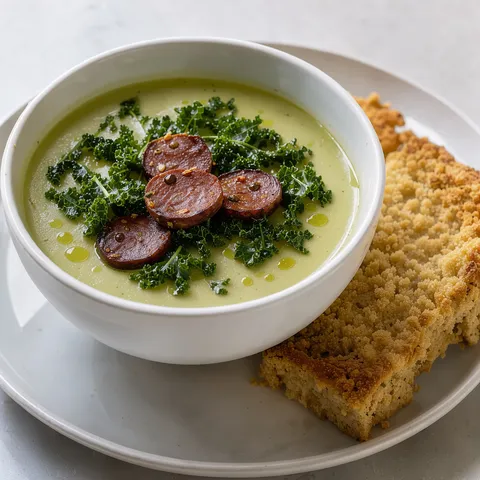 Portuguese Kale, Potato and Sausage Soup50 min · Soup
 Salt Cod with Eggs and Crisp Potatoes50 min · Main course
 Portuguese Custard Tarts1 hr 20 min · Patisserie
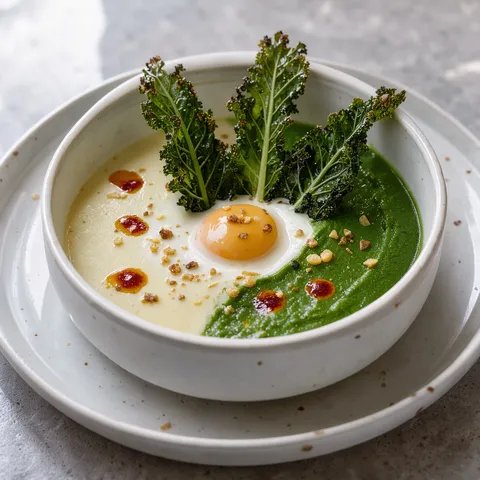 Caldo Verde 2.01 hr 15 min · Soup
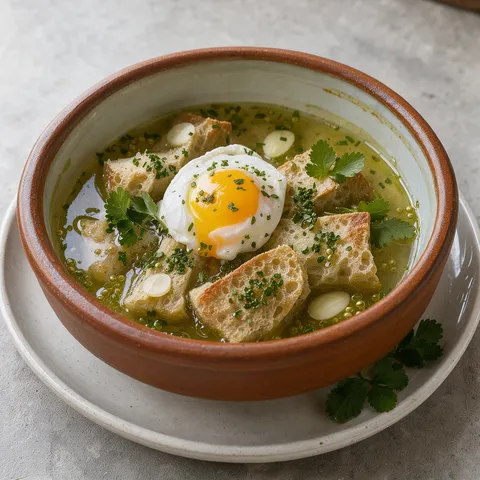 Alentejo Coriander Bread Soup30 min · Soup
 Algarve-Style Barbecued Chicken1 hr 40 min · Main course