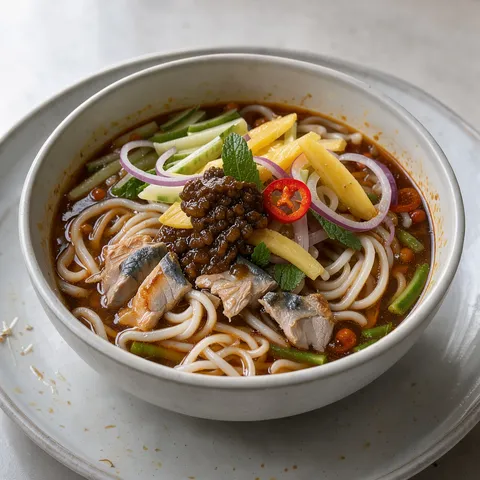
Penang Sour Mackerel Noodle Soup with Tamarind Asam Laksa
A Malaysian soup. Takes 1 hr 15 min, Serves 4. Difficulty: medium.
At a glance
- Total time
- 1 hr 15 min
- Serves
- Serves 4
- Difficulty
- Medium
- Cuisine
- Malaysian cuisine
- Dish type
- Soup
- Allergens
- Gluten, Milk, Fish, Crustaceans, Celery, Sulphites
Ingredients
Fish stock
- 4 medium mackerel (about 1 kg in total, cleaned)
- 2 litres water
- 1 tsp salt
Rempah (paste)
- 12 dried red chillies (soaked)
- 3 fresh red chillies
- 8 shallots
- 2 lemongrass stalks (white part)
- 3 cm fresh turmeric (or 1 tsp ground)
- 3 cm galangal
- 1 tsp belacan
Soup
- 80 g tamarind pulp (loosened in 250 ml hot water and strained)
- 3 slices of asam gelugor (or 1 more tbsp tamarind if unavailable)
- 1 bunch Vietnamese mint (daun kesum) or mint
- 1 torch ginger flower (bunga kantan, optional, halved lengthways)
- 2 tbsp sugar
- 2 tbsp neutral oil
Noodles
- 400 g thick rice noodles (laksa noodles, dried)
Garnish
- 1/4 pineapple (finely julienned)
- 1 cucumber (julienned)
- 1 red onion (thinly sliced into rings)
- 1 red chilli (in rings)
- 1/2 bunch mint
- 4 tbsp hae ko (thick shrimp paste syrup)
Equipment
- Saucepan
- Blender
- Heavy-based saucepan
- Fine sieve / chinois
- Colander
- Ladle
- Chef's knife
- Chopping board
- Pestle and mortar (optional)
Method
- Poach the fish: Put the mackerel in cold salted water, bring to the boil, then lower the heat and cook for 8-10 min. When the flesh comes away from the bone easily, lift out the fish and leave to cool slightly. Strain and keep the stock: it is the base of the soup
- Flake the fish: Carefully remove the skin and bones from the mackerel and separate the flesh into large flakes. Return the bones and heads to the poaching liquid, boil for another 10 min, then strain again. This second boil gives the stock a deeper fish flavour
- Blend the rempah: Blend the chillies, shallots, lemongrass, turmeric, galangal and belacan with 4 tbsp water to a smooth paste. Pounded in a mortar, it is more aromatic
- Fry the rempah: Heat the oil in a wide saucepan, add the paste and fry over medium heat for 8-10 min, stirring constantly, until its aroma intensifies and the oil separates. The paste for asam laksa is not browned, only cooked until it loses its raw taste
- Build the soup: Add the fish stock and tamarind water to the rempah and drop in the asam gelugor, daun kesum and torch ginger. When it boils, lower the heat and simmer for 20 min. It should taste distinctly sour, hot and slightly sweet. Balance with the sugar and check the salt
- Return the fish: Add two-thirds of the flaked fish to the soup and boil for 5 min. Some of it breaks down and thickens the broth. Set aside the remaining third for garnish and remove the aromatic leaves
- Cook the noodles: Cook the dried noodles in plenty of boiling water for 10-12 min, until no white core remains in the centre of the strands, then drain and rinse under cold water
- Prepare the garnish: Cut the pineapple, cucumber, onion and chilli into julienne. The sweet sourness of the pineapple cuts through the oiliness of the fish. Loosen the hae ko with 1 tbsp hot water to a runny syrup
- Plate: Put a handful of noodles in a deep bowl and ladle over the boiling soup with plenty of fish flakes. Pile the pineapple, cucumber, onion, chilli and mint leaves on top and add the reserved fish flakes. Drizzle a spoonful of hae ko over the top or serve it alongside on a small spoon
Chef's note
Penang asam laksa contains no coconut milk, which is why it is so different from the creamy laksa lemak of Kuala Lumpur. Belacan, hae ko and asam gelugor are traditionally bought ready-made. Laksa noodles are not made at home in Malaysia either: they are bought dried or fresh.
Frequently asked questions
- How does the fish give body to asam laksa?
- Two-thirds of the flaked fish goes into the soup, and some of it breaks up to thicken the broth. The remaining third is set aside for serving.
- What can I use if I can't find asam gelugor?
- According to the recipe, add one more tablespoon of tamarind in its place. The soup should be distinctly sour, hot and slightly sweet.
- Should the rempah paste be fried?
- The paste isn't fried hard. Just stir-fry until the raw taste goes and the oil separates. Pounded in a mortar, it is more aromatic.
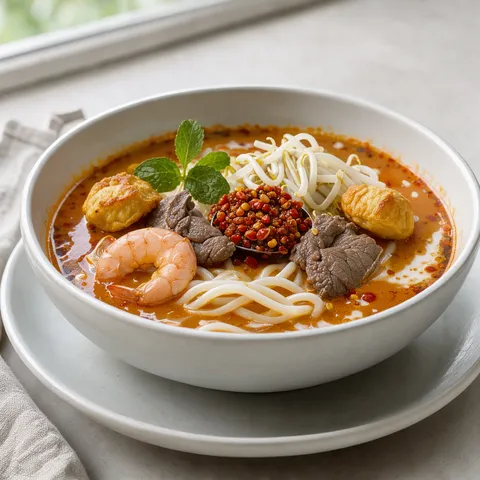 Laksa Lemak1 hr · Soup
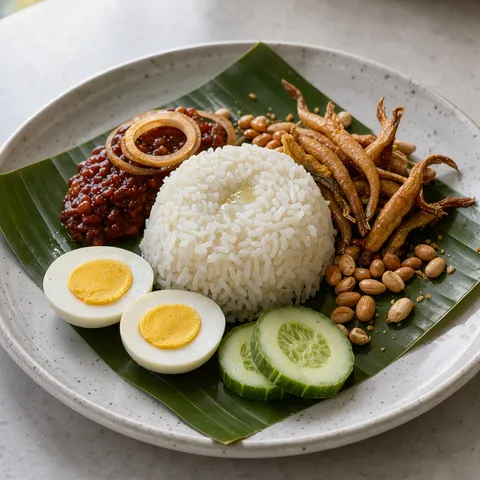 Pandan Coconut Rice with Sambal1 hr 25 min · Main course
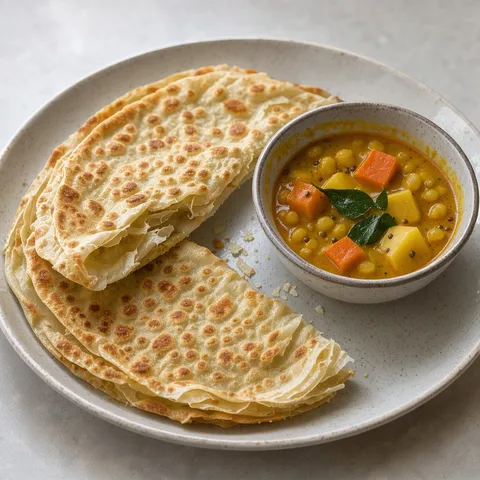 Folded Pan Flatbread with Lentil Curry1 hr 20 min · Bread & pastry
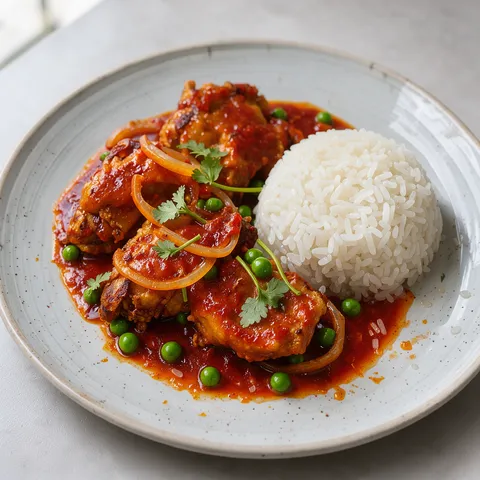 Chicken in Red Chilli and Tomato Sauce1 hr 15 min · Main course
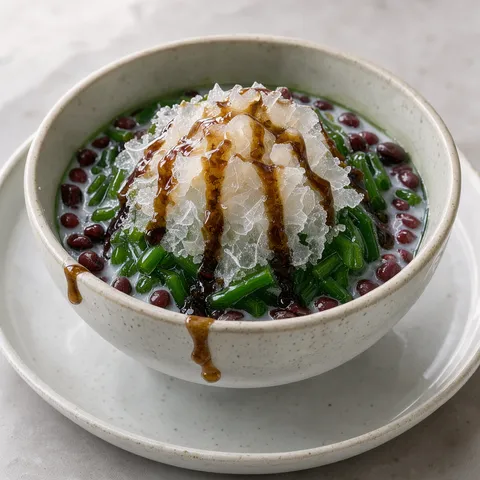 Iced Coconut Dessert with Pandan Jelly1 hr 15 min · Dessert
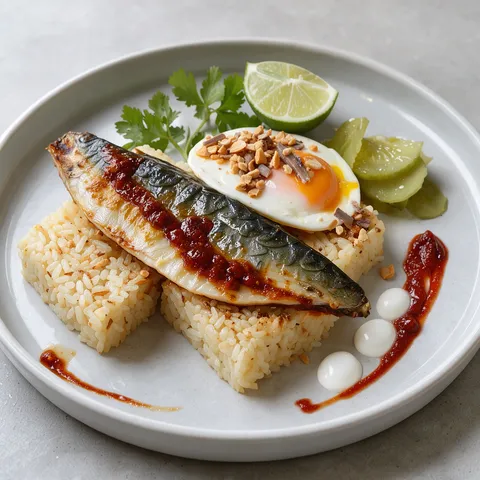 Nasi Lemak 2.01 hr 25 min · Main course