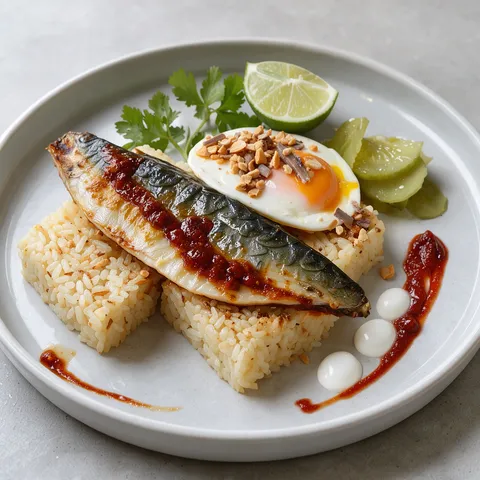
Nasi Lemak 2.0
A Malaysian main course. Takes 1 hr 25 min, Serves 4. Difficulty: challenging.
At a glance
- Total time
- 1 hr 25 min
- Serves
- Serves 4
- Difficulty
- Challenging
- Cuisine
- Malaysian cuisine
- Dish type
- Main course
- Diet
- Gluten-free
- Allergens
- Milk, Eggs, Fish, Peanuts, Tree nuts
Ingredients
Crispy coconut rice
- 250 g jasmine rice
- 250 ml unsweetened coconut milk
- 150 ml water
- 2 pandan leaves
- 1 thumb-sized piece of ginger (bruised)
- 1/2 tsp salt
- 3 tbsp neutral oil
Mackerel
- 4 mackerel fillets (skin-on, about 500 g in total, pin bones removed with tweezers)
- 1/2 tsp salt
- 1 tbsp neutral oil
Sambal glaze
- 12 dried red chillies (soaked)
- 4 shallots
- 2 garlic cloves
- 1/2 tsp belacan
- 60 ml neutral oil
- 40 g tamarind pulp (loosened in 80 ml hot water and strained)
- 3 tbsp palm sugar
- 1/4 tsp salt
Eggs
- 4 eggs (at room temperature)
Anchovy and peanut sprinkle
- 40 g dried anchovies (cleaned)
- 40 g raw peanuts
- 1 tbsp grated coconut (fresh or desiccated, unsweetened)
- 100 ml neutral oil
Cucumber pickle
- 1 cucumber
- 2 tbsp rice vinegar
- 1 tsp sugar
- a pinch of salt
- finely grated zest of 1/2 lemon
Coconut cream
- 100 ml coconut cream (chilled in the fridge)
- a pinch of salt
To finish
- 1 lemon (in quarters)
- a few coriander sprigs
Equipment
- Sous vide circulator
- Heavy-based saucepan
- Colander
- Baking tray
- Cling film
- Blender
- Fine sieve / chinois
- Sauté pan
- Frying pan
- Food processor
- Balloon whisk
- Piping bag
- Plating tweezers
- Cast-iron frying pan
- Silicone spatula
- Pastry brush
- Kitchen blowtorch
- Chef's knife
- Chopping board
- Mixing bowls
- Probe thermometer (optional)
Method
- Set up the eggs: First, start heating the sous-vide water bath and set it to 63.5°C, lower the eggs in their shells into the water and cook for 45 min. All the other jobs run in parallel during this time. The yolk becomes creamy and runny and the white as soft as a membrane: in place of the boiled egg of the classic, it becomes the sauce of the plate
- Cook the rice: Rinse the rice and leave to drain for 10 min. Bring it to the boil with the coconut milk, water, salt, pandan and ginger, cover and cook over the lowest heat for 15 min, then leave to steam for 5 min. Remove the aromatics. Press the rice firmly into a 20×20 cm tray lined with cling film, 1.5 cm thick, cover with more cling film and press down with a flat dish. Chill in the freezer for 25 min. Cooled and pressed, the rice becomes a block that can be cut
- Fry the sambal glaze: Squeeze out the chillies and blend them with the shallots, garlic, belacan and 2 tbsp water until smooth. Fry in the oil over medium heat for 12-15 min, stirring constantly, until the paste turns deep red and the oil separates. Add the tamarind water, palm sugar and salt and cook for another 3 min. Blitz the glaze in a blender for 30 sec until silky and pass through a fine sieve. It should be like a glossy jam that can be brushed onto the fish
- Fry the anchovies and peanuts: Heat the oil in a small frying pan, fry the peanuts for 4 min until golden and remove. Fry the anchovies for 3 min until crisp and light golden and remove. Toast the grated coconut in a dry frying pan for 1 min until light brown. Pulse everything in a food processor 3-4 times to a coarse sand. This sprinkle turns the crunchy anchovy-and-peanut side dish of the classic into a single umami powder
- Pickle the cucumber: Peel the cucumber, halve it lengthways, scoop out the seeds with a spoon and slice into 5 mm half-moons. Mix with the vinegar, sugar, salt and lemon zest and leave for 20 min
- Prepare the coconut cream: Whisk the cream with a pinch of salt for 1 min to soft peaks, transfer to a piping bag and keep in the fridge. This salted cream brings the milky taste of the classic coconut rice to the plate as a separate touch
- Crisp the rice: Cut the cooled rice block into 8 rectangles of 5×10 cm. Heat the oil in two non-stick frying pans over medium-high heat and fry the rectangles at the same time for 3-4 min on each side, until a deep golden, crisp crust forms. The inside stays soft while the outside crisps. Drain on kitchen paper
- Cook the mackerel: Score the skin side of the fillets 3-4 times with a sharp knife, pat dry and salt. Heat a cast-iron frying pan over high heat, add the oil and lay in the fillets skin side down, pressing with a spatula for 20 sec so they do not curl. Cook for 3 min, until the skin is glassy crisp, then turn and cook over low heat for another 1 min. Brush the flesh side with sambal glaze and torch it with a blowtorch for 20-30 sec, until the glaze bubbles and caramelises. The internal temperature should be 60-63°C: at this temperature mackerel is cooked but stays juicy
- Crack the eggs: Lift the eggs out of the water, crack each shell into a small bowl and spoon away the watery part of the white. The yolk and creamy white should stay whole
- Plate: Place two crispy rice rectangles slightly crossed in the centre of the plate. Lay a mackerel fillet across the rice, glazed side up. Make a nest beside the rice with a small spoon and place the egg in it, topped with a pinch of anchovy and peanut sprinkle. Put the drained cucumber pickle in a small pile on the empty side of the plate and pipe three small dots of coconut cream. Draw a thin line of the remaining sambal glaze across the plate with the back of a spoon and finish with coriander sprigs and a lemon quarter. Serve immediately: when the yolk is cut, it becomes a sauce for the rice and fish
Chef's note
The five elements of the classic nasi lemak are kept: pandan coconut rice, sambal, crispy anchovies and peanuts, egg and cucumber. The innovations: the rice becomes a crisp block, the sambal a caramelised glaze brushed onto mackerel, the side dishes an umami sprinkle, and the egg, cooked at 63.5°C, a sauce. Belacan, dried anchovies and unsweetened coconut milk are traditionally bought ready-made.
Frequently asked questions
- How do I make the nasi lemak rice into a block that can be cut?
- Press the cooked rice firmly into a tray lined with cling film to a thickness of 1.5 cm, cover with film and weigh it down with a flat lid. Once chilled in the freezer, it becomes a block that can be cut.
- How do I crisp mackerel skin without it curling in the pan?
- Score the skin with a sharp knife, dry it and press it down with a spatula for 20 seconds as soon as it hits the pan. At an internal temperature of 60-63°C the fish is cooked but juicy.
- How do I get a creamy, runny egg yolk?
- Cook the eggs in their shells in sous-vide water at 63.5°C. Then crack them and spoon off the runny white, leaving the yolk and the creamy white whole.
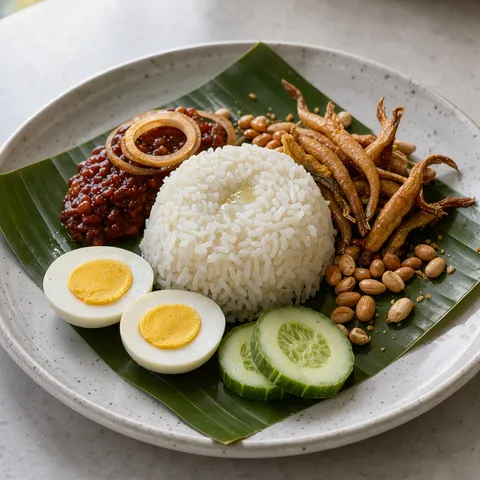 Pandan Coconut Rice with Sambal1 hr 25 min · Main course
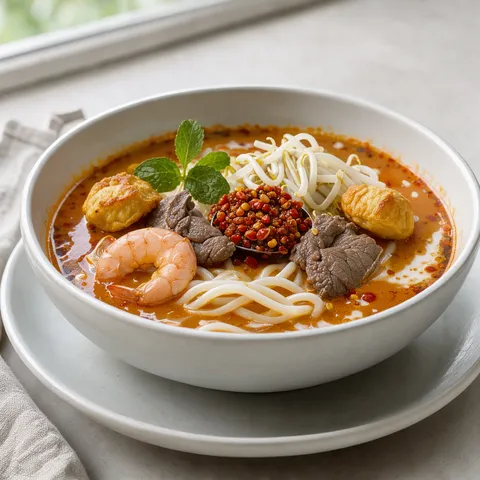 Laksa Lemak1 hr · Soup
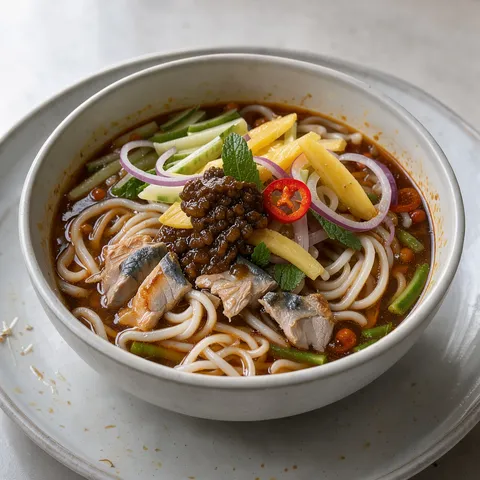 Penang Sour Mackerel Noodle Soup with Tamarind1 hr 15 min · Soup
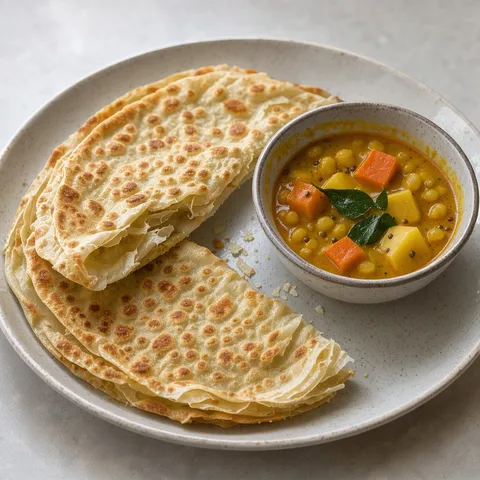 Folded Pan Flatbread with Lentil Curry1 hr 20 min · Bread & pastry
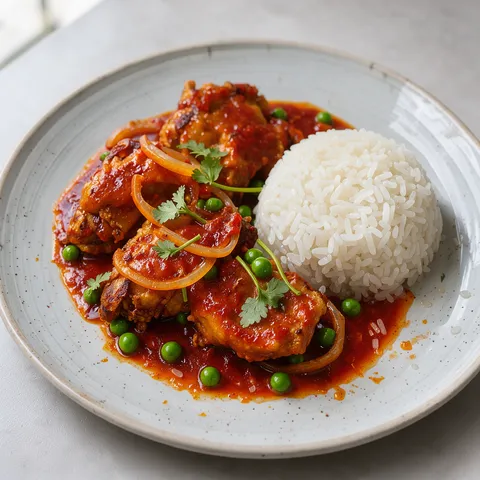 Chicken in Red Chilli and Tomato Sauce1 hr 15 min · Main course
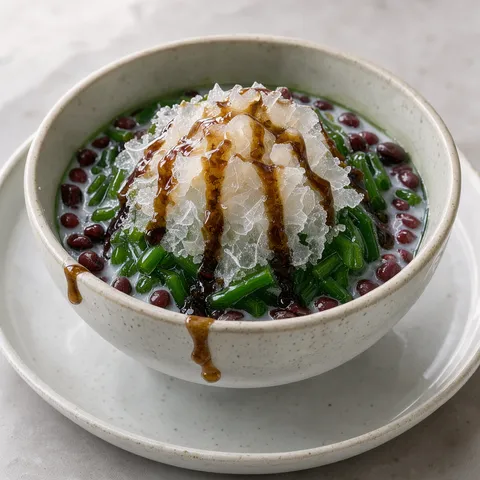 Iced Coconut Dessert with Pandan Jelly1 hr 15 min · Dessert
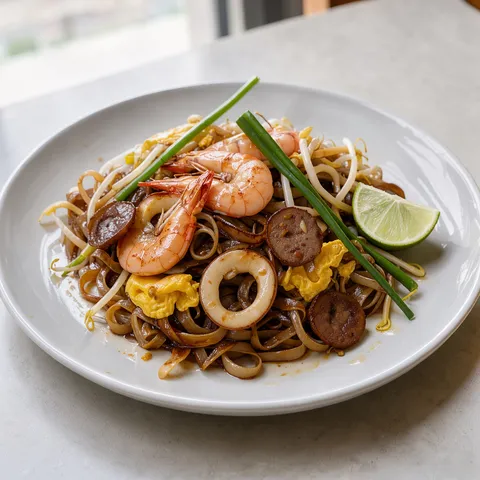 Penang Wok-Fried Flat Rice Noodles45 min · Main course