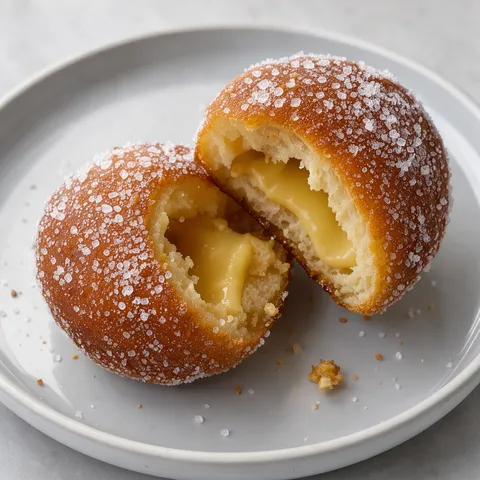
Portuguese Doughnuts with Lemon Custard Bolas de Berlim
A Portuguese dessert. Takes 1 hr 35 min · +2 hr 20 min rising and cooling, Makes 12. Difficulty: medium.
At a glance
- Total time
- 1 hr 35 min · +2 hr 20 min rising and cooling
- Serves
- Makes 12
- Difficulty
- Medium
- Cuisine
- Portuguese cuisine
- Dish type
- Dessert
- Allergens
- Gluten, Milk, Eggs, Soya
Ingredients
Dough
- 500 g plain flour (type 550)
- 60 g caster sugar
- 10 g fast-action dried yeast
- 2 eggs (at room temperature)
- 200 ml lukewarm milk
- 60 g soft butter
- finely grated zest of 1 lemon
- 1 tsp salt
Custard (creme pasteleiro)
- 500 ml milk
- 1 strip of lemon peel (taken from the same lemon with a peeler before grating)
- 4 egg yolks
- 100 g caster sugar
- 40 g cornflour
- 1/2 tsp vanilla extract (Basics)
Frying
- 1.8 litres sunflower oil (about 4 cm deep in a 24 cm pan)
Coating
- 150 g caster sugar
Equipment
- Stand mixer
- Mixing bowls
- Cling film
- Saucepan
- Balloon whisk
- Vegetable peeler
- Fine grater
- Precision scales
- Baking paper
- Baking tray
- Probe thermometer
- Tongs
- Ladle
- Piping bag
- Chef's knife
- Piping nozzles (optional)
Method
- Knead the dough: Take a strip of peel from the lemon with a peeler and set it aside for the custard, then finely grate the remaining zest. Put the flour, sugar, yeast, salt and lemon zest in the bowl of a stand mixer and mix. Add the eggs and lukewarm milk and knead with the dough hook on low-medium speed for 8 min. Add the soft butter a piece at a time and knead for another 5 min, until the dough comes away from the sides of the bowl and is glossy and elastic. The butter goes in late because otherwise the fat coats the flour before the gluten network can form
- First prove: Shape the dough into a ball, put it in a lightly oiled bowl, cover with cling film and leave in a warm place for 1 hr 15 min, until doubled in size
- Cook the custard: While the dough rises, heat the milk and the strip of lemon peel in an 18 cm saucepan over medium heat until bubbles appear at the edges. In a bowl, whisk the yolks, sugar and cornflour for 1 min, until pale. Gradually add half the hot milk to the yolks, whisking constantly, then pour the mixture back into the pan. Bring to the boil over medium heat, whisking constantly, and keep whisking for 1 min after it boils. The custard should be thick and glossy. Boiling cooks the yolks fully and stops the starch from thinning the custard
- Chill the custard: Take off the heat, remove the lemon peel and add the vanilla. Transfer the custard to a wide container and press cling film onto the surface (so no skin forms). Leave at room temperature for 15 min, then put it in the fridge
- Divide into balls: Turn the risen dough out onto the worktop and gently press out the air. Divide into 12 equal pieces using scales (about 78 g each). Roll each piece on the worktop under your cupped palm into a taut ball. Cut 12 squares of baking paper, 10×10 cm, dust them lightly with flour and put a ball on each square. The paper lets you transfer the risen balls into the oil without deflating them
- Second prove: Arrange the balls on a tray, cover with a cloth and leave for 45 min, until clearly puffed and a fingertip pressed into them leaves a mark that springs back slowly
- Heat the oil: Heat the sunflower oil in a 24 cm saucepan over medium heat until a thermometer reads 165-170°C. Leave at least 6 cm of free space above the oil. Hotter oil darkens the outside while leaving the inside raw
- Fry: Turn the balls upside down into the oil, paper and all: the paper comes away within a few seconds, so lift it out with tongs. Fry 3 balls per batch for 3 min on each side, until deep golden with a pale band around the middle. Lift out with a slotted spoon, drain on kitchen paper for 1 min and roll in the sugar while hot. The 4 batches take about 28 min, so check the oil temperature between batches
- Cool and fill: Leave the doughnuts to cool for 20 min. Beat the custard with a spatula until smooth and spoon it into a large piping bag fitted with a plain nozzle. With a chef's knife, cut a deep slit into the side of each doughnut without cutting through to the base. Pipe about 2 tbsp custard into each slit so it shows on the outside. Serve the same day: custard-filled doughnuts must be kept in the fridge
Chef's note
Bolas de Berlim are the Portuguese version of German Berliner doughnuts, said to have arrived in Portugal in the 20th century and to have settled in there. In Portugal they are especially known for being sold on beaches in summer, from boxes carried on vendors' backs. Unlike the German version, the custard is not hidden inside but piped generously into a side slit where it can be seen. Versions without custard are common too. You can make the vanilla extract at home with Vanilla Sugar and Vanilla Extract (Basics). Unfilled doughnuts can be fried on the day and filled later. Makes 12.
Frequently asked questions
- Why is the custard covered with cling film?
- Press the cling film onto the surface of the custard so it doesn't form a skin. Leave the custard at room temperature for a while, then refrigerate.
- What temperature should the oil be?
- 165-170°C. Hotter oil darkens the outside while leaving the inside raw.
- How long can the filled doughnuts be kept?
- Serve them on the day they are made. Filled doughnuts should be kept in the fridge.
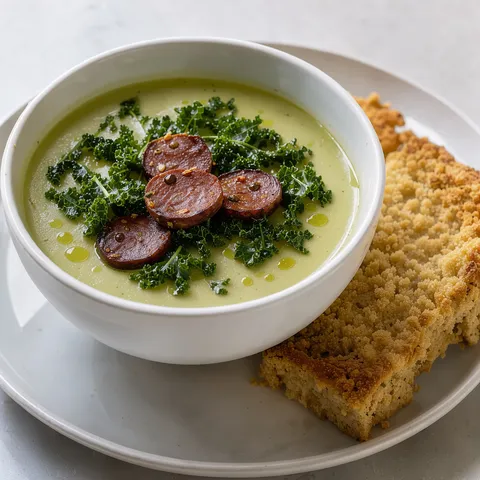 Portuguese Kale, Potato and Sausage Soup50 min · Soup
 Salt Cod with Eggs and Crisp Potatoes50 min · Main course
 Portuguese Custard Tarts1 hr 20 min · Patisserie
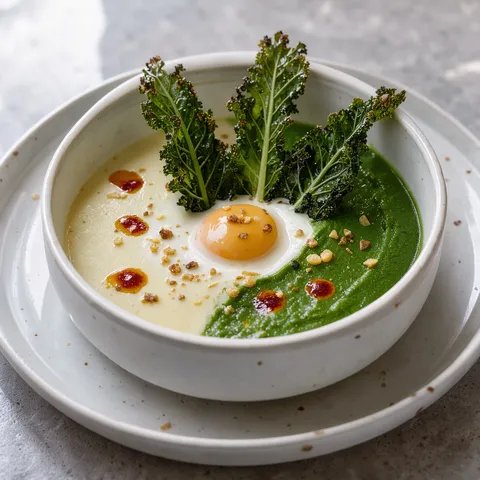 Caldo Verde 2.01 hr 15 min · Soup
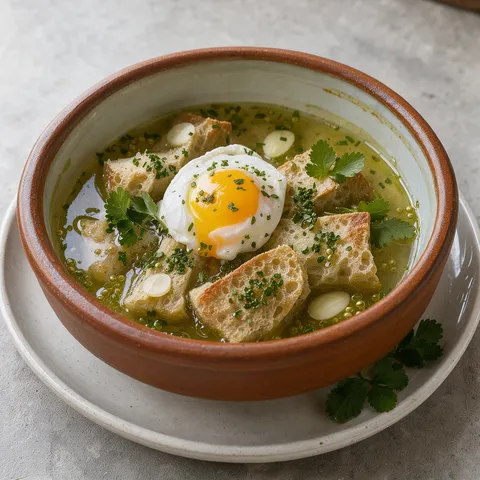 Alentejo Coriander Bread Soup30 min · Soup
 Algarve-Style Barbecued Chicken1 hr 40 min · Main course