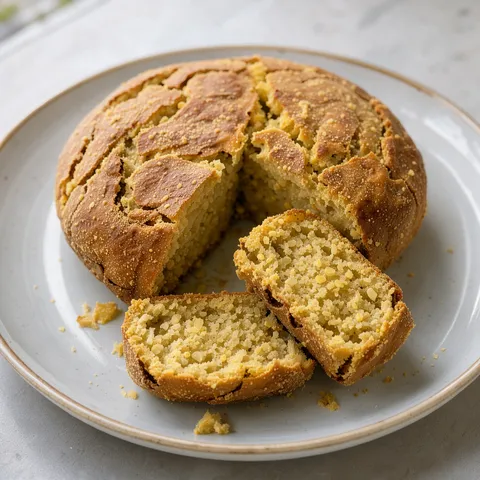
Northern Portuguese Cornbread Broa de Milho
A Portuguese bread & pastry. Takes 1 hr 35 min · +2 hr 50 min rising and cooling, 1 loaves, about 950 g (10 slices). Difficulty: medium.
At a glance
- Total time
- 1 hr 35 min · +2 hr 50 min rising and cooling
- Serves
- 1 loaves, about 950 g (10 slices)
- Difficulty
- Medium
- Cuisine
- Portuguese cuisine
- Dish type
- Bread & pastry
- Allergens
- Gluten
Ingredients
Scald
- 300 g fine yellow cornmeal
- 300 ml boiling water
- 2 tsp salt
Dough
- 7 g fast-action dried yeast
- 1 tsp caster sugar
- 150 ml lukewarm water (about 35°C)
- 150 g plain flour (type 550)
- 50 g rye flour (or another 50 g plain flour)
- 1 tbsp extra virgin olive oil
Shaping
- 2 tbsp fine yellow cornmeal (for dusting)
Equipment
- Saucepan
- Mixing bowls
- Wooden spoon / spatula
- Dough scraper
- Baking tray
- Baking paper
- Oven
- Bread knife
Method
- Scald the cornmeal: Boil the water in a kettle or a small saucepan. Mix the 300 g cornmeal and the salt in a large bowl, pour over the boiling water and stir with a wooden spoon for 1-2 min, until no dry flour remains. The mixture becomes a thick, moist mush. This scalding (escaldar) gelatinises the starch in the maize: it gives gluten-free cornmeal the ability to hold moisture and bind, so the bread does not dry out or crumble
- Let cool slightly: Leave the mush for 20 min, until cool enough to handle. Hot mush kills the yeast: it should feel lukewarm when you push a finger into it
- Activate the yeast: While the mush cools, stir the yeast and sugar into the lukewarm water and leave for 10 min to froth
- Knead the dough: Add the yeast mixture, the plain and rye flours and the olive oil to the mush. Knead by hand or with a dough scraper for 8-10 min. The dough will be much stickier and heavier than a wheat dough and will not form an elastic membrane: this is normal. Knead with wet hands rather than adding flour. The dough should be smooth, moist and hold its shape as a ball
- First prove: Gather the dough together in the bowl, cover with a damp cloth and leave to rise in a warm place for 1 hr 30 min. It should grow to about one and a half times its size, with fine cracks appearing on the surface. A cornmeal dough does not rise as much as a wheat dough
- Shape: Line a 30×40 cm baking tray with baking paper and sprinkle 1 tbsp cornmeal over the paper. Dust your hands with cornmeal, lift the dough out of the bowl with the scraper and turn it between your palms to make a tall, round loaf 18-20 cm across. Place it on the tray and sprinkle the remaining 1 tbsp cornmeal over the top. Leave for another 20 min, and meanwhile preheat the oven to 230°C (conventional)
- Bake: Put the loaf on the middle shelf and bake at 230°C for 15 min, then lower the oven to 200°C and bake for another 35 min. The crust should be deep golden brown, with the deep cracks typical of broa across the top. It should sound hollow when tapped underneath
- Cool and serve: Leave the bread to cool on the worktop for at least 1 hr. The crumb of cornbread is sticky and doughy while hot and sets as it cools. Cut into thick slices with a bread knife
Chef's note
Broa de milho is the traditional country bread of northern Portugal (Minho and Trás-os-Montes) and is famously served with caldo verde. Traditionally yellow or white cornmeal is used together with rye flour, and in the oven the loaf forms a thick, cracked, crunchy crust. The cornmeal must be finely ground: coarse polenta does not bind the dough. Wrapped in a cloth, the bread keeps for 3 days. Once it goes stale, you can fry the slices in a pan or use them in bread soups such as açorda. Makes 1 round loaf of about 950 g (10 slices).
Frequently asked questions
- Why is the cornmeal scalded with boiling water for broa?
- Scalding gelatinises the corn starch, giving gluten-free cornmeal moisture retention and binding power, so the bread doesn't dry out or crumble.
- The dough is very sticky. Should I add flour?
- No. Cornmeal dough is stickier and heavier than wheat dough and doesn't form an elastic membrane. Knead with wet hands and don't add flour.
- Is broa sliced while hot?
- No, let it cool for at least 1 hour. The crumb of cornbread stays sticky and doughy when hot and settles as it cools.
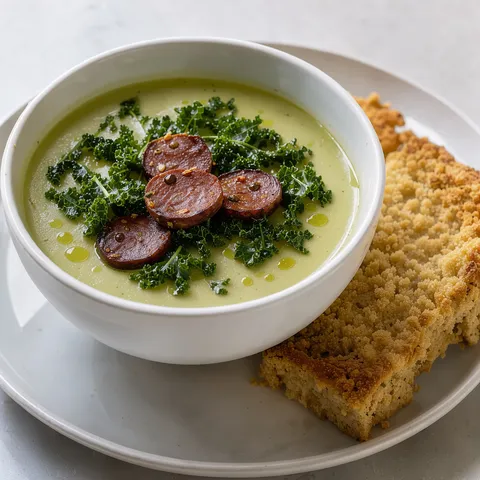 Portuguese Kale, Potato and Sausage Soup50 min · Soup
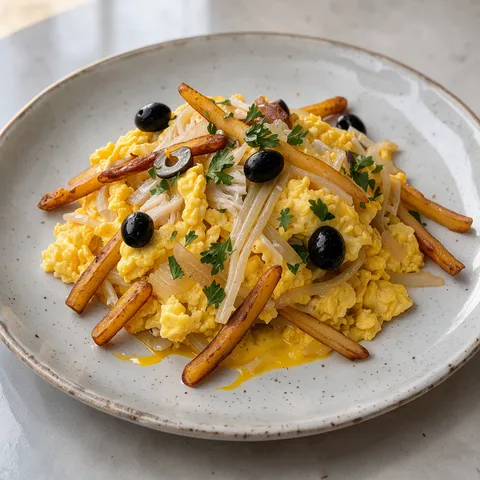 Salt Cod with Eggs and Crisp Potatoes50 min · Main course
 Portuguese Custard Tarts1 hr 20 min · Patisserie
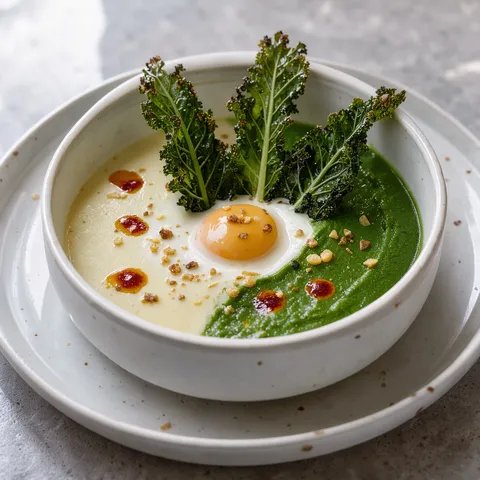 Caldo Verde 2.01 hr 15 min · Soup
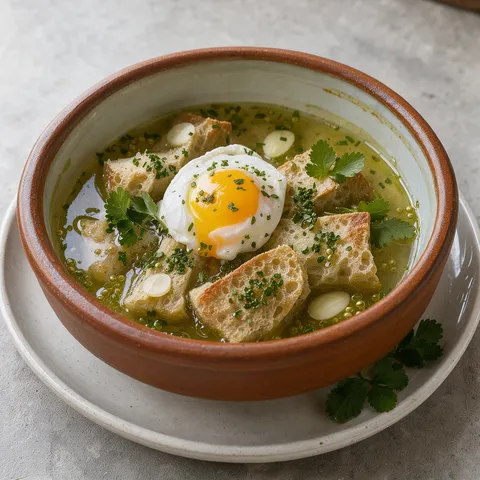 Alentejo Coriander Bread Soup30 min · Soup
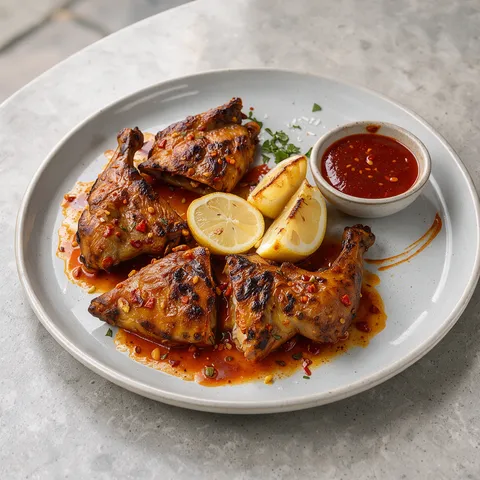 Algarve-Style Barbecued Chicken1 hr 40 min · Main course