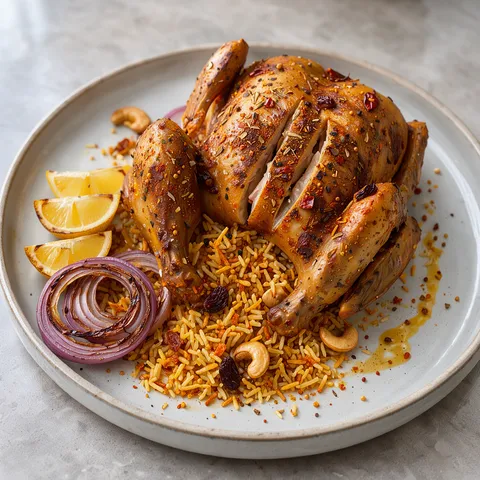
Karachi-Style Whole Roast Chicken Chicken Sajji
A Pakistani main course. Takes 2 hr 10 min · +2 hr marinating, Serves 4. Difficulty: medium.
At a glance
- Total time
- 2 hr 10 min · +2 hr marinating
- Serves
- Serves 4
- Difficulty
- Medium
- Cuisine
- Pakistani cuisine
- Dish type
- Main course
- Diet
- Gluten-free
- Allergens
- Milk
Ingredients
Chicken and marinade
- 1 whole chicken (about 1.4 kg)
- 1.5 tsp salt
- 1 tsp ground black pepper
- 1 tsp ground cumin
- 1/2 tsp chilli powder
- 4 garlic cloves (crushed in a mortar)
- 3 tbsp lemon juice (1 lemon)
- 2 tbsp sunflower oil
Rice stuffing
- 150 g basmati rice
- 1 litre water (for rinsing and soaking)
- 1 tbsp sunflower oil
- 1/2 tsp cumin seeds
- 2 cloves
- 2 green cardamom pods
- 1 bay leaf
- 225 ml water
- 1/2 tsp salt
Cooking and serving
- 30 g butter (melted)
- 1 lemon (sliced)
- 1 small red onion (in thin rings)
Equipment
- Chopping board
- Chef's knife
- Pestle and mortar
- Mixing bowls
- Cling film
- Colander
- Saucepan
- Baking tray
- Oven
- Pastry brush
- Probe thermometer
- Baking paper (optional)
Method
- Prepare the chicken: Pat the chicken thoroughly dry inside and out with kitchen paper. On a chopping board, use a chef's knife to score the breasts and legs 1 cm deep at 2-3 cm intervals. The scoring carries the marinade into the meat and helps the skin brown evenly all over
- Marinate: In a bowl, mix the salt, pepper, cumin, chilli powder, garlic, lemon juice and oil. Rub the mixture into the chicken inside and out and into the scoring with your fingers. Cover with cling film and leave in the fridge for at least 2 hr, ideally 4 hr. In Balochistan sajji is usually rubbed only with salt, and in Karachi this lemony spice mix is added
- Cook the rice: 40 min before cooking, rinse the rice in a bowl 3 times, soak for 20 min and drain in a colander. Heat the oil in an 18 cm saucepan over medium heat, stir the cumin, cloves, cardamom and bay leaf for 30 sec, then add the rice and stir for 1 min. Add the 225 ml water and the salt and bring to the boil, then cover and cook over the lowest heat for 10 min, take off the heat and leave to steam for 5 min. Remove the bay leaf, spread the rice on a tray and let it cool slightly for 10 min
- Prepare the oven: Preheat the oven to 200°C. Take the chicken out of the fridge and set the oven's wire rack over a roasting tray. With the underside of the chicken in the air, it browns evenly all over
- Stuff and truss: Loosely fill the cavity with the warm rice, without packing it in, so the heat reaches the centre. Set any leftover rice aside for serving. Close the opening with cocktail sticks and tie the legs together with kitchen string. Stuff the chicken just before it goes into the oven, as stuffed raw chicken must not be left standing
- Roast: Place the chicken breast side up on the rack and brush with half the melted butter using a pastry brush. Roast for 1 hr 15 min, brushing with the remaining butter after 40 min. If the breast browns too much, cover it with a piece of baking paper
- Check it is cooked: Insert a thermometer into the thickest part of the thigh without touching the bone, and it should read at least 74°C. Then measure the very centre of the stuffing, which should also be at least 74°C. The joint should be loose when you wiggle the leg and the juices from the scoring should run clear. If not, roast for another 10 min
- Rest: Rest the chicken on the tray for 10 min, then remove the string and cocktail sticks. Resting keeps the juices in the meat
- Serve: Transfer the chicken to a large plate, spoon the rice out of the cavity and spread it alongside. Carve the chicken into legs, wings and breast. Place the lemon slices and onion rings alongside and serve hot
Chef's note
Sajji comes from the shepherd cooking of Balochistan: a whole lamb or chicken is rubbed with salt and cooked for hours on skewers planted around the fire. The sajji shops of Karachi stuff the chicken with spiced rice, and roasting it in the oven is the closest way to make it at home. In a stuffed chicken, both the thigh and the centre of the stuffing must reach at least 74°C. A 1.4 kg chicken with the rice serves 4. It is traditionally eaten with kaak (Balochi bread) or naan.
Frequently asked questions
- How do you tell when the stuffed chicken is cooked?
- A thermometer should read at least 74°C in the thickest part of the thigh, and the centre of the stuffing should also be at least 74°C. The joint should be loose and the juice from a score should run clear.
- Is it a problem to pack the rice into the chicken?
- Fill the chicken loosely rather than packing it, so the heat reaches the centre. Add the stuffing just before putting it in the oven.
- Why is the chicken scored?
- The scores carry the marinade into the meat and help the skin brown evenly all over.
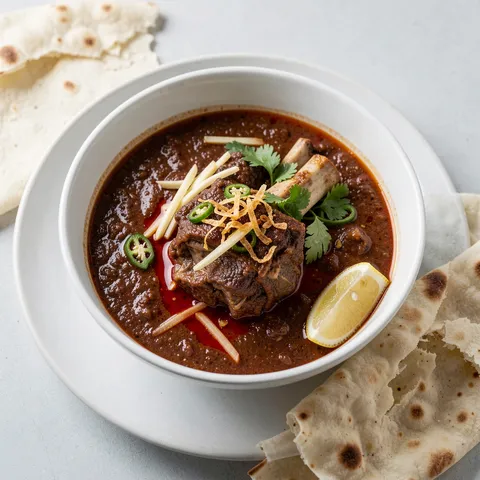 Pakistani Slow-Cooked Beef Shin2 hr · Main course
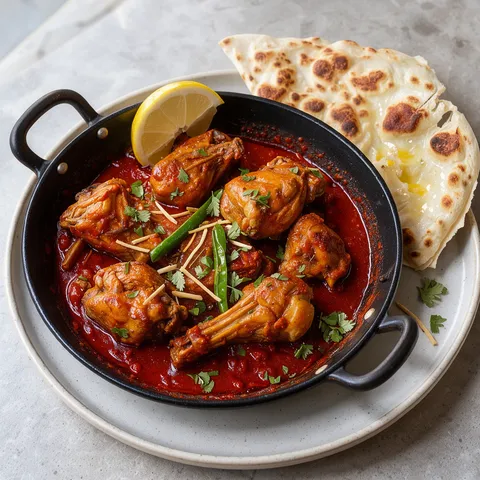 Peshawari-Style Chicken with Tomatoes40 min · Main course
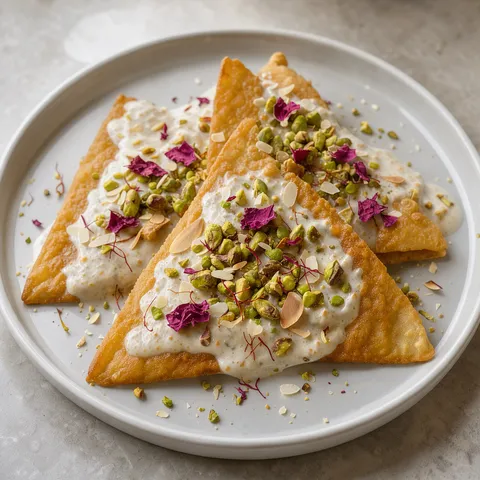 Fried Bread Dessert with Saffron Milk Cream55 min · Dessert
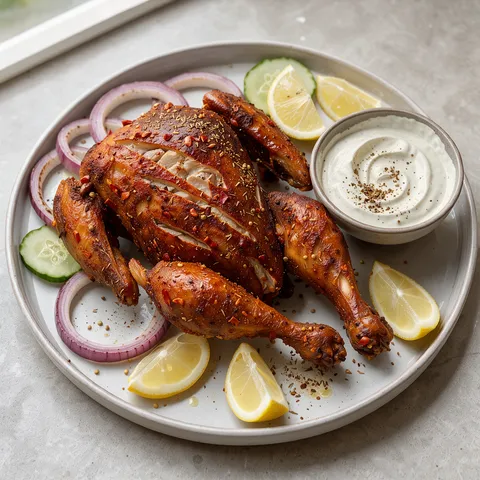 Lahore-Style Steamed and Fried Whole Chicken2 hr 30 min · Main course
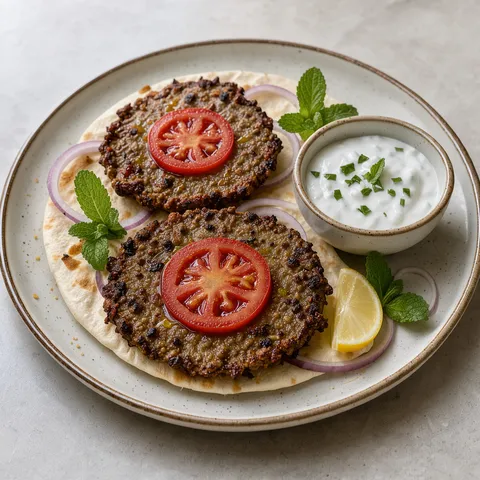 Peshawar-Style Flat Mince Kebab with Cornmeal1 hr 30 min · Main course
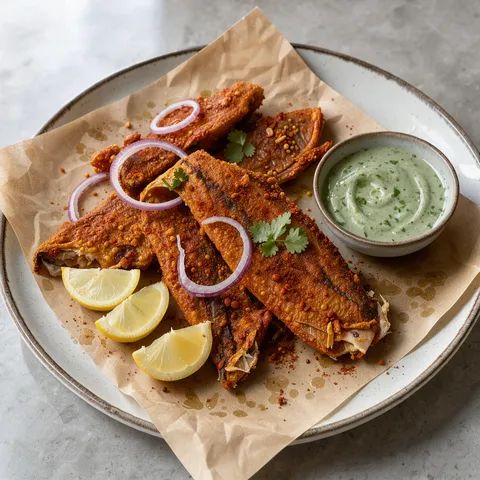 Fried Fish in Spiced Gram Batter1 hr · Starter