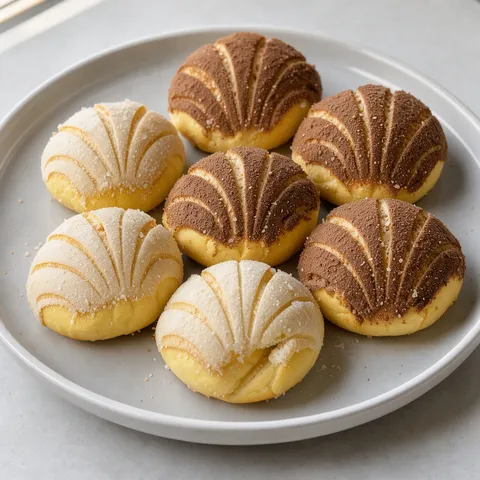
Mexican Sweet Bread Conchas
A Mexican patisserie. Takes 1 hr 15 min · +2 hr 30 min rising, Makes 12. Difficulty: medium.
At a glance
- Total time
- 1 hr 15 min · +2 hr 30 min rising
- Serves
- Makes 12
- Difficulty
- Medium
- Cuisine
- Mexican cuisine
- Dish type
- Patisserie
- Allergens
- Gluten, Milk, Eggs
Ingredients
Dough
- 500 g strong white bread flour
- 100 g caster sugar
- 8 g fast-action dried yeast
- 1 tsp salt
- 3 eggs (at room temperature)
- 150 ml lukewarm milk
- 1 tsp vanilla extract
- 100 g butter (softened, cubed)
Topping
- 100 g plain flour
- 100 g icing sugar
- 90 g butter (softened)
- 1/2 tsp vanilla extract
- 1 tbsp cocoa powder (for flavouring half the topping)
To brush
- 1 egg + 1 tbsp milk
Equipment
- Stand mixer
- Dough scraper
- Silicone spatula
- Precision scales
- Baking paper
- Baking tray
- Pastry brush
- Oven
- Probe thermometer (optional)
Method
- Knead the dough: Mix the flour, sugar, yeast and salt in the bowl of a stand mixer. Add the eggs, lukewarm milk and vanilla and knead with the dough hook on low speed for 4 min. Add the butter cube by cube, adding the next piece once the previous one has disappeared, and knead on medium speed for 8-10 min, until the dough comes away from the sides of the bowl and is glossy and elastic. A small piece stretched thin should let light through without tearing
- First prove: Put the dough in a lightly oiled bowl, cover with cling film and leave to prove in a warm place at 26-28°C for 1 hr 30 min, until doubled in size. When pressed with a finger, the dent should spring back slowly
- Make the topping dough: While the dough proves, work the flour, icing sugar, butter and vanilla together with a spatula and dough scraper, pressing, into a smooth dough with the consistency of play dough. Halve it and knead the cocoa into one half. If the topping is too soft, firm it up in the fridge for 10 min
- Shape: Knock back the dough and divide it into 12 equal pieces on the scales (about 75 g each). Roll each piece under your palm on the worktop into a ball with a taut surface. A taut surface keeps the round shape as the dough proves. Space them out on two trays lined with baking paper and flatten the tops slightly
- Add the topping: Divide the topping dough into 12 pieces. Press each piece out between two sheets of baking paper by hand to a 9 cm circle. Lightly brush the dough balls with the egg mixture, lay the topping over each and press gently. With a sharp knife or a cutter, score curved lines like a seashell into the topping without cutting through to the dough
- Second prove: Leave the trays, covered, in a warm place for 1 hr, until the balls have clearly risen and the lines in the topping begin to open. Preheat the oven to 180°C
- Bake: Bake the conchas for 18-20 min, until the bases are light brown and the topping looks matt and cracked without taking on colour. The topping should not brown. If it does, cover the tops with baking paper after 10 min. The internal temperature of the bread should be 88-90°C
- Cool: Leave on the tray for 5 min, then cool on a wire rack for 15 min. The topping is fragile while hot and sets as it cools
- Serve: Arrange the vanilla and chocolate conchas side by side on a plate, with their seashell-patterned tops showing. Serve for breakfast with hot chocolate or coffee
Chef's note
The concha is the best-known pan dulce of Mexican panaderías and takes its name from the seashell pattern on its topping. The traditional topping is made with vegetable shortening, and butter gives a more fragrant but slightly softer topping. They are best eaten on the day, and reheating for 3 min in the oven the next day freshens them.
Frequently asked questions
- How do I know the concha dough is kneaded enough?
- The dough should come away from the sides of the bowl and look glossy and elastic. A small piece stretched thin should let light through without tearing.
- What if the concha topping browns while baking?
- The topping should stay pale, matt and cracked. If it starts to brown, cover the buns loosely with baking paper after the first 10 minutes.
- Why are the dough balls shaped with a tight surface?
- Roll each piece under the palm of your hand on the worktop into a tight ball. A taut surface helps the bun hold its round shape as it proves.
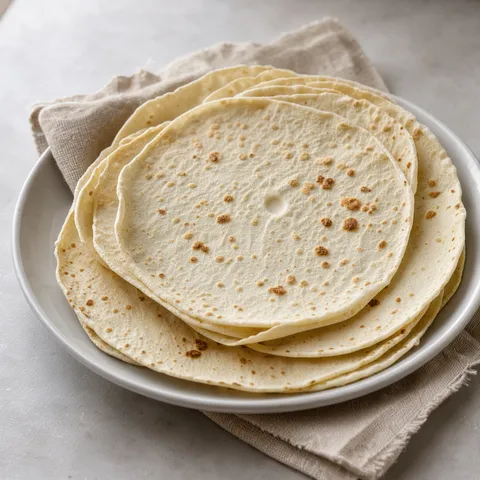 Corn Tortillas1 hr 15 min · Bread & pastry
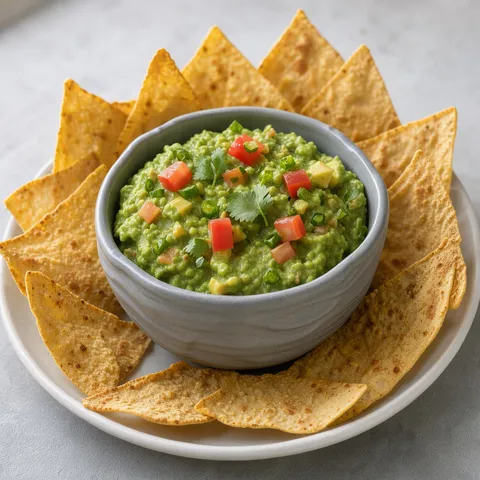 Guacamole25 min · Meze
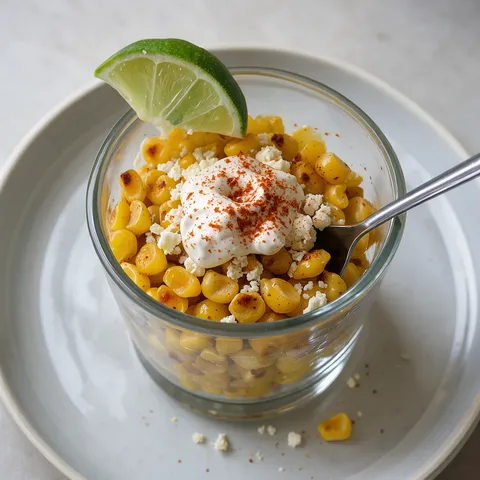 Mexican Corn in a Cup35 min · Meze
 Mexican Tortilla Soup1 hr · Soup
 Red Chicken and Hominy Stew2 hr · Soup
 Chargrilled Beef Tacos1 hr · Main course