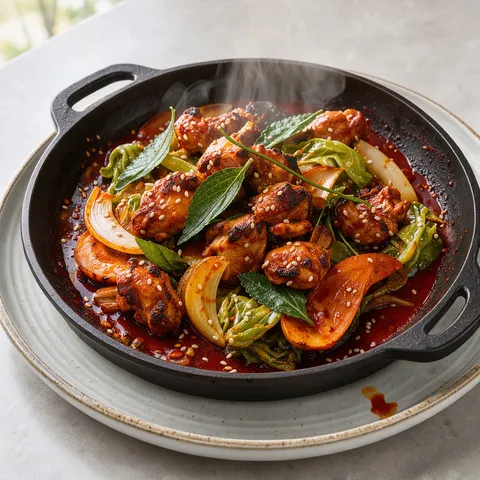
Chuncheon-Style Spicy Chicken and Cabbage Dakgalbi
A Korean main course. Takes 1 hr 5 min, Serves 4. Difficulty: medium.
At a glance
- Total time
- 1 hr 5 min
- Serves
- Serves 4
- Difficulty
- Medium
- Cuisine
- Korean cuisine
- Dish type
- Main course
- Allergens
- Gluten, Eggs, Sesame, Soya, Mustard
Ingredients
Chicken
- 800 g boneless chicken thighs (large bite-sized pieces)
Sauce
- 3 tbsp gochujang (Korean chilli paste)
- 2 tbsp gochugaru
- 2 tbsp soy sauce
- 1 tbsp sugar
- 1 tbsp rice syrup or honey
- 6 garlic cloves (grated)
- 1 tbsp ginger (grated)
- 1 tsp curry powder
- 1/4 tsp black pepper
- 1 tbsp sesame oil
- 2 tbsp water
Vegetables
- 1/4 white cabbage (about 400 g, large pieces)
- 1 sweet potato (about 250 g, 5 mm half-moons)
- 1 onion (thick slices)
- 4 spring onions (5 cm)
- 10 perilla leaves (or basil leaves, shredded)
- 2 tbsp neutral oil
Fried rice to finish (bokkeumbap)
- 300 g cooked short-grain rice
- 2 sheets dried gim (seaweed, crumbled)
- 1 tbsp sesame oil
- 2 tbsp chopped cabbage
- 1 tbsp toasted sesame seeds
Equipment
- Saucepan
- Mixing bowls
- Cast-iron frying pan
- Wooden spoon / spatula
- Silicone spatula
- Chef's knife
- Chopping board
- Probe thermometer (optional)
Method
- Cook the rice: Bring the washed rice (about 130 g uncooked) to the boil with 180 ml water, cook covered over the lowest heat for 15 min, leave to steam for 10 min, then uncover and leave to cool. Slightly dried-out rice fries much better in the finishing fried rice
- Mix the sauce: Mix the gochujang, gochugaru, soy sauce, sugar, syrup, garlic, ginger, curry powder, black pepper, sesame oil and water to a thick, glossy paste. Curry powder is the little-known but signature aroma of the Chuncheon style
- Marinate the chicken: Rub the chicken pieces well with two-thirds of the sauce and leave for 20 min. Set the rest of the sauce aside for later. Thigh meat stays much juicier than breast and is the traditional choice for dakgalbi
- Prepare the vegetables: Cut the cabbage into large leafy pieces, the sweet potato into thin half-moons and the onion into thick slices. The sweet potato must be thin so it cooks in the time the chicken takes
- Cook in a wide pan: Heat a wide, heavy-based cast-iron pan over medium-high heat and add the oil. Spread the cabbage, sweet potato and onion over the base first, then put the chicken and its sauce on top. Leave untouched for 3-4 min so the cabbage underneath caramelises with the sauce
- Stir-fry: Cook for 12-15 min, turning constantly with a wooden spoon or spatula. Keep going until the chicken is deep red outside with slightly charred edges and the sweet potato is easily pierced with a knife. If the sauce sticks to the pan, add 2 tbsp water. The internal temperature of the chicken should reach 74°C
- Final flavour: Add the remaining sauce, the spring onions and the perilla leaves and stir for another 2 min. With its aroma somewhere between mint and anise, perilla is a signature of Korean cooking
- Serve in the pan: Put the pan in the middle of the table, or pile the glossy red chicken and cabbage high on a large plate, and scatter with the perilla strips and sesame seeds. Everyone helps themselves from the centre
- Fry the finishing rice: Once three-quarters of the chicken has been eaten, add the rice, crumbled gim, sesame oil and chopped cabbage to the remaining sauce and pieces. Mix, chopping with the spatula, then press flat into the pan and leave untouched over high heat for 3-4 min. Once a crisp, browned crust forms on the bottom, sprinkle with sesame seeds and serve, scraping it from the pan
Chef's note
Dakgalbi was born in the 1960s in the city of Chuncheon in Gangwon as a cheap tavern dish. In restaurants it is cooked in a large cast-iron pan set into the table, and the fried rice at the end is the most eagerly awaited moment of the meal. Gochujang, gochugaru, soy sauce and gim are traditionally bought ready-made.
Frequently asked questions
- Why is chicken thigh used in dakgalbi?
- Thigh meat stays much juicier than breast and is the traditional choice for dakgalbi.
- What is the finishing rice (bokkeumbap)?
- After the chicken is eaten, rice, crumbled gim, sesame oil and cabbage are added to the sauce left in the pan and fried. Serve when a crisp crust forms on the bottom.
- Why is there curry powder in the marinade?
- Curry powder is a little-known but recognisable aroma of the Chuncheon style. It goes into the sauce with the gochujang, garlic and ginger.
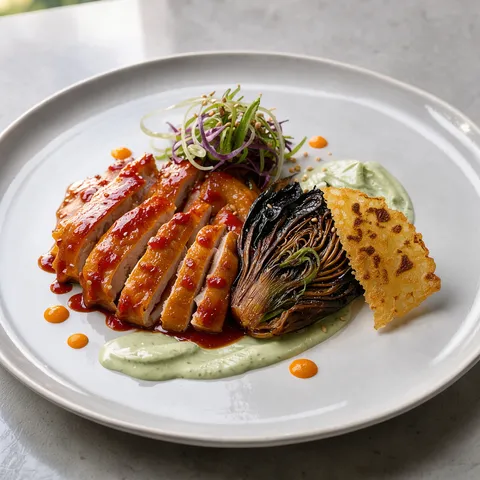 Dakgalbi 2.01 hr 25 min · Main course
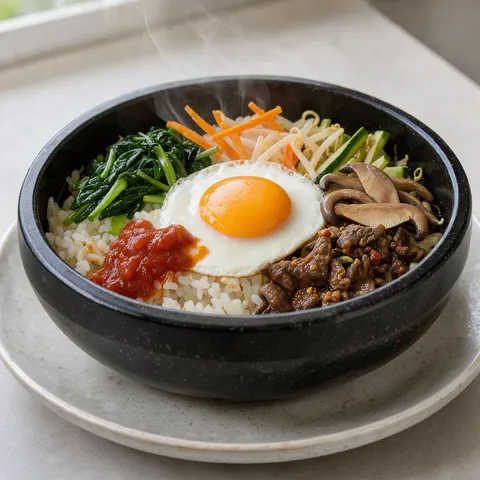 Bibimbap1 hr 15 min · Main course
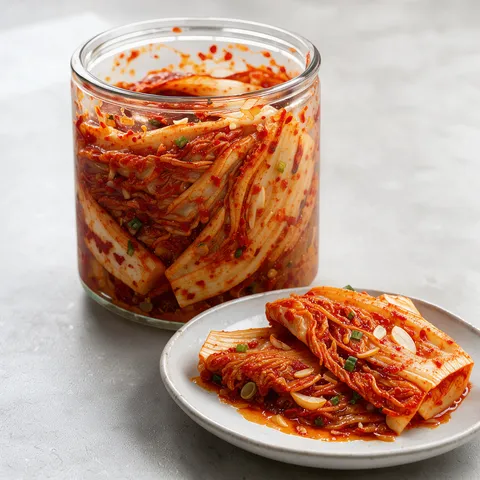 Kimchi3 hr · Side dish
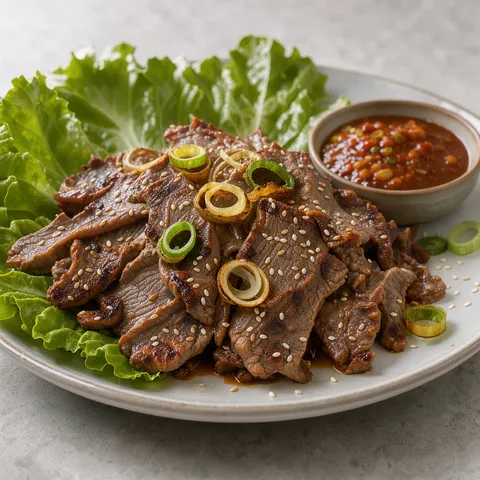 Bulgogi30 min · Main course
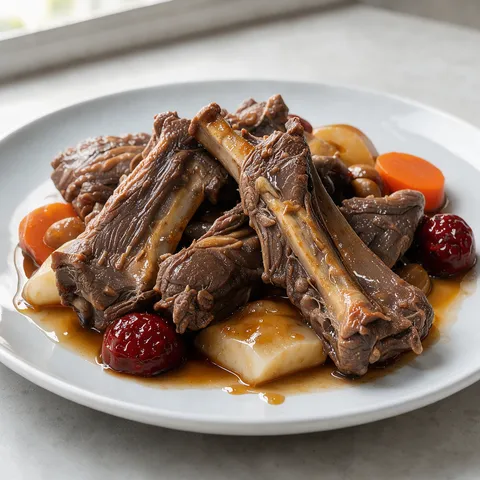 Korean Braised Short Ribs1 hr 30 min · Main course
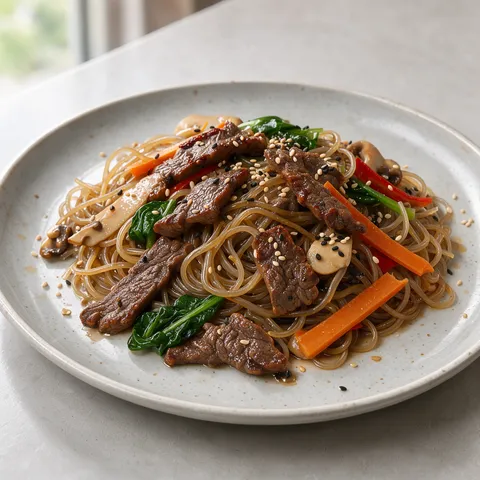 Korean Glass Noodles with Vegetables45 min · Main course
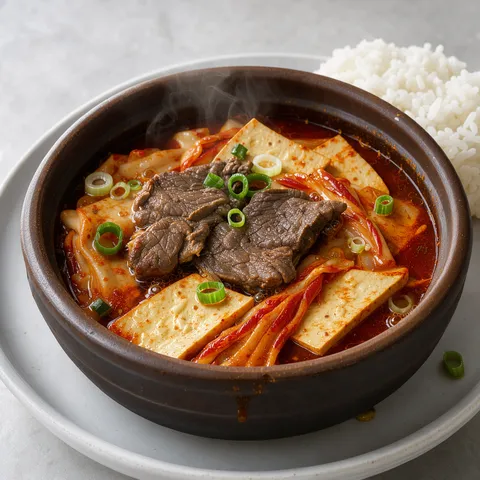 Kimchi Stew40 min · Soup