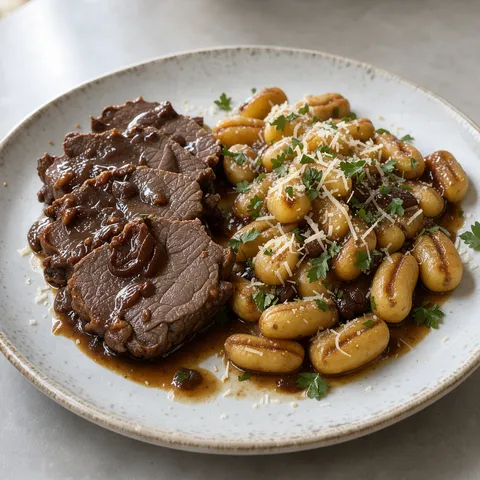
Dalmatian Beef with Prunes Dalmatinska Pašticada
A Croatian main course. Takes 3 hr 30 min · +12 hr marinating (pressure cooker: ~2 hr 30 min), Serves 4. Difficulty: challenging.
At a glance
- Total time
- 3 hr 30 min · +12 hr marinating (pressure cooker: ~2 hr 30 min)
- Serves
- Serves 4
- Difficulty
- Challenging
- Cuisine
- Croatian cuisine
- Dish type
- Main course
- Allergens
- Gluten, Milk, Eggs, Celery, Sulphites
Ingredients
Meat and marinade
- 1 kg beef topside or silverside (frikando or kontrnuar cut, in one piece, not diced)
- 300 ml red wine vinegar
- 300 ml water
- 4 garlic cloves (halved lengthways)
- 8 cloves
- 50 g smoked beef bacon without fenugreek coating (cut into batons)
For the braise
- 3 tbsp olive oil
- 2 onions (300 g)
- 2 carrots
- 150 g celeriac
- 1 parsley root
- 2 tbsp tomato paste
- 100 g pitted prunes
- 2 dried figs
- 200 ml prošek (Dalmatian sweet wine) or sweet red wine
- 300 ml dry red wine
- 500 ml Brown Beef Stock (Basics)
- 2 bay leaves
- 1 rosemary sprig
- 1/4 tsp nutmeg
- peel of 1 lemon (in strips)
- 1.5 tsp salt
- 1 tsp black pepper
Njoki
- 800 g floury potatoes
- 200 g plain flour
- 1 egg
- 1 tsp salt
- 20 g butter
To serve
- 30 g grated hard cheese
- flat-leaf parsley
Equipment
- Filleting knife
- Mixing bowls
- Heavy-based saucepan
- Saucepan
- Potato ricer
- Blender
- Colander
- Chef's knife
- Oven (optional)
- Pressure cooker (optional)
Method
- Lard the meat: The day before, use a thin knife to make deep incisions 2 cm apart, parallel to the grain of the meat. Push a piece of garlic, a clove and a baton of bacon into each one. In Dalmatia this is called pikanje, and it flavours the braise from the inside
- Marinate: Put the meat in a container, pour over the vinegar and water to cover and leave in the fridge for 12 hr, turning occasionally. The vinegar loosens the outside of the meat and gives pašticada its characteristic sour undertone. Before cooking, pat the meat thoroughly dry with kitchen paper and discard the marinade
- Sear: Heat the olive oil in a heavy-based saucepan over medium-high heat and sear the meat, turning, for 8-10 min until deep brown on all sides. Season with salt and black pepper and transfer to a plate. Wet meat doesn't sear, it stews, which is why drying it is essential
- Caramelise the vegetables: Finely chop the onions, carrots, celeriac and parsley root. Cook them in the same pan over medium heat for 20 min, stirring often, until deep golden and sweet-smelling. The dark, glossy sauce of pašticada comes from this patient frying. Add the tomato paste and fry for another 2 min
- Add the wines: Pour in the prošek and red wine and boil for 5 min, scraping up the sediment from the bottom, until the smell of alcohol has gone. Add the prunes, figs, bay leaves, rosemary, nutmeg and lemon peel
- Braise: Return the meat to the pan and add enough stock for the liquid to come two-thirds of the way up the meat. Cover and cook over the lowest heat or in a 150°C oven for 2 hr 30 min, turning the meat every half hour and adding a little stock or water if the liquid reduces. It is done when a fork slides in and out of the meat easily. In a pressure cooker this takes 1 hr 10 min
- Boil the potatoes for the njoki: While the meat is cooking, boil the potatoes in their skins in salted water for 25-30 min. Peel them while hot, pass them through a ricer onto the work surface and leave for 10 min to let the steam escape. Dry potato needs less flour, and njoki made with little flour are soft and light
- Knead the njoki dough: Add the egg, salt and most of the flour to the potato and knead for just 1-2 min, until the dough comes together. If it is sticky, add the remaining flour. Roll the dough into 2 cm thick ropes, cut into 2 cm pieces and roll them over a fork to make ridges. The ridges hold the sauce
- Reduce the sauce: Lift out the cooked meat and cover with foil. Remove the bay leaves, rosemary and lemon peel. Blend the sauce with the prunes and figs until smooth. Return to the pan and thicken for 5-10 min, until it coats the back of a spoon in a thick, glossy layer. Adjust with salt and black pepper: you are looking for a balance of sweet, sour and wine
- Boil the njoki: Drop the njoki into boiling salted water. Lift them out with a slotted spoon 1 min after they rise to the surface and toss with the butter
- Slice: Slice the meat 1 cm thick across the grain, return the slices to the sauce and heat for 2-3 min
- Plate: Pile the njoki on one half of a hot, wide plate and arrange three slices of meat, leaning against each other, on the other half. Cover everything generously with the thick sauce, letting it fill the ridges of the njoki. Scatter the njoki with grated cheese and chopped parsley
Chef's note
Serves 4. The original recipe lards the meat with pork bacon (pancetta); here it is made with beef bacon without fenugreek coating (dry-cured smoked beef brisket). Pašticada is the wedding and feast-day dish of Split and Dalmatia, and every family has its own ratio of dried fruit to wine. The sauce is even better the next day, but make the njoki fresh.
Frequently asked questions
- Why is the beef prepared a day ahead for pašticada?
- Push the garlic, cloves and bacon batons into holes cut along the grain, then leave the beef in the vinegar marinade for 12 hours. The vinegar loosens the outer part of the meat and gives pašticada its tangy undertone.
- Why is the marinated beef dried before searing?
- Wet meat stews rather than sears. So dry the beef well with kitchen paper.
- How do I make soft, light gnocchi?
- Boil the potatoes in their skins, press them while hot and let the steam escape. Dry potato needs less flour, and gnocchi with less flour are softer.
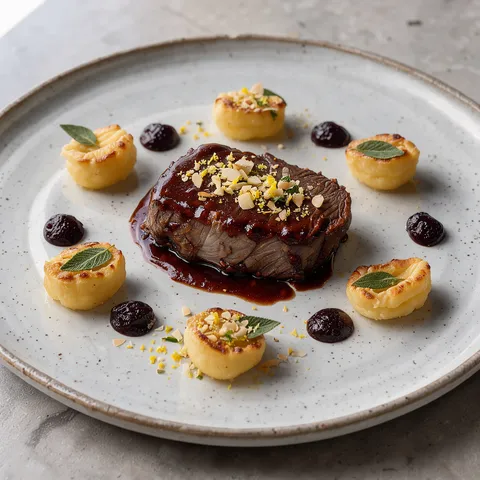 Pašticada 2.01 hr 30 min · Main course
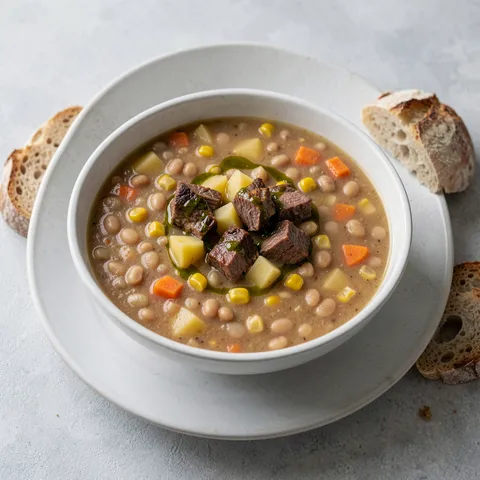 Istrian Bean and Sweetcorn Soup1 hr 55 min · Soup
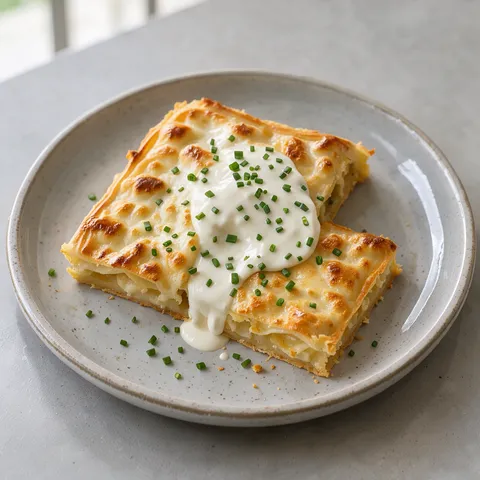 Zagorje Curd Cheese Parcels2 hr · Bread & pastry
 Dubrovnik Caramel Custard1 hr 20 min · Dessert
 Dalmatian Black Risotto with Cuttlefish Ink1 hr · Main course
 Dalmatian Mixed Fish Stew with Polenta1 hr 15 min · Main course
 Zagorje Roast Turkey Legs2 hr 15 min · Main course