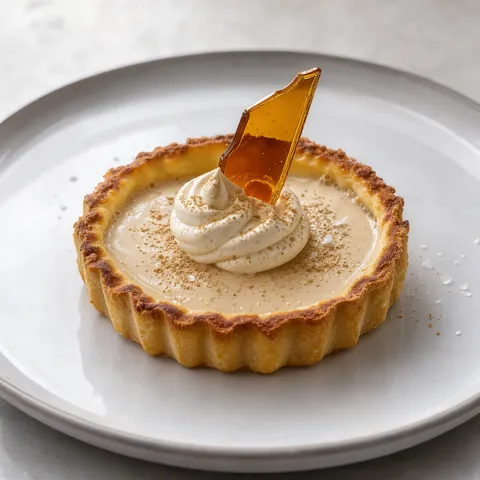
Hong Kong Egg Tarts 2.0
A Chinese dessert. Takes 1 hr 23 min, Serves 4. Difficulty: challenging.
At a glance
- Total time
- 1 hr 23 min
- Serves
- Serves 4
- Difficulty
- Challenging
- Cuisine
- Chinese cuisine
- Dish type
- Dessert
- Allergens
- Gluten, Milk, Eggs
Ingredients
Crust
- 200 g plain flour
- 50 g icing sugar
- 110 g cold butter (cubed)
- 1 egg yolk
- 2 tbsp cold water
- a pinch of salt
Milk tea custard
- 250 ml milk
- 80 ml double cream
- 3 tbsp (8 g) strong black tea (Ceylon or Assam)
- 3 egg yolks
- 1 egg
- 70 g sugar
- a pinch of salt
Tea chantilly
- 150 ml cold double cream
- 20 g icing sugar
- 2 tbsp infusion from the milk tea custard (chilled)
Caramel glass
- 80 g sugar
- 2 tbsp water
Finish
- 1 tsp tea powder (finely ground)
- flaky salt for the edges
Equipment
- Tart tin
- Rolling pin / oklava
- Oven
- Balloon whisk
- Fine sieve / chinois
- Mixing bowls
- Saucepan
- Frying pan
- Pastry brush
- Baking paper
- Baking tray
Method
- Make the crust dough: Mix the flour, icing sugar and salt. Rub the cold butter in with your fingertips to the consistency of breadcrumbs. Add the egg yolk and water and gather together without kneading. Shape into a disc and wrap in cling film. Keeping the fat cold makes the crust crumbly (~8 min)
- Chill the dough and infuse the tea: Rest the dough in the freezer for 15 min, as cold dough does not tear when rolled and does not shrink in the oven. Meanwhile, bring the milk, cream and tea to the boil in a small saucepan, take off the heat, cover and steep for 6 min. Strain through a sieve, do not press the leaves, and set aside 2 tbsp of the tea milk for the chantilly. The tea gives the milk its aroma and a light tannin taste (~15 min)
- Line the tins: Roll the dough with a rolling pin to 3 mm thick and cut 4 circles of 12 cm. Press into greased 10 cm tart tins and prick the base with a fork to stop it puffing up. Trim the excess. Fill with baking paper and baking beans or weights. Chill the tins in the fridge for 5 min (~10 min)
- Blind-bake the crust: Preheat the oven to 190°C. Blind-bake the crusts for 12 min, remove the weights and bake for 4 min more. The crust should be light golden and dry. When it has cooled slightly, brush the inside thinly with 1 tbsp of beaten egg that you set aside from the custard. The glazed surface stops the custard soaking into the crust (~16 min)
- Mix the tea custard: Mix the egg yolks, egg and sugar with a fork without making them foamy. Add the warm tea milk in a thin stream and stir. Pass through a fine sieve twice. Sieving gives a smooth silky surface (~5 min)
- Fill and bake: Reduce the oven to 150°C. Put the crusts on a baking tray and ladle the custard into the crusts, leaving 3 mm below the edge. Burst the bubbles on the surface with the tip of a spoon. Bake for 25 min until the centre wobbles slightly and the edges are set. High heat opens holes in the custard and low heat gives silkiness (~25 min)
- Make the caramel glass while baking: Cook the sugar and water in a small frying pan over low heat without stirring for 5 min until amber. Pour a thin layer onto baking paper. It hardens as it cools and breaks like glass (~5 min)
- Whip the tea chantilly while baking: Whisk the cold cream, icing sugar and chilled tea infusion in a bowl with a whisk for 1-2 min until soft peaks form. If overwhipped it splits. Keep in the fridge (~2 min)
- Plate: Transfer the tarts to a rack and rest for 5 min. Put a spoonful of tea chantilly on each tart. Break the caramel glass and lean it upright on the chantilly. Sprinkle flaky salt around the edges and fine tea powder over the surface (~4 min)
Chef's note
The egg custard of the classic dan tat meets Hong Kong's symbol, milk tea (silk-stocking tea). The custard is flavoured with milk and tea, and the crust is blind-baked and sealed with egg. The caramel glass adds a crisp texture, and the flaky salt and tea chantilly add a sweet-salty balance. The original recipe uses lard; here it is made with butter.
Frequently asked questions
- What is Hong Kong milk tea?
- It is made with strongly brewed black tea and evaporated milk. The texture is smooth and the taste strong and slightly bitter.
- Why does the custard bubble?
- Eggs release gas at high heat. Baking at 150°C and straining the custard prevents it.
- Why do I brush the case with egg?
- A thin egg wash seals the tiny holes in the pastry. The custard does not soak into the case, so it stays crisp.
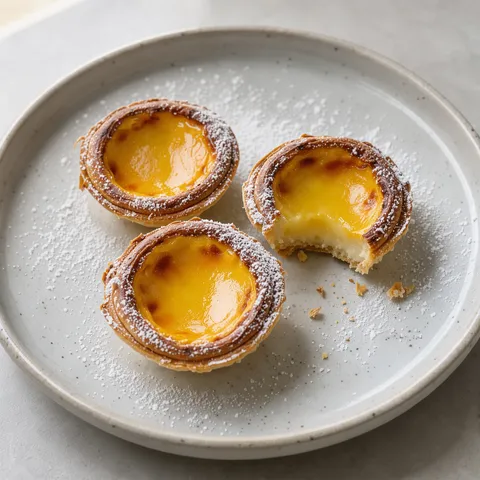 Hong Kong Egg Tarts1 hr 35 min · Dessert
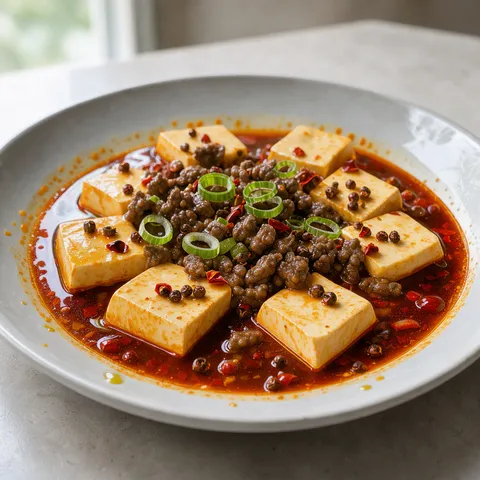 Mapo Tofu35 min · Main course
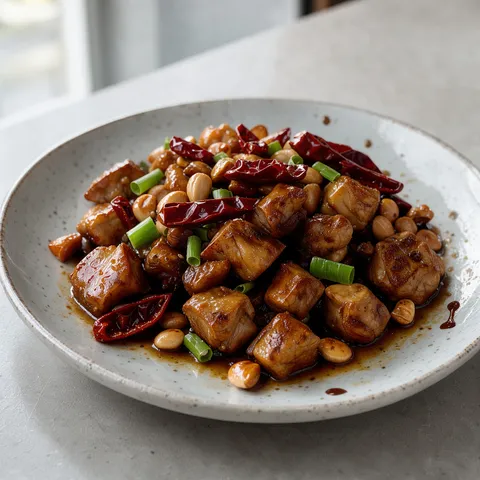 Kung Pao Chicken30 min · Main course
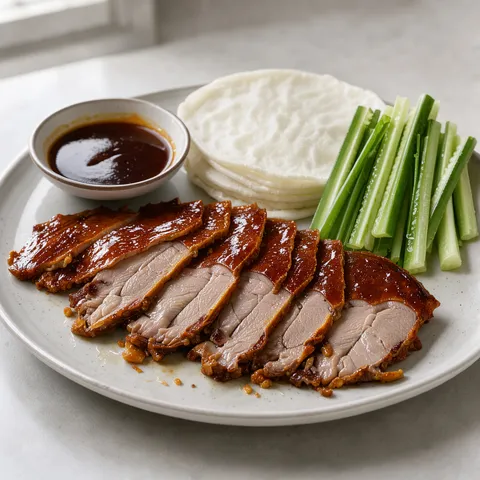 Peking Duck2 hr · Main course
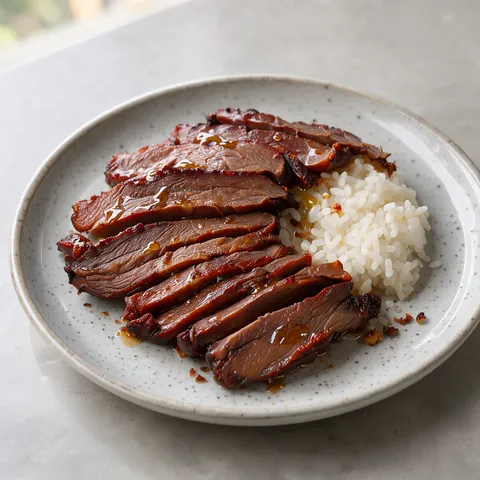 Char Siu1 hr · Main course
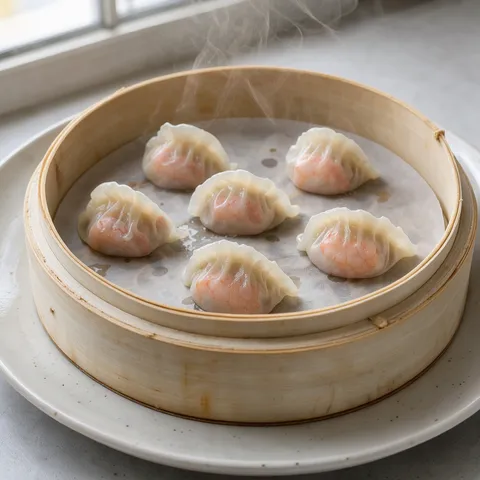 Crystal Prawn Dumplings1 hr 30 min · Starter
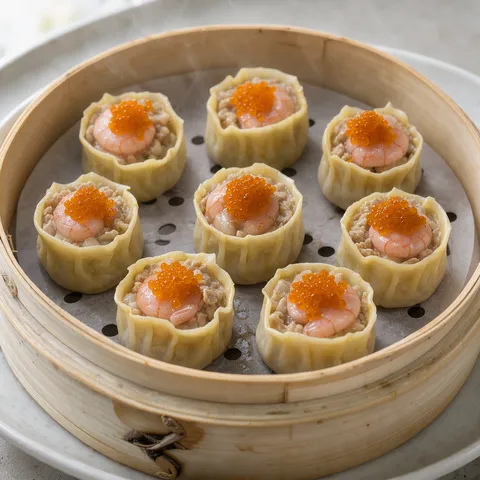 Open-Topped Dumplings50 min · Starter