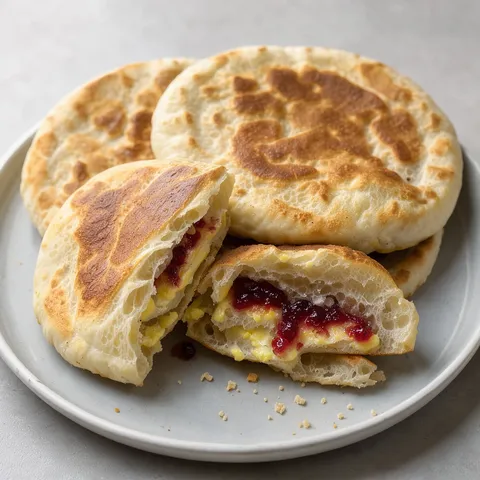
Botswana Dry-Pan Yeast Flatbreads Diphaphata
A Botswanan bread & pastry. Takes 1 hr · +1 hr 15 min rising, Serves 4. Difficulty: challenging.
At a glance
- Total time
- 1 hr · +1 hr 15 min rising
- Serves
- Serves 4
- Difficulty
- Challenging
- Cuisine
- Botswanan cuisine
- Dish type
- Bread & pastry
- Allergens
- Gluten, Milk
Ingredients
Dough
- 500 g plain flour
- 7 g fast-action dried yeast
- 1 tbsp caster sugar
- 1 tsp salt
- 150 ml lukewarm milk
- 150 ml lukewarm water
- 2 tbsp sunflower oil
Shaping
- 2 tbsp flour (for the work surface)
Equipment
- Mixing bowls
- Wooden spoon / spatula
- Cling film
- Rolling pin / oklava
- Cake ring / food ring
- Baking tray
- Cast-iron frying pan
- Silicone spatula
- Probe thermometer
Method
- Mix the dry ingredients: Mix the flour, yeast, sugar and salt in a large bowl. Mixing the yeast and salt dry first stops the yeast touching the salt directly and slowing down
- Bring the dough together: Add the lukewarm milk, lukewarm water and oil and stir with a wooden spoon until it clumps. The liquids should feel lukewarm on your wrist. Hot liquid kills the yeast
- Knead: Turn the dough out onto the work surface and knead for 10 min, until smooth, silky and slightly sticky. A small piece stretched between your fingers should form a thin membrane without tearing. Well-kneaded dough rises evenly in the pan
- Prove: Put the dough in a lightly oiled bowl, cover with cling film and leave in a warm place for 1 hr, until doubled in size
- Roll out: Knock back the dough and roll it out on a floured surface with a rolling pin to a thickness of 1.5 cm. The thickness matters: if rolled thin, diphaphata turns into a flat pitta, and if left thick, the centre stays raw
- Cut: Cut circles with an 8 cm pastry ring (or the rim of a glass). Gather the offcuts, rest for 5 min, roll out again and cut. You should get 12 in total. Arrange on a floured tray, cover with a clean tea towel and leave to prove a second time for 15 min
- Heat the pan: Heat a 28 cm cast-iron pan over low-medium heat for 4 min with no oil. A pinch of flour sprinkled on it should turn light beige in 15 sec. If it blackens immediately, the pan is too hot
- Cook: Put 6 breads in the pan and cook for 6 min, until the underside is an even light brown. Turn with a spatula and cook for another 6 min. Then hold each bread by the edge and roll it in the pan to cook the sides for 1 min. The bread should rise in the middle and the sides puff slightly. The centre should read 93°C on a thermometer
- Cook the second batch: Wrap the cooked breads in a clean tea towel. The steam keeps the crust soft. Cook the remaining 6 breads in the same way
- Serve: Split the diphaphata through the middle while hot and fill with butter, jam or chopped meat. In Botswana they are eaten at breakfast with tea or with seswaa
Chef's note
Diphaphata are yeasted flatbreads cooked in a dry pan, unlike the deep-fried magwinya, and resemble the English muffin. The dough is more aromatic if it proves slowly overnight in the fridge. Cooled breads freshen up when warmed in the pan for 1 min. Makes 12.
Frequently asked questions
- Why is the middle of my diphaphata raw?
- If the dough is rolled too thick the middle stays raw, so aim for 1.5 cm thickness. If it is rolled thin the bread turns into a flat pitta. The middle should read 93°C on a thermometer.
- How hot should the dry pan be?
- Heat a cast-iron pan without oil over a low to medium heat. A pinch of flour sprinkled on it should turn light beige in 15 seconds, and if it darkens at once the pan is too hot.
- How do I keep cooked diphaphata soft, and what is it eaten with?
- Wrap the cooked breads in a clean cloth, as the steam keeps the crust soft. Split them while hot and fill with butter, jam or minced meat. In Botswana they are eaten at breakfast with tea or with seswaa.
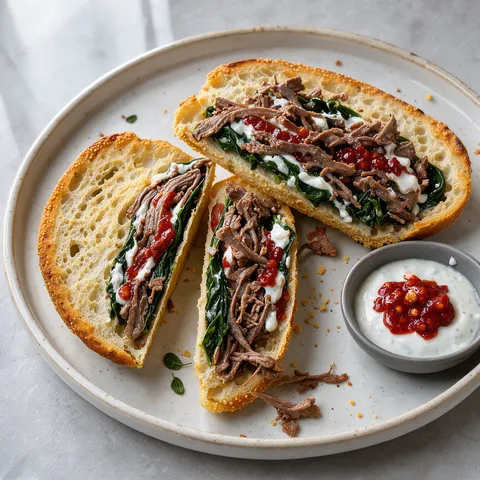 Diphaphata 2.01 hr 30 min · Main course
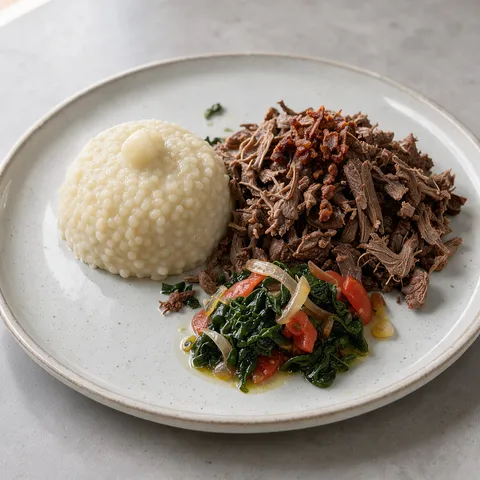 Seswaa and Bogobe1 hr 45 min · Main course
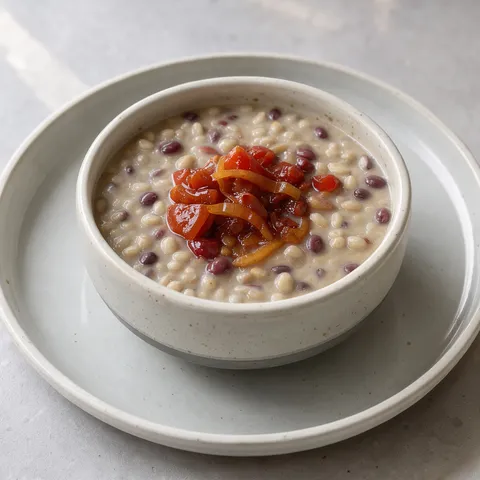 Botswana Cracked Maize and Beans1 hr 30 min · Main course
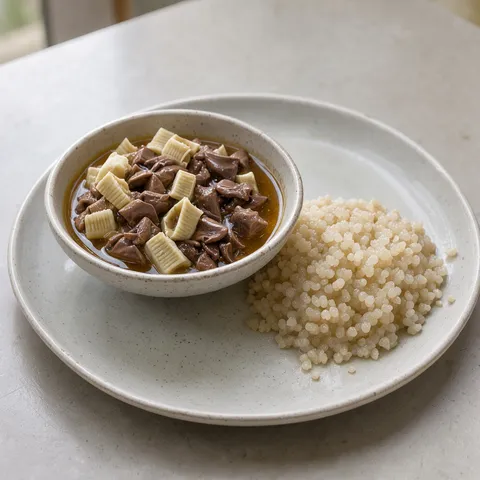 Botswana Finely Chopped Lamb Offal2 hr 10 min · Main course
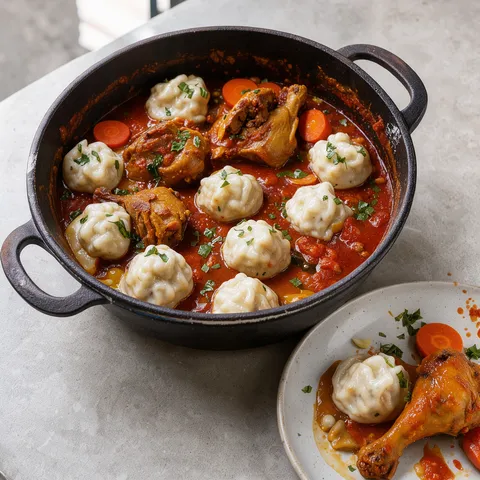 Botswana Chicken Stew1 hr 35 min · Main course
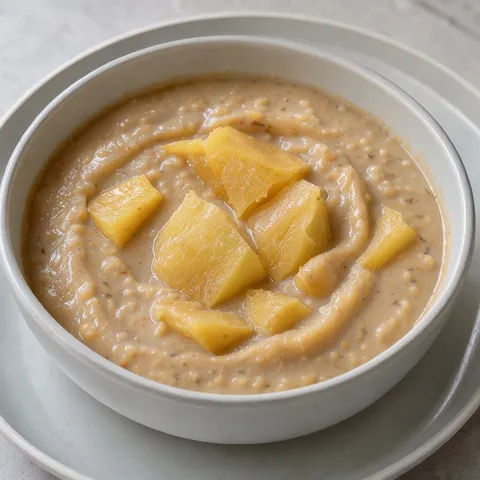 Botswana Melon and Sorghum Porridge55 min · Side dish
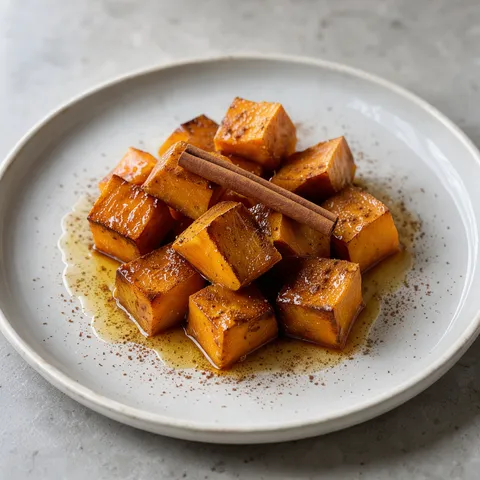 Botswana Cinnamon Butter Pumpkin40 min · Side dish