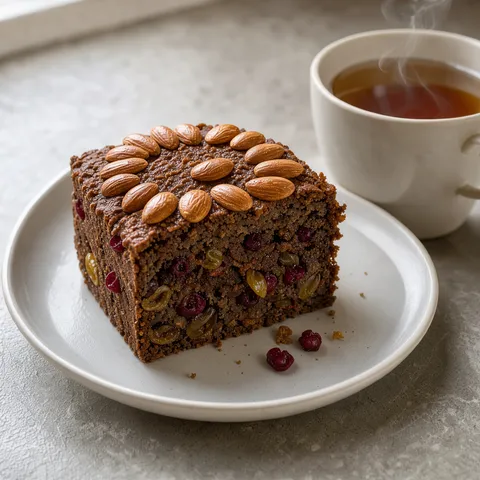
Dundee Cake
A Scottish patisserie. Takes 3 hr 15 min · +1 hr cooling, 20 cm round tin, 12 slices. Difficulty: medium.
At a glance
- Total time
- 3 hr 15 min · +1 hr cooling
- Serves
- 20 cm round tin, 12 slices
- Difficulty
- Medium
- Cuisine
- Scottish cuisine
- Dish type
- Patisserie
- Diet
- Vegetarian
- Allergens
- Gluten, Milk, Eggs, Tree nuts
Ingredients
Quick marmalade
- zest of 1 orange (in fine julienne, pith removed)
- 4 tbsp orange juice
- 2 tbsp sugar
Cake
- 175 g soft butter
- 175 g light brown sugar
- 3 eggs (at room temperature)
- 225 g plain flour
- 1 tsp baking powder
- a pinch of salt
- 50 g ground almonds
- 1/2 tsp cinnamon
- 1/4 tsp nutmeg
- finely grated zest and 2 tbsp juice of 1 orange
- finely grated zest of 1 lemon
- 175 g sultanas
- 175 g currants
Topping
- 60 g whole blanched almonds
For the tin
- butter
- 2 layers of baking paper
Equipment
- Saucepan
- Cake tin
- Baking paper
- Hand mixer
- Silicone spatula
- Mixing bowls
- Oven
- Chef's knife
- Fine grater (optional)
Method
- Make the quick marmalade: Cut the orange zest into julienne, blanch in boiling water for 2 min and drain, which removes its bitterness. Cook the zest with the orange juice and sugar in a small saucepan over low heat for 10 min until the syrup thickens and the peel turns translucent, then leave to cool slightly. This citrus note is the identity of Dundee cake and comes from the city's marmalade tradition. This takes 15 min
- Prepare the tin: Preheat the oven to 150°C (conventional). Grease a deep 20 cm round cake tin and line the base and sides with 2 layers of baking paper, letting the paper stand 5 cm above the rim. The double layer of paper stops the edges burning and drying out during the long bake. This takes 8 min
- Prepare the fruit: Mix the sultanas and currants in a bowl with the marmalade and the orange and lemon zest, sprinkle over 1 tbsp of the flour and toss to coat. The flour coating stops the fruit sinking to the bottom of the tin as it bakes. This takes 3 min
- Cream: Beat the butter and brown sugar with a hand mixer for 5 min until pale and fluffy. Add the eggs one at a time, beating for 1 min after each, and if the mixture looks like curdling, add a spoonful of flour. This takes 9 min
- Finish the batter: Mix the flour, baking powder, salt, ground almonds, cinnamon and nutmeg and fold into the creamed mixture with a spatula. Add the orange juice and fruit and stir gently until the fruit is evenly distributed. The batter should be thick, dropping reluctantly from the spoon. This takes 4 min
- Arrange the almonds: Transfer the batter to the tin, level the top and make a 1 cm dip in the centre so the cake rises flat without cracking on top. Lightly place the whole almonds on the surface in concentric rings from the outer edge to the centre, without pressing them in, or they sink as the cake bakes. This takes 5 min
- Bake: Bake on the lower-middle shelf at 150°C for 1 hr 45 min - 2 hr. After 1 hr, once the almonds are golden, cover the top loosely with baking paper. A skewer pushed into the centre should come out clean and dry, and the cake should have shrunk slightly from the sides. The low heat lets the dense fruit batter cook through in the centre without the edges burning
- Cool: Rest the cake in the tin for 30 min, then lift it out with its paper and leave to cool completely on a wire rack for 1 hr. Fruit cake cut while warm crumbles
- Plate: Slice the cake 2 cm thick with a sharp knife dipped in hot water. Lay a slice on a flat dessert plate so the dark fruit in the cut side and the glossy ring of almonds on top show. Serve with a cup of tea or a slice of mature Cheddar. This takes 3 min
Chef's note
Dundee cake takes its name from the city of Dundee on Scotland's east coast and is associated with the city's famous marmalade makers. Mary, Queen of Scots is said to have disliked cherries in her cake, which is why whole almonds were arranged on top instead. Makes a 20 cm cake, about 12 slices. Wrapped in paper, it keeps in an airtight container for 2 weeks, and its flavour matures as the days pass.
Frequently asked questions
- Why does the fruit not sink to the bottom of the Dundee cake?
- Toss the fruit in a tablespoon of flour before baking. The flour coating stops the fruit sinking to the bottom of the tin as it bakes.
- Why does Dundee cake bake at a low temperature with double paper?
- Double paper stops the sides burning and drying in the long bake. The low heat lets the middle of the dense fruit batter cook before the edges burn.
- Can Dundee cake be sliced while hot?
- No. A fruit cake cut hot crumbles. Rest it in the tin for 30 minutes and cool completely on a wire rack, then cut with a sharp knife dipped in hot water.
 Scottish Smoked Haddock and Potato Soup50 min · Soup
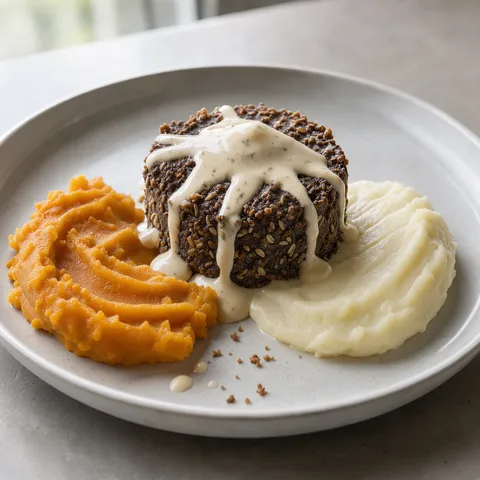 Haggis with Mashed Swede3 hr 30 min · Main course
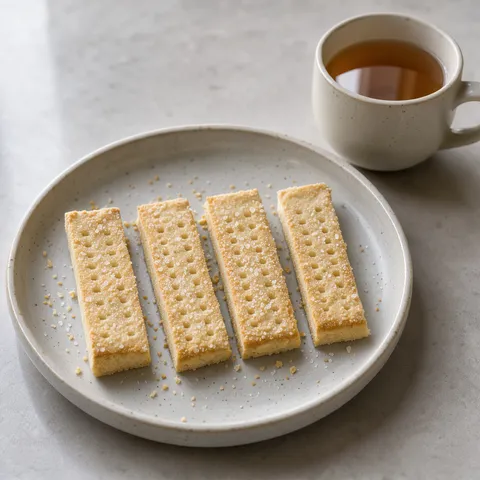 Shortbread1 hr 25 min · Patisserie
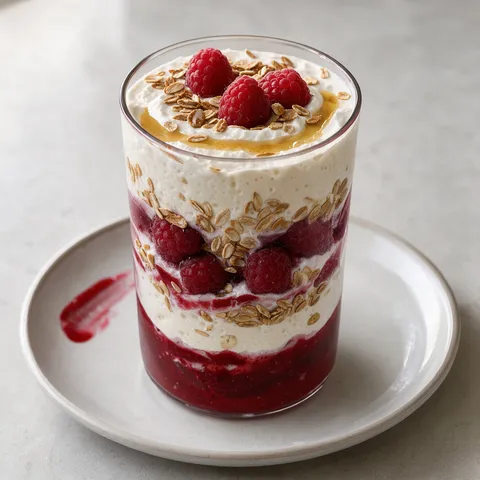 Cranachan30 min · Dessert
 Cullen Skink 2.01 hr 10 min · Soup
 Scottish Chicken, Leek and Prune Soup1 hr 55 min · Soup