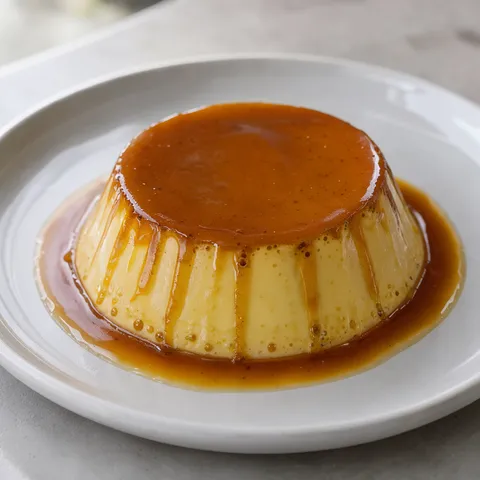
Spanish Egg Caramel Custard Flan de Huevo
A Spanish dessert. Takes 1 hr 20 min (+ 4 hr chilling), 4 servings (4 tin). Difficulty: medium.
At a glance
- Total time
- 1 hr 20 min (+ 4 hr chilling)
- Serves
- 4 servings (4 tin)
- Difficulty
- Medium
- Cuisine
- Spanish cuisine
- Dish type
- Dessert
- Diet
- Gluten-free
- Allergens
- Milk, Eggs
Ingredients
Caramel
- 100 g sugar
- 2 tbsp water
Custard
- 500 ml whole milk
- 4 eggs
- 2 egg yolks
- 100 g sugar
- 1 vanilla pod (or 1 tsp vanilla extract)
- 1 strip of lemon zest (without the bitter white pith)
- a pinch of salt
Oven
- 4 flan moulds (200 ml each)
- deep tray
- boiling water
Equipment
- Saucepan
- Balloon whisk
- Fine sieve / chinois
- Oven
- Baking tray
- Mixing bowls
- Probe thermometer (optional)
Method
- Make the caramel: Boil the sugar with the water in a small saucepan over medium heat without stirring, until the edges turn amber and after 8 min it is deep brown. Divide quickly among the moulds and tilt and rotate to coat the base. Caramel hardens quickly (8 min)
- Infuse the milk: Bring the milk with the seeds and pod of the vanilla, the lemon zest and the salt almost to a simmer, take off the heat and leave to infuse for 10 min. This passes the aroma to the milk (10 min). Meanwhile preheat the oven to 160°C
- Whisk the eggs: Whisk the eggs, yolks and sugar with a balloon whisk for 2 min, only until combined, without making them foamy. If they get too foamy, air pockets remain in the flan (2 min)
- Mix and strain: Add the warm milk to the eggs in a thin stream, whisking constantly. Pass the mixture through a fine sieve twice, and remove the vanilla pod and lemon. Skim the foam off the surface with a spoon (3 min)
- Fill: Ladle the custard into the caramel-lined moulds. Arrange the moulds in a deep tray (2 min)
- Set up the water bath: Pour boiling water into the tray to come halfway up the moulds. Cover loosely with aluminium foil so that no crust forms (3 min)
- Bake: Bake at 160°C in the oven for 35 min. The centre should have a slight wobble and the edges be set, and it will finish setting in the residual heat after it comes out. The temperature of the custard must not exceed 82°C, or the inside becomes full of holes (35 min)
- Chill: Take the moulds out of the water bath, leave at room temperature for 15 min, then chill in the fridge for at least 4 hr. The waiting time is not included (15 min)
- Serve: Run a thin knife around the edge of the mould and turn out onto a plate, and the caramel sauce flows over the top (2 min)
Chef's note
Flan is the most common dessert in Spanish homes. Keeping the eggs close to a 1:1 ratio to the milk gives a silky texture. Made the day before, it sets better. If caramel remains in the mould, dissolve it with warm water.
Frequently asked questions
- Why is my flan full of holes?
- If the custard goes above 82°C it turns full of holes. Also whisk the eggs only until combined, not frothy, as too much foam leaves air pockets in the flan.
- How do I know the flan is cooked?
- The middle should have a slight wobble and the edges should be set. It finishes setting from the residual heat once out of the oven.
- How long should the flan chill for?
- Cool the moulds at room temperature for 15 minutes, then in the fridge for at least 4 hours. This chilling time is not included in the total time.
 Cold Córdoba Tomato and Bread Soup25 min · Soup
 Spanish Potato Omelette1 hr 5 min · Main course
 Paella Valenciana1 hr 20 min · Main course
 Sizzling Garlic Prawns20 min · Starter
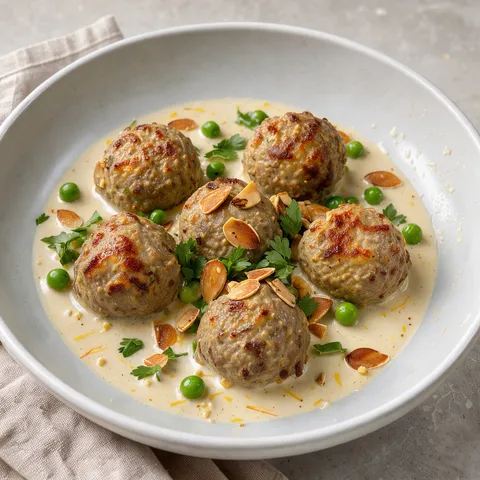 Meatballs in Almond Sauce1 hr 10 min · Main course
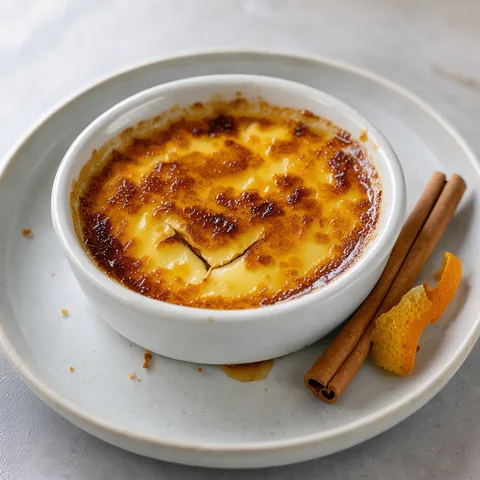 Catalan Burnt Cream35 min · Dessert