
Korean Steamed Egg Gyeran-jjim
A Korean side dish. Takes 30 min, Serves 4. Difficulty: easy.
At a glance
- Total time
- 30 min
- Serves
- Serves 4
- Difficulty
- Easy
- Cuisine
- Korean cuisine
- Dish type
- Side dish
- Allergens
- Gluten, Eggs, Fish, Sesame, Soya
Ingredients
Eggs
- 6 large eggs
- 360 ml kombu stock (made with a 5 cm piece of kombu)
- 3/4 tsp salt
- 1 tsp light soy sauce
- 1 tsp sesame oil
Topping
- 2 spring onions (thinly sliced into rings)
- 1 tbsp toasted sesame seeds
- 1/2 tsp sesame oil
- a pinch of gochugaru (Korean chilli flakes)
Vessels
- 4 heatproof bowls of 250 ml (or a 1.2 litre lidded earthenware casserole)
- a large pan for steaming
Equipment
- Saucepan
- Balloon whisk
- Mixing bowls
- Fine sieve / chinois
Method
- Make the kombu stock (3 min): Put a 5 cm piece of kombu in 360 ml water and heat over medium heat for 3 min, without letting it boil. If the kombu stock boils it turns bitter and slimy. Remove the kombu and leave the stock until lukewarm. This is the vegetarian alternative to Dashi (Basics), which contains fish
- Whisk the eggs (3 min): Whisk the eggs in a large bowl with a whisk just until yolks and whites combine, without frothing. Too many air bubbles give a holey texture when steamed
- Mix the liquid (2 min): Add the lukewarm kombu stock, salt, soy and sesame oil and stir gently. The egg to liquid ratio is about 1:1.2 (by volume). The more liquid, the softer the jjim, and with less it stays firm
- Strain (2 min): Divide the mixture evenly between 4 bowls through a fine sieve. Straining gives the silky texture and catches bubbles and white strands. Fill the bowls to ¾ full
- Set up the steam (4 min): Boil 3 cm of water in a large pan. Put the bowls in and cover each bowl with foil. The foil stops condensation from dripping onto the egg and gives a smooth surface
- Steam (14 min): Reduce the heat to low, leave the lid slightly ajar, and cook for 14 min with a little steam escaping. The egg should be completely set, the middle should not ripple when the bowl is shaken, and the internal temperature should reach at least 74°C. Hard boiling makes the surface holey and rubbery. No raw egg should remain
- Finish (1 min): Lift the bowls out with tongs and take off the foil. Sprinkle with the sesame oil, sesame seeds, spring onion and gochugaru
- Plate (1 min): Put the bowl on a hot serving plate and eat by cutting through the middle with a spoon
Chef's note
Gyeran-jjim is a soft steamed egg side dish of the Korean table and balances red spicy dishes. Traditional versions also use saeujeot (salted shrimp) or anchovy stock. Here kombu and soy are used for a vegetarian version. Vegetarian. A weeknight dish, 30 min in total.
Frequently asked questions
- Why does the surface of gyeran-jjim end up full of holes?
- If the eggs are whisked until frothy, the extra air bubbles make a pitted texture when steamed. Boiling too hard also leaves the surface pitted and rubbery.
- Why are the bowls covered with foil?
- The foil stops condensation dripping onto the eggs and gives a smooth surface.
- Can gyeran-jjim be made vegetarian?
- Yes. The recipe uses kombu stock, which is a vegetarian alternative to fish-based dashi.
 Gyeran-jjim 2.052 min · Starter
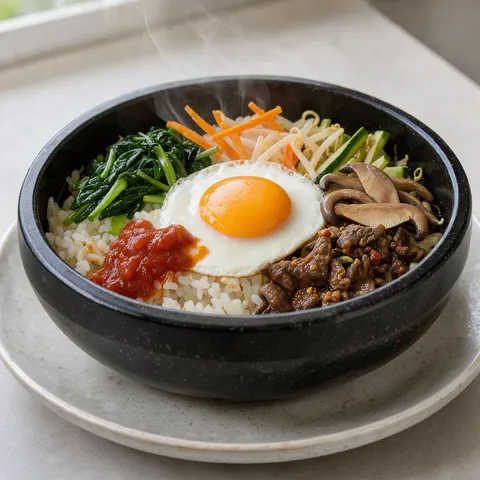 Bibimbap1 hr 15 min · Main course
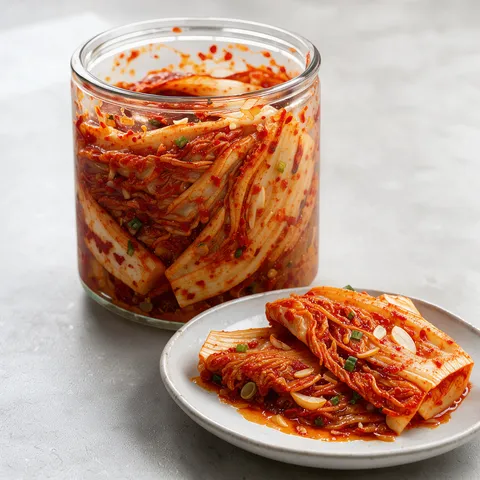 Kimchi3 hr · Side dish
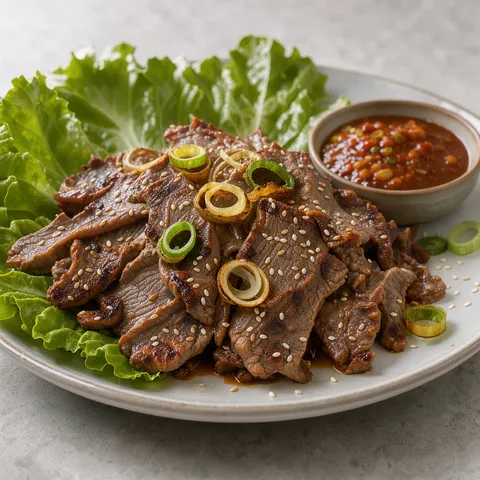 Bulgogi30 min · Main course
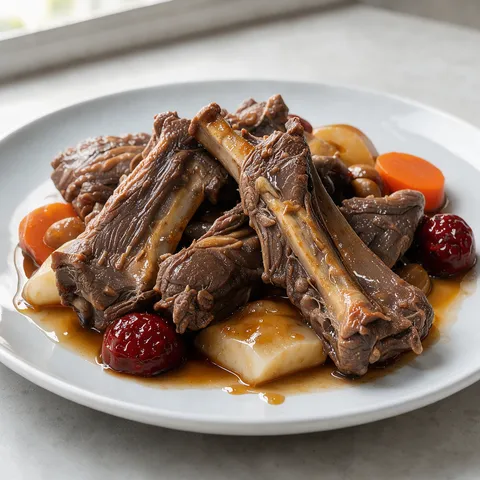 Korean Braised Short Ribs1 hr 30 min · Main course
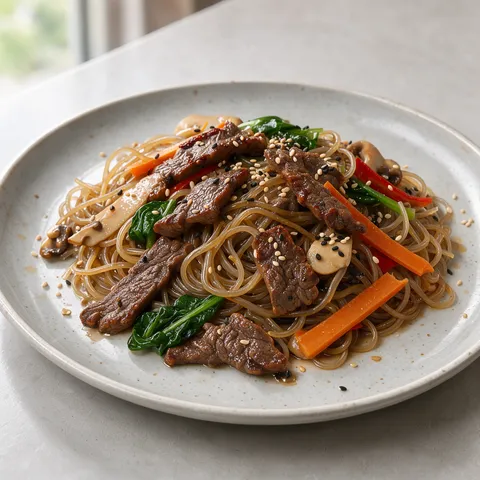 Korean Glass Noodles with Vegetables45 min · Main course
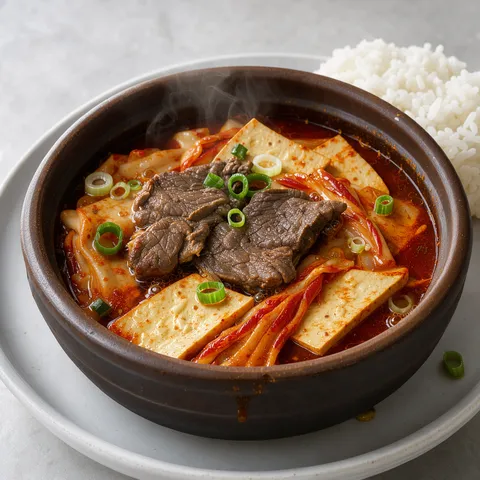 Kimchi Stew40 min · Soup