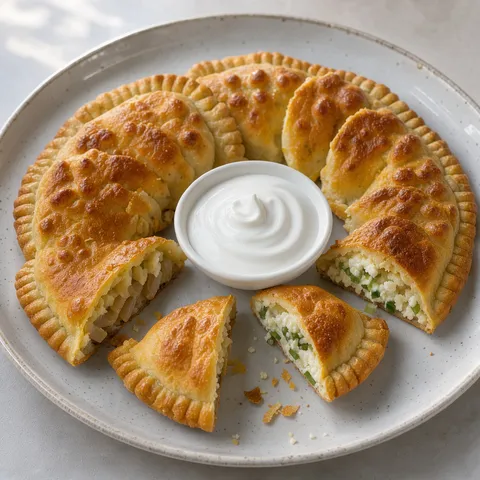
Circassian Fried Pastries with Cheese and Potato Haliva
A Circassian / North Caucasian bread & pastry. Takes 1 hr 50 min, about 40 pieces (6-8 servings). Difficulty: medium.
At a glance
- Total time
- 1 hr 50 min
- Serves
- about 40 pieces (6-8 servings)
- Difficulty
- Medium
- Cuisine
- Circassian / North Caucasian cuisine
- Dish type
- Bread & pastry
- Allergens
- Gluten, Milk
Ingredients
Dough
- 500 g plain flour
- 250 ml lukewarm water
- 60 g strained (Greek-style) yoghurt
- 2 tbsp sunflower oil
- 1 tsp salt
Potato filling
- 500 g floury potatoes
- 1 medium onion (very finely chopped)
- 20 g butter
- 1/2 tsp salt
- 1/2 tsp black pepper
- 1/2 tsp Aleppo pepper
Cheese filling
- 250 g Circassian cheese (fresh, unsalted or lightly salted, or if unavailable a mixture of desalted Turkish whey cheese and fresh white cheese)
- 2 spring onions (finely chopped)
- 1/4 tsp black pepper
For frying
- 1 litre sunflower oil
To serve
- strained yoghurt or garlic yoghurt
Equipment
- Mixing bowls
- Saucepan
- Potato masher
- Frying pan
- Rolling pin / oklava
- Sauté pan
- Ladle
- Probe thermometer (optional)
Method
- Knead the dough: Mix the flour and salt and make a well in the centre. Add the water, yoghurt and oil and knead for 8-10 min. The dough should be as soft as an earlobe, smooth and not sticky. The yoghurt makes the dough crisp when fried
- Rest: Leave the dough to rest, covered, for 30 min. As the gluten relaxes, the dough does not spring back when rolled thin
- Boil the potatoes: Boil the potatoes in their skins in salted water for 20-25 min, until a knife slides in easily. Drain, peel while hot and mash until smooth. Boiling them in their skins stops the potatoes absorbing water: a wet filling bursts the dough during frying
- Make the potato filling: Fry the onion in the butter over low heat for 6-7 min, until soft and lightly golden. Add to the mashed potato and stir in the salt, black pepper and Aleppo pepper. The filling should not go into the dough hot, but it only needs to be lukewarm
- Make the cheese filling: Crumble the Circassian cheese with a fork and mix with the spring onions and black pepper. If the cheese is very dry, add 1 tbsp yoghurt. Taste it: if the Circassian cheese is salty, do not add extra salt
- Roll out and cut: Divide the dough into two pieces. Roll each piece out 2 mm thick on a floured surface and cut out rounds with the rim of a 10 cm bowl: with dough rolled to 2 mm, each round weighs about 18-19 g, and with the trimmings you get about 40 rounds. Gather up the leftover dough, rest it for 10 min and roll it out again
- Fill and seal: Put 1 full dessertspoon (about 20 g) of filling on one half of each round. Fold the dough over into a half-moon, press the edges with your fingers and seal tightly by crimping with a fork or your fingers. Filling that leaks into the oil through an unsealed edge makes the oil foam and the pastry burst open
- Heat the oil: Heat the oil to 170-175°C in a wide, deep pan. Without a thermometer, the oil is ready when a small piece of dough dropped in rises to the surface with bubbles within 2-3 sec
- Fry: Lower the haliva into the oil in batches of 6-8 and fry for 2-3 min on each side, until puffed and golden brown. Do not crowd the pan: the oil temperature drops and the dough soaks up oil
- Drain: Lift them out with a slotted spoon and drain on a wire rack lined with kitchen paper for 2 min. The wire rack lets the steam escape so the underside does not go soft
- Plate: Arrange the potato and cheese haliva in separate rows on a large plate, leaning slightly against each other like a fan. Cut one from each row in half and place it in front of its row, cut side forward, so the potato and cheese fillings show. Put strained or garlic yoghurt in a small bowl in the centre. Serve hot
Chef's note
Haliva (halive) is one of the best-loved pastries of the Circassian table; its unleavened dough and half-moon shape set it apart from Turkish fried dough. In Circassian villages in Anatolia it is also made with a filling of boiled dried beans. The yoghurt in the dough is a home touch: the classic dough is just flour, water and salt. When the same dough and filling are boiled, the dish is called pshyhalive or haluj, as in Metaz (Circassian Boiled Cheese Dumplings); the names vary from region to region. Circassian cheese is made at home with the Circassian Cheese (Homemade Fresh Basket Cheese) recipe on this site or bought ready-made. Makes about 40 (serves 6-8).
Frequently asked questions
- Why is yoghurt added to the dough?
- The yoghurt makes the dough crisp when fried.
- Why does the filling leak as the haliva fries and how do I prevent it?
- Filling that seeps into the oil through an unsealed edge makes the oil foam and the pastry opens. Press the edges with your fingers and seal them tightly by crimping with a fork or your fingers.
- Why are the potatoes boiled in their skins?
- Boiling in the skin stops the potato taking in water. A wet filling bursts the dough when fried.
 Potato-Filled Dumplings1 hr · Main course
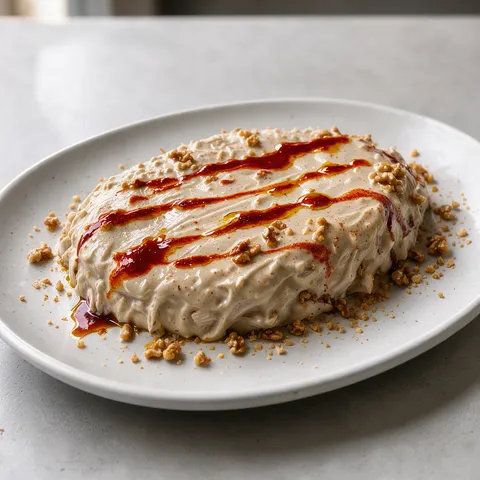 Circassian Chicken1 hr 30 min · Meze
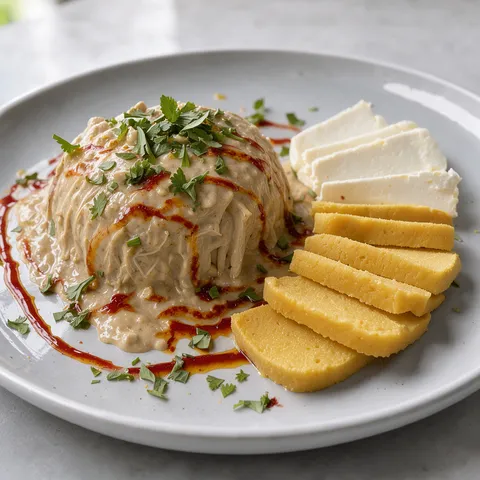 Circassian Chicken with Cornmeal Cake1 hr 45 min · Main course
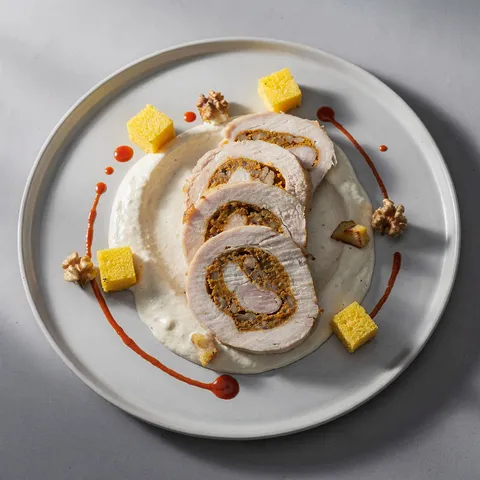 Circassian Chicken 2.03 hr · Main course
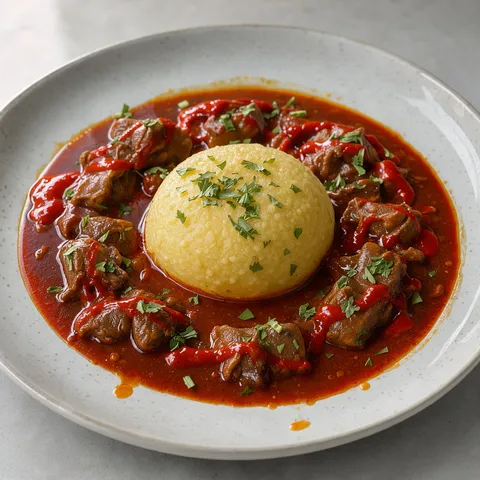 Circassian Meat Stew2 hr 30 min · Main course
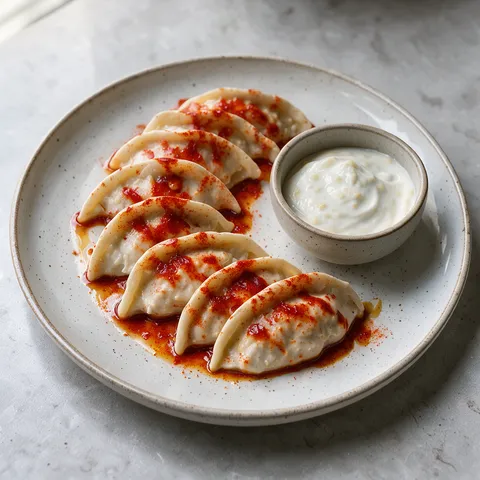 Circassian Boiled Cheese Dumplings1 hr 30 min · Bread & pastry