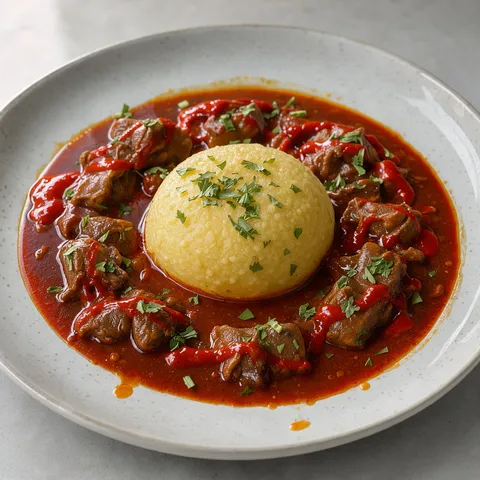
Circassian Meat Stew Lepsi
A Circassian / North Caucasian main course. Takes 2 hr 30 min (pressure cooker: 1 hr 45 min), Serves 4. Difficulty: challenging.
At a glance
- Total time
- 2 hr 30 min (pressure cooker: 1 hr 45 min)
- Serves
- Serves 4
- Difficulty
- Challenging
- Cuisine
- Circassian / North Caucasian cuisine
- Dish type
- Main course
- Diet
- Gluten-free
- Allergens
- Milk
Ingredients
Meat
- 900 g boneless lamb shoulder or leg (or diced beef, 3 cm cubes)
- 30 g butter
- 1 tbsp sunflower oil
- 2 medium onions (finely chopped)
- 3 garlic cloves (crushed)
- 1 tbsp tomato paste
- 1 tbsp Turkish red pepper paste
- 2 tsp sweet paprika
- 1 tsp Aleppo pepper
- 1 tsp salt
- 1/2 tsp black pepper
- 1 litre hot water
To thicken
- 4 tbsp fine cornmeal
- 200 ml cold water
Abysta (cornmeal polenta)
- 250 g fine cornmeal
- 1 litre water
- 1 tsp salt
- 20 g butter
Red oil (to finish)
- 20 g butter
- 1 tsp sweet paprika
To serve
- 1/2 bunch coriander or flat-leaf parsley (chopped)
Equipment
- Heavy-based saucepan
- Mixing bowls
- Balloon whisk
- Wooden spoon / spatula
- Saucepan
- Frying pan
- Pressure cooker (optional)
Method
- Pat the meat dry: Pat the cubes thoroughly dry with kitchen paper and sprinkle with the salt and black pepper. Wet meat does not sear in the pan: it releases its juices and stews
- Sear: Heat the butter and oil in a wide, heavy-based saucepan over medium-high heat until foaming. Brown the meat in two batches, turning, for 6-8 min, until brown on all sides, and transfer to a plate. The brown residue left on the bottom is the foundation of the stew's flavour
- Fry the onion: Lower the heat to medium, add the onion to the same fat and fry for 8-10 min, scraping up the residue from the bottom, until soft and golden. Add the garlic and stir for 1 min, until fragrant
- Add the paste: Fry the paprika, Aleppo pepper and both pastes in the fat for 1-2 min, until the paste darkens and smells sweet: keep the heat at medium so they do not burn. Raw paste tastes sour and metallic. Fried in fat, it turns sweet and its colour deepens
- Cook the stew: Return the meat and its juices to the pan and add the hot water. Once boiling, lower the heat and simmer gently for 1 hr 30 min with the lid ajar. It is done when the meat falls apart easily when pressed with a fork. In a pressure cooker (no more than 2/3 full), cook for 35 min once it reaches pressure, then let the pressure release naturally for 10 min. Using a pressure cooker, the onion and searing take 36 min, coming up to pressure and cooking 40 min, the pressure release 10 min, and the thickening and finishing 15 min: about 1 hr 45 min in all
- Slake the cornmeal: Whisk the cornmeal with the cold water into a smooth, lump-free slurry. Dry flour added to a hot stew forms lumps instantly
- Thicken: Add the slurry to the boiling stew in a thin stream, stirring constantly. Cook over low heat for 15 min, scraping the bottom with a wooden spoon. It is ready when the raw flour taste has gone completely and the sauce coats the back of the spoon in a thick, glossy layer. Check the seasoning
- Cook the abysta: While the stew cooks, in its last 30 min, bring the water and salt to the boil in a separate saucepan. Sprinkle in the cornmeal like rain with one hand while whisking constantly with the other. Cook over low heat for 20-25 min, scraping the bottom. When the spoon stands upright in the centre and the mixture comes away from the sides, add the butter
- Shape the abysta: Wet a bowl with water, fill it with the hot abysta and smooth the top by pressing with the back of a wet spoon. Leave for 5 min: the abysta takes the shape of the bowl
- Make the red oil: Melt the butter in a small frying pan, take it off the heat and stir in the paprika. The paprika should infuse in the hot butter, not over the heat, or it turns bitter
- Plate: Invert the bowl of abysta onto a wide, shallow white serving plate so that a neat, pale yellow dome stands in the centre. Ladle the lepsy around the dome and over its upper edges, so the pieces of meat form a deep red-brown ring around it. Drizzle the red oil over the stew, scatter with the chopped coriander and serve hot. At the table the abysta is cut with a wooden spoon and eaten with the stew
Chef's note
Lepsy (also spelled lepsi) is the meat stew of the Circassians of Türkiye; its name comes from the Adyghe words for meat (ly) and water (psy). In and around Düzce it is often made with chicken, elsewhere with lamb or beef. In the Kabardian cooking of the Caucasus, similar dishes in which the meat is thickened with flour or millet belong to the shypsy family. It is also made with fresh tomatoes: grate 2 ripe tomatoes and cook them in the fat for 5 min instead of the paste, until the liquid has evaporated. For detailed instructions on making the abysta, see the Circassian Chicken with Abista (Cornmeal Polenta) recipe. Serves 4.
Frequently asked questions
- Why is the cornmeal mixed with cold water to thicken the lepsi?
- Dry flour added to hot stew clumps at once. Whisk the cornmeal with cold water into a lump-free slurry and add it in a thin stream, stirring constantly.
- How do I know the paste (abista) is ready?
- Cook it on a low heat for 20-25 minutes, scraping the bottom. Add the butter when the spoon stands upright in the middle and the dough pulls away from the sides.
- Why is the red butter made off the heat?
- The pepper should steep in hot butter off the direct heat, or it turns bitter.
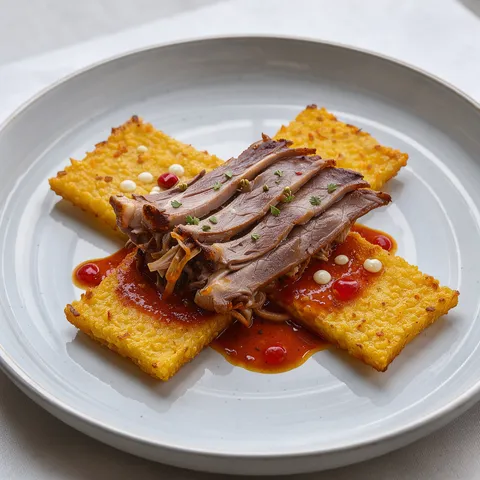 Lepsi 2.01 hr 25 min · Main course
 Potato-Filled Dumplings1 hr · Main course
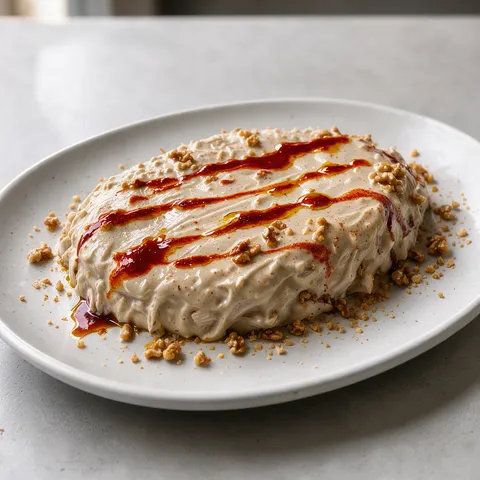 Circassian Chicken1 hr 30 min · Meze
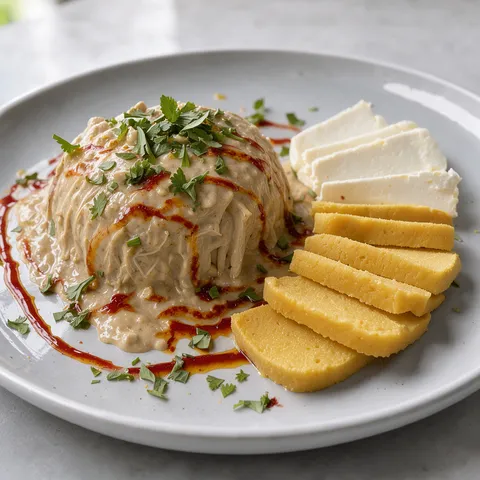 Circassian Chicken with Cornmeal Cake1 hr 45 min · Main course
 Circassian Chicken 2.03 hr · Main course
 Circassian Fried Pastries with Cheese and Potato1 hr 50 min · Bread & pastry
 Circassian Boiled Cheese Dumplings1 hr 30 min · Bread & pastry