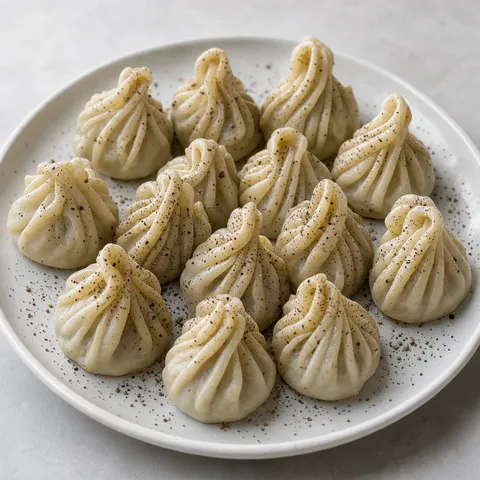
Khinkali Georgian Dumplings
A Georgian bread & pastry. Takes 2 hr, 4 servings (30-32 pieces). Difficulty: challenging.
At a glance
- Total time
- 2 hr
- Serves
- 4 servings (30-32 pieces)
- Difficulty
- Challenging
- Cuisine
- Georgian cuisine
- Dish type
- Bread & pastry
- Allergens
- Gluten
Ingredients
Dough
- 500 g strong white bread flour (high-protein)
- 250 ml cold water
- 8 g salt
Filling (herb-free mountain Tusheti/Pshavi style)
- 400 g fatty beef mince (minced twice, about 20% fat)
- 200 g lamb mince (minced twice)
- 2 medium onions (about 200 g, grated)
- 1 tsp salt
- 1 tsp coarsely ground black pepper
- 1/2 tsp cumin
- a pinch of chilli flakes
- 200 ml ice-cold water
- 1/2 bunch coriander (optional, finely chopped, for the kalakuri or city style)
To serve
- coarsely ground black pepper
Equipment
- Mixing bowls
- Box grater
- Cling film
- Chef's knife
- Rolling pin / oklava
- Saucepan
- Wooden spoon / spatula
- Ladle
- Probe thermometer (optional)
Method
- Knead the dough: Mix the flour and salt, then add the cold water a little at a time and knead for 10 min. The dough should look stiff and dry and not stick to your hands at all. A stiff dough does not tear when rolled thin and holds the liquid inside
- Rest: Wrap the dough in cling film and rest at room temperature for 40 min. During this time the flour fully absorbs the water and the dough softens noticeably
- Make the filling: Put the minces in a large bowl. Add the grated onion with its juice, the salt, black pepper, cumin and chilli flakes. If making the city style, add the coriander now as well. Add the ice-cold water in three additions, kneading by hand for 2-3 min each time. The mixture should be soft, almost runny, and sticky. This water forms the soup inside the khinkali as they cook, and keeping it cold stops the fat melting
- Chill: Keep the filling in the fridge until the dough is rolled out. Cold filling does not fall apart on the spoon and is easier to seal
- Divide the dough: Shape the dough into a cylinder 3 cm across and cut it into 30-32 pieces (about 25 g). Press the pieces flat on a floured surface and keep them covered
- Roll out: Roll each piece out with a rolling pin into a 12-13 cm round, with the edges slightly thinner than the centre. A thin edge reduces the thick knot that forms in the pleats
- Pleat: Hold the dough in your palm and put 1 full tbsp (about 30 g) of filling in the centre. Hold the edge with one hand and, with the other, gather it upwards by folding small pleats in the same direction. Expertly made khinkali have 18-20 pleats. Bring the pleats together at the top, twist tightly and pinch off the excess dough, leaving a knot. If the closure is not tight, water gets in and the soup escapes
- Boil: Bring plenty of water (at least 5 litres) to a rolling boil with 1 tbsp salt in a large saucepan. Drop the khinkali in one at a time and stir the water very gently with a wooden spoon so that they do not stick to the base. Do not crowd the pan: cook in two batches
- Cook: Once the khinkali float to the surface, boil over medium-high heat for 10-12 min. They are ready when the dough turns translucent, the pleats stand out and the internal temperature is at least 71°C. Lift out one by one with a slotted spoon and let them drain
- Plate: Arrange the khinkali tightly on a large, flat white plate, knots upwards. Sprinkle generously with coarsely ground black pepper and serve hot immediately
- To eat: Hold a khinkali by the knot, turn it upside down, take a small bite from the bottom and drink the soup first. Then eat the rest, leaving the knot on the side of the plate
Chef's note
In Georgia the knots are not eaten: the number of knots left on the plate shows how many khinkali each person has eaten. Instead of the beef and pork mix common in the lowlands, a beef and lamb mix is used here, which is closer to the lamb-based mountain style of Tusheti. Coriander is the mark of the city (kalakuri) style, and in the mountain style (Tusheti, Pshavi, Khevsureti) no herbs go into the filling. Leftover khinkali are eaten the next day, fried in butter. Makes 30-32, serves 4.
Frequently asked questions
- Where does the broth inside khinkali come from?
- Ice-cold water is added to the filling in three batches, kneading for 2-3 minutes each time. As the khinkali cooks, this water becomes the broth inside. Keeping it cold stops the fat melting.
- How do I stop khinkali sticking to the bottom while boiling?
- Add the khinkali one at a time and stir the water very gently with a wooden spoon. Don't crowd the pan and cook in two batches.
- How is khinkali eaten?
- Hold it by the knob, turn it over and take a small bite from the bottom, then drink the broth first. Then eat the rest and leave the knob on the edge of the plate.
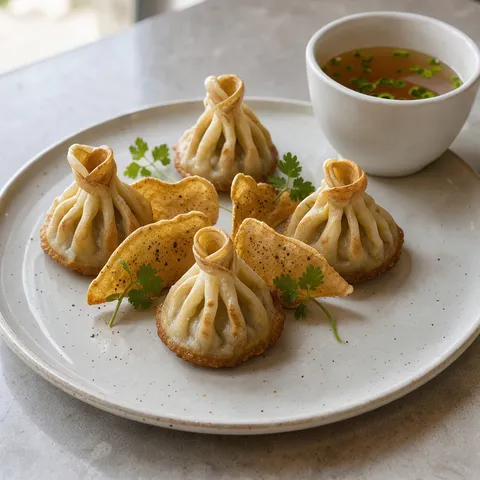 Khinkali 2.01 hr 30 min · Bread & pastry
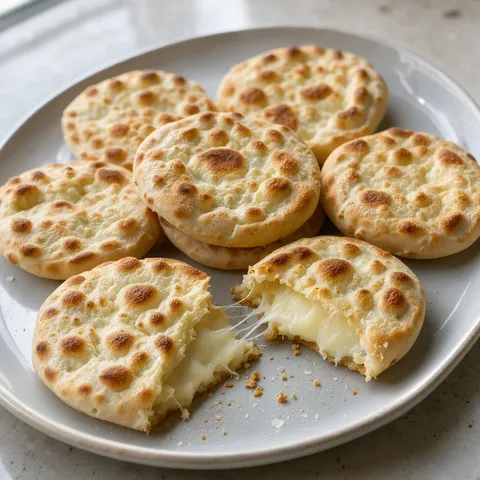 Mini Imeruli Khachapuri1 hr · Meze
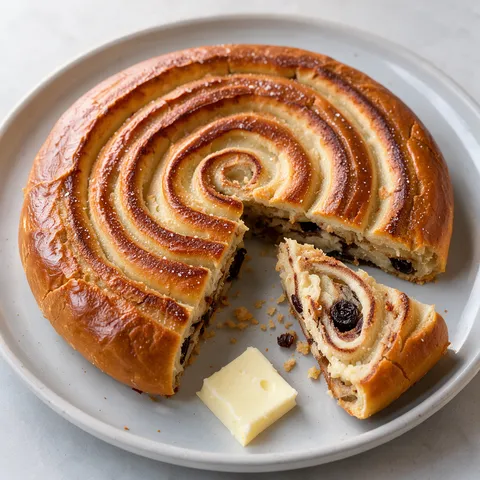 Georgian Cinnamon Raisin Bread1 hr 7 min · Breakfast
 Georgian Sour Plum Sauce52 min · Sauce
 Abkhazian Chilli Garlic Paste26 min · Sauce
 Svan Lamb and Beef Pastries 5.5 cm1 hr 37 min · Meze
 Khachapuri Adjaruli2 hr 15 min · Bread & pastry