Kadhi Pakora 2.0
An Indian main course. Takes 1 hr 20 min, Serves 4. Difficulty: challenging.
At a glance
- Total time
- 1 hr 20 min
- Serves
- Serves 4
- Difficulty
- Challenging
- Cuisine
- Indian cuisine
- Dish type
- Main course
- Diet
- Vegetarian
- Allergens
- Gluten, Milk, Eggs
Ingredients
Kadhi velouté
- 300 g sour yoghurt
- 40 g gram flour (chickpea flour)
- 700 ml water
- 1/2 tsp ground turmeric
- 3/4 tsp salt
- 15 g Clarified Butter (Ghee) (Basics)
Spinach pakoras
- 12 large
- stalk-trimmed spinach leaves
- 60 g gram flour
- 1 tbsp rice flour
- 1/4 tsp ajwain (carom seeds, or dried thyme if unavailable)
- 1/4 tsp chilli powder
- 1/4 tsp salt
- a pinch of bicarbonate of soda
- about 90 ml iced water
- 300 ml sunflower oil
Red tadka oil
- 3 tbsp Clarified Butter (Ghee) (Basics)
- 1/2 tsp cumin seeds
- 1/4 tsp fenugreek seeds
- 2 dried red chillies
- 1 tsp sweet paprika (or Kashmiri chilli powder)
Quick pickled onion
- 1 small red onion (sliced into very thin rings)
- 3 tbsp cider vinegar
- 1 tsp sugar
- a pinch of salt
To finish
- 1/2 tsp cumin seeds
- a few fresh coriander leaves
Equipment
- Mixing bowls
- Balloon whisk
- Saucepan
- Frying pan
- Fine sieve / chinois
- Squeezy bottle
- Pestle and mortar
- Stick blender
- Probe thermometer
- Colander
Method
- Plan the workflow: The order is: make the kadhi and bring it to the boil, prepare the pickle, tadka oil and pakoras while it slow-cooks, blend the kadhi until smooth, fry the pakoras, plate, 80 min in total. The flavour of classic kadhi pakora is kept but the textures are separated: a silky velouté, pakoras that stay separate and crisp, and a clear red oil
- Whisk and boil the kadhi: Whisk the yoghurt and gram flour in a bowl to a lump-free paste, then gradually add the water and turmeric to make a smooth mixture. Transfer to a 20 cm saucepan and bring to the boil over medium-high heat, stirring constantly, for 8-10 min. Do not stop stirring until it boils, or the yoghurt will split
- Slow-cook: Reduce the heat, add the salt and cook uncovered at a gentle bubble for 30 min, scraping the bottom now and then. It is ready when the raw taste of the gram flour has completely gone and the kadhi thinly coats the back of a spoon
- Make the pickle: While the kadhi cooks, mix the onion rings with the vinegar, sugar and salt in a small bowl. Within 20 min they turn pink, giving a sharp counterpoint to the mellow sourness of the kadhi
- Make the tadka oil: Heat the ghee in a small frying pan over medium heat, let the cumin and fenugreek sizzle for 20 sec, then add the dried chillies and stir for 10 sec. Take off the heat, add the sweet paprika and stir for 5 sec. Leave to infuse for 10 min, then strain through a fine sieve into a squeeze bottle. You are left with a clear, ruby-red oil, and no spice sediment clouds the plate
- Toast the cumin and prepare the pakoras: Toast the cumin for finishing in a dry frying pan for 1 min and crush it coarsely in a mortar. Wash the spinach leaves and pat them completely dry with kitchen paper: wet leaves do not hold the batter and spit in the oil. In a bowl, mix the gram flour, rice flour, ajwain crushed in your palm, chilli powder, salt and bicarbonate of soda, then gradually whisk in the iced water to a thin pancake-batter consistency. Cold batter gives a thinner, crisper crust when fried
- Blend the velouté until smooth: Take the kadhi off the heat, blend with a stick blender for 1 min and strain through a fine sieve into a clean saucepan. Keep it over low heat, and just before serving take it off the heat and whisk in the 15 g ghee. It should be a glossy velouté that flows slowly from a spoon
- Fry the pakoras: Heat the 300 ml oil (about 1.5 cm deep) in a small 16 cm saucepan to 175°C on a thermometer. Hold each leaf by its stalk, dip it in the batter, let the excess drip off against the side of the bowl and lay it in the oil. Fry 2 leaves per batch for 40-50 sec on each side, until the crust is light golden and puffed, then lift onto kitchen paper with a slotted spoon. It takes six batches, so let the oil come back to 175°C between batches
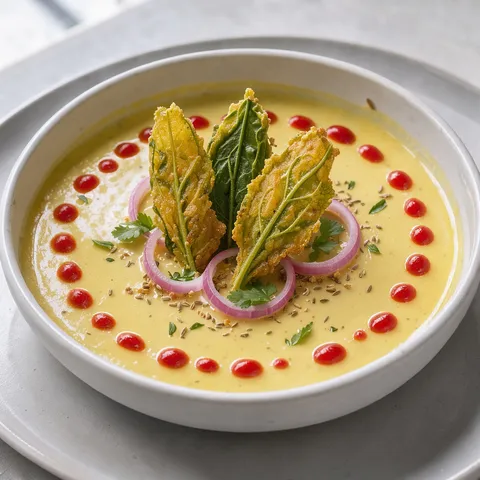
- Plate: Pour about 150 ml velouté into the centre of each warm, shallow bowl. Stand three spinach pakoras upright in the middle, leaning against each other, so that only their bottom tips touch the kadhi
- Finish and serve: Drip a ring of tadka oil onto the surface of the velouté, put pickled onion rings and coriander leaves between the pakoras and scatter with the crushed cumin. Serve immediately, as the pakoras soften where they touch the kadhi
Chef's note
The sour yoghurt, gram flour and red tadka of Punjab's kadhi pakora are kept intact here. The innovation lies in the texture: the kadhi is strained and finished with ghee into a velouté, the pakoras arrive as crisp individual spinach leaves rather than softening in the sauce, and the tadka is dripped onto the plate as a clear red oil. For sour yoghurt, choose yoghurt that has been kept in the fridge for a few days. Ajwain is available in Indian shops. If unavailable, thyme gives a similar aroma.
Frequently asked questions
- Why does kadhi split?
- Yoghurt can split, so don't stop stirring until it boils. Stir constantly over a medium-high heat.
- How do you get a thin, crisp pakora coating?
- A cold batter gives a thinner, crisper coating when fried. The spinach leaves should also be dried completely and fried in oil at 175°C.
- How do you stop the tadka oil clouding the plate?
- Once the oil has infused, strain it through a fine sieve. The spice sediment won't cloud the plate and a clear red oil is left.
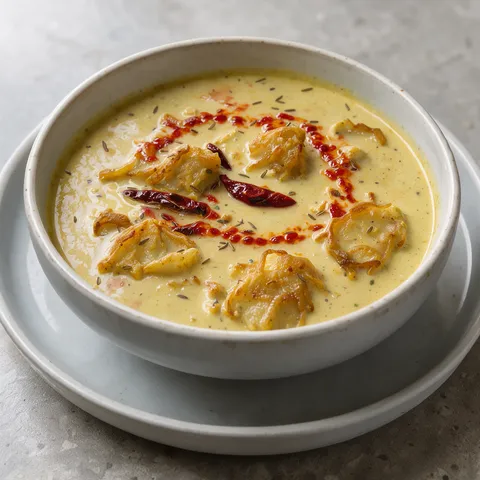 Punjabi Onion Pakoras in Gram Sauce1 hr · Main course
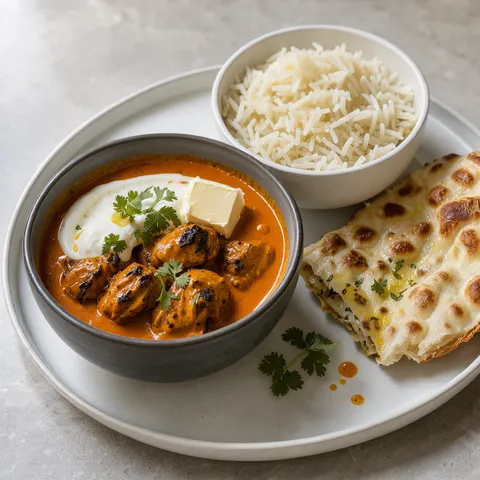 Indian Butter Chicken50 min · Main course
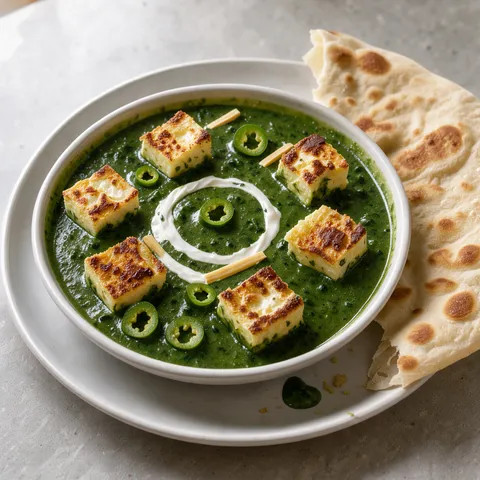 Spinach with Homemade Paneer45 min · Main course
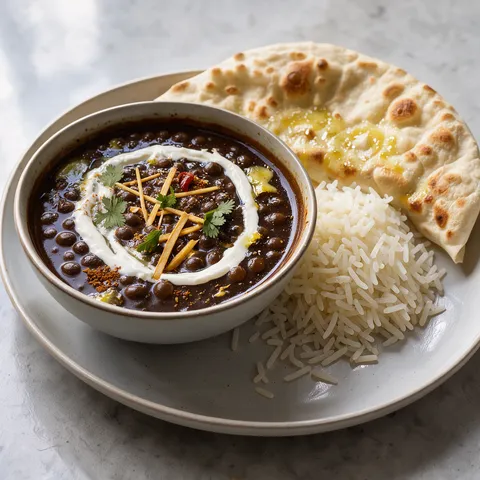 Black Lentil and Kidney Bean Stew1 hr 30 min · Main course
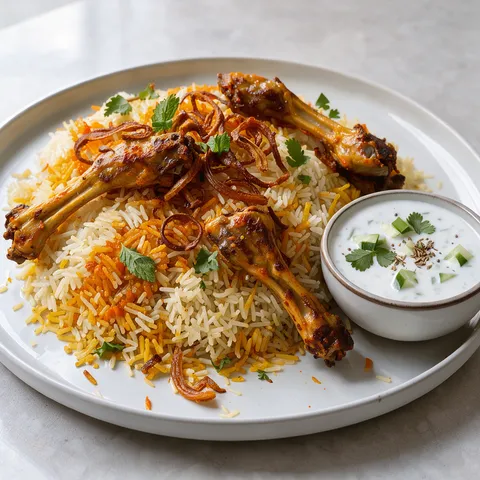 Chicken Dum Biryani1 hr 30 min · Main course
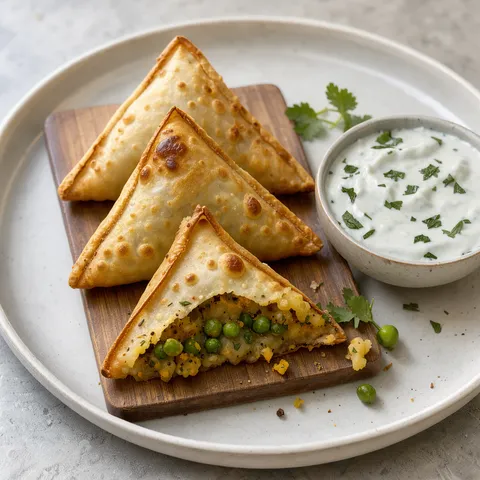 Indian Potato Pastries1 hr 30 min · Bread & pastry
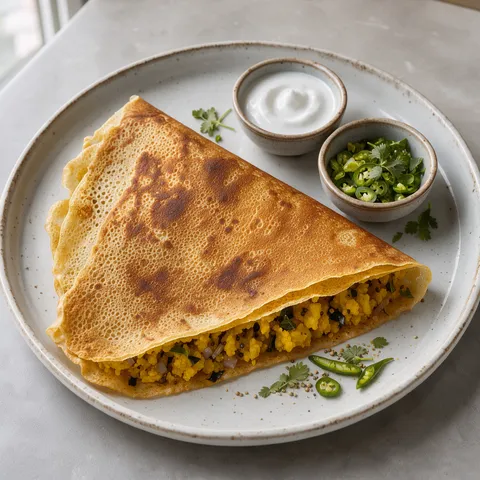 Fermented Rice Crêpes with Spiced Potato50 min · Bread & pastry