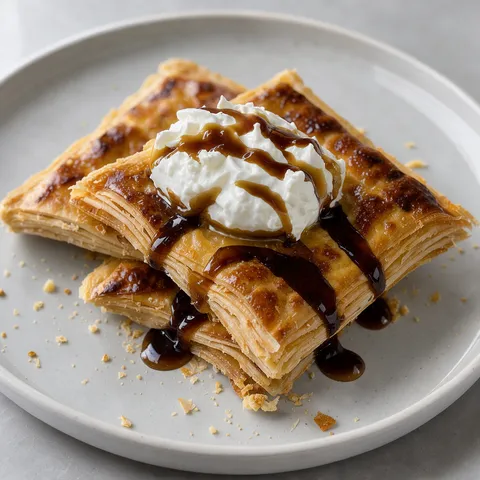
Baghdad-Style Layered Pastry with Cream Kahi
An Iraqi dessert. Takes 1 hr 50 min · +30 min resting, 8 pieces (4 servings). Difficulty: medium.
At a glance
- Total time
- 1 hr 50 min · +30 min resting
- Serves
- 8 pieces (4 servings)
- Difficulty
- Medium
- Cuisine
- Iraqi cuisine
- Dish type
- Dessert
- Allergens
- Gluten
Ingredients
- Makes 8 (serves 4)
Dough
- 400 g plain flour
- 1 tsp salt
- 1 tsp sugar
- 240 ml lukewarm water
- 1 tbsp sunflower oil
Folding
- 150 g clarified butter (ghee, melted)
- 2 tbsp flour for rolling out
Syrup
- 250 g sugar
- 180 ml water
- 1 tsp lemon juice
- 1 tbsp rosewater
To serve
- 250 g buffalo clotted cream (geymar)
- 4 tbsp dibis (date molasses, optional)
Equipment
- Mixing bowls
- Saucepan
- Rolling pin / oklava
- Pastry brush
- Baking paper
- Baking tray
- Oven
- Stand mixer (optional)
Method
- Knead the dough: Mix the flour, salt and sugar in a bowl. Add the lukewarm water and oil and knead on the work surface for 10 min, until the dough is smooth, soft and elastic. A piece stretched between your fingers should let the light through without tearing, which is what lets kahi open up into layers. With the dough hook of a stand mixer, 6 min is enough
- Rest: Divide the dough into 8 equal balls, round them, brush with a little ghee and leave to rest, covered, for 30 min. The relaxed gluten lets the dough be rolled out paper-thin
- Boil the syrup: While the dough rests, bring the sugar and water to the boil in a saucepan and cook over medium heat for 8 min, until it sticks lightly to a spoon. Add the lemon juice, stir in the rosewater once off the heat and leave to cool completely. When cold syrup is poured over hot pastry, the kahi stays crisp
- Roll out thinly: Lightly flour the work surface. Roll a ball out to 25 cm with a rolling pin, then stretch it from the edges with the backs of your hands into a sheet about 35×35 cm, thin enough to see through. Tears are no problem, as they disappear in the layers
- Fold: Brush ghee over the whole sheet with a pastry brush. Fold two opposite edges into the centre, brush with ghee, then fold the other two edges into the centre. Brush the resulting parcel with ghee again and fold it in half once more. Each buttered layer will separate and puff up in the oven. Leave the folded parcels to rest, covered, for 10 min
- Roll out the parcels: Preheat the oven to 220°C. Roll each folded parcel out gently with a rolling pin, without crushing the layers, to 12×12 cm and about 6-7 mm thick. Arrange them spaced apart on two baking trays lined with baking paper and brush the remaining ghee over them
- Bake: Bake in two batches, or on two shelves swapping the trays halfway, for 15-18 min, until the kahi puff up, the layers separate and both sides are deep golden. If the underside stays pale, turn them over for the last 3 min
- Dip in syrup: As soon as the kahi come out of the oven, dip them while hot in the cold syrup for 10 sec and leave to drain on a wire rack for 2 min. Leaving them longer softens the pastry
- Plate: Place two kahi on each plate, one on top of the other, slightly offset. Drop a spoonful of geymar on top with the back of the spoon and drizzle over dibis for those who want it. Serve at once for the contrast of hot kahi and cold cream
Chef's note
Kahi is the breakfast pastry of Baghdad, coming out of the bakeries early in the morning and eaten with the buffalo clotted cream called geymar, with dibis alongside. Geymar and dibis are traditionally bought ready-made (if you want to make dibis at home, use the date liquid reduction method from Kleicha 2.0). Some bakeries fry kahi in plenty of ghee in a frying pan instead of baking it. Ready-made yufka or puff pastry is not used, as the layers come from the buttered folding in this recipe.
Frequently asked questions
- How is kahi dough stretched paper-thin?
- Knead the dough until elastic, divide into balls and rest them oiled. The relaxed gluten lets the dough stretch thin, and any tears are lost in the layers.
- Should the syrup be hot or cold?
- It should be cold. When cold syrup is poured over the hot pastry, the kahi stays crisp.
- Why is it a problem to leave kahi in the syrup?
- The kahi are dipped in the syrup for 10 seconds as soon as they come out of the oven, and leaving them longer softens the pastry.
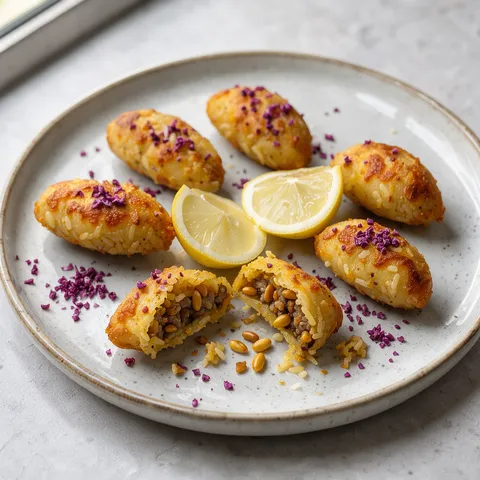 Iraqi Fried Rice Lamb Kibbeh1 hr 47 min · Meze
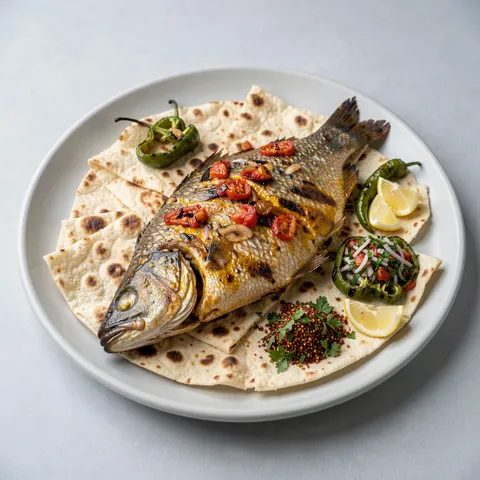 Tigris-Style Butterflied Carp Cooked by the Embers1 hr 30 min · Main course
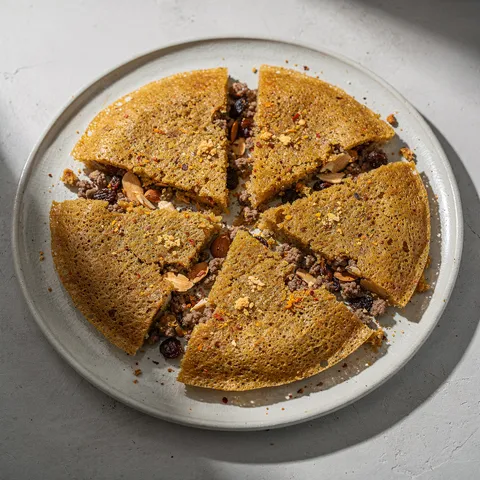 Mosul-Style Flat Stuffed Bulgur Pies1 hr 45 min · Main course
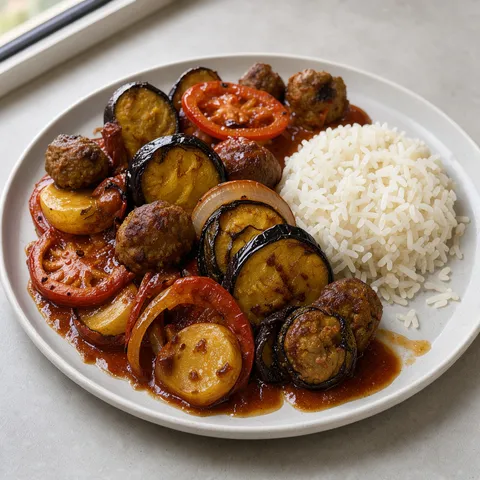 Iraqi Aubergine and Meatball Bake1 hr 55 min · Main course
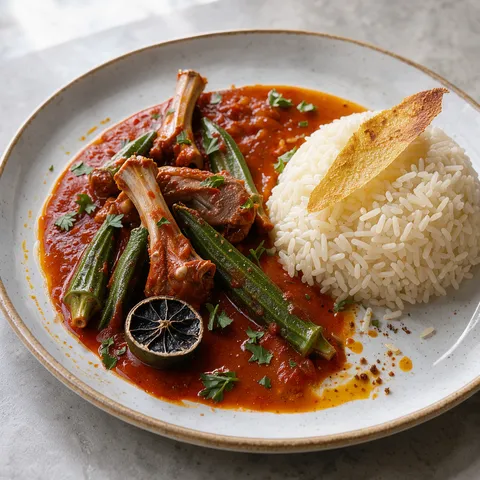 Margat Bamia and Timman2 hr · Main course
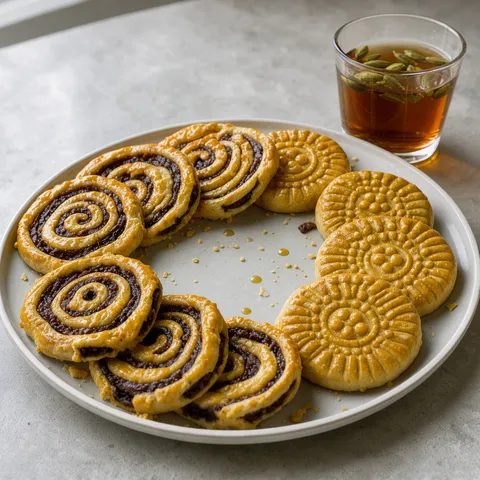 Iraqi Date Cookies1 hr 15 min · Patisserie