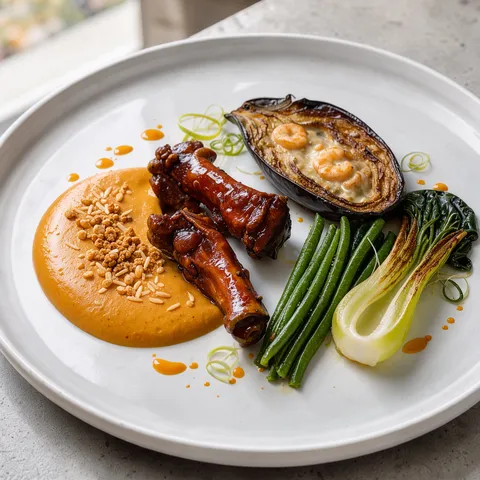
Kare-Kare 2.0
A Filipino main course. Takes 1 hr 30 min, Serves 4. Difficulty: challenging.
At a glance
- Total time
- 1 hr 30 min
- Serves
- Serves 4
- Difficulty
- Challenging
- Cuisine
- Filipino cuisine
- Dish type
- Main course
- Diet
- Gluten-free
- Allergens
- Milk, Crustaceans, Peanuts, Tree nuts, Soya
Ingredients
Oxtail
- 1.2 kg oxtail (thick sections)
- 1.2 litres water
- 1 onion (halved)
- 4 garlic cloves
- 1 bay leaf
- 1 tsp black peppercorns
- 1 tsp salt
Annatto oil
- 1 tbsp annatto seeds
- 60 ml neutral oil
Lacquer
- 300 ml oxtail cooking liquid
- 1 tbsp annatto oil
- 1 tsp sugar
- 1 tsp cane or cider vinegar
Peanut and rice velouté
- 70 g rice
- 80 g roasted skinned peanuts
- 1 shallot (finely chopped)
- 1 garlic clove
- 1 tbsp annatto oil
- 400 ml oxtail cooking liquid
- salt
Bagoong butter
- 60 g soft butter
- 1 tbsp bagoong alamang (fermented shrimp paste)
- 1 garlic clove (finely grated)
- 1 tsp sugar
- 1 tsp calamansi or lemon juice
Vegetables
- 2 long Asian aubergines
- 150 g yardlong beans or green beans
- 4 small pak choi (halved)
- 1 tbsp neutral oil
- salt
Crumb
- the coarse part of the toasted rice
- 30 g roasted peanuts (roughly chopped)
- 3 garlic cloves (thinly sliced and fried until crisp in 2 tbsp oil)
- a pinch of salt
To finish
- 2 spring onions (cut into fine threads and curled in iced water)
Equipment
- Pressure cooker
- Saucepan
- Frying pan
- Pestle and mortar
- Baking paper
- Cast-iron frying pan
- Fine sieve / chinois
- Blender
- Sauté pan
- Colander
- Mixing bowls
- Chef's knife
Method
- Pressure-cook the oxtail: Pat the oxtail pieces (3-4 cm sections) dry with kitchen paper, without blanching them first. In the pressure cooker, bring the water to the boil with the onion, garlic, bay leaf, peppercorns and salt, add the oxtail to the boiling water and close the lid. Once steam escapes, cook over medium-low heat for 40 min, then let the pressure release naturally (about 10 min). You will remove the scum and fat when straining after cooking. The hours of simmering in the classic come down to under an hour here thanks to the pressure
- Annatto oil: While the pressure cooker is working, warm the oil in a small saucepan until lukewarm, add the annatto seeds, infuse over low heat for 4 min and strain. The oil should be deep orange and the seeds should not darken
- Toast the rice: Toast the rice in a dry frying pan over medium heat for 6-8 min, stirring, until deep golden and smelling of toasted corn. Once cool, grind 40 g to a flour in a mortar and leave the rest in coarse pieces, which go into the crumb
- Bagoong butter: Mash the soft butter thoroughly with a fork with the bagoong, grated garlic, sugar and calamansi juice. Transfer to baking paper, roll into a log 3 cm in diameter and firm up in the fridge for 30 min. The salty shrimp paste served on the side in the classic becomes a butter here, melting over the vegetables
- Crumb: Put the garlic slices in a small frying pan with the cold oil and fry over medium heat for 4-5 min, until pale golden, then drain. Mix the coarse toasted rice, roughly chopped peanuts, crisp garlic and salt
- Velouté base (while under pressure): In a small saucepan, soften the shallot and garlic in the annatto oil for 2 min, add the 80 g peanuts and the 40 g toasted rice flour, stir for 1 min and set aside. Once the oxtail liquid is ready, you will only need to add it
- Char the aubergines: Halve the aubergines lengthways, score the cut sides in a criss-cross pattern with a knife and brush with a thin layer of oil. Heat a cast-iron pan over medium-high heat and cook the aubergines cut side down for 6 min, until deep caramel-coloured, then turn and cook for another 6 min, until completely soft inside. While the halves sit in the hot pan, top each with a thick slice of bagoong butter so it melts into the scoring
- Velouté and lacquer (at the same time): Open the pressure cooker, lift out the oxtail and keep it on the bone. Pass the liquid through a fine sieve and spoon the fat off the surface. First add 400 ml of the liquid to the velouté base, cook over low heat for 8 min, blend for 2 min until smooth and pass through a fine sieve. It should be silky and coat a spoon, so season to taste and keep warm. While the velouté cooks, boil 300 ml of the liquid in a wide sauté pan with the annatto oil, sugar and vinegar over high heat for 8-10 min, until syrupy, then add the oxtail and cook for 3-4 min, turning constantly, until every side is coated in a glossy, reddish-brown lacquer
- Greens (while the lacquer cooks): Blanch the beans in boiling salted water for 3 min and the pak choi for 1 min, then drain. Sear the cut sides of the pak choi halves in a hot pan for 1 min, so they take on a light smoky flavour and some colour
- Plate: Pour 4 tbsp velouté onto the left half of a warm shallow plate and spread it into a half-moon with the back of a spoon. Place two lacquered oxtail pieces side by side in the centre and drizzle the remaining lacquer over them. Place an aubergine half with its bagoong butter on the right, with a small bundle of beans and a pak choi half beside it. Scatter the crumb over the velouté, add a few drops of annatto oil and place the spring onion threads on top of the oxtail. Serve immediately
Chef's note
The four foundations of the classic kare-kare are kept: oxtail, peanuts, toasted rice and bagoong. The sauce of the stew becomes a silky velouté, the oxtail a lacquered piece and the bagoong a butter melting over the aubergine, while the toasted rice also becomes a crunchy crumb that does not exist in the classic. Bagoong alamang is traditionally bought ready-made, and if calamansi is unavailable, use lemon.
Frequently asked questions
- How is the oxtail cooking liquid used in the recipe?
- Once strained and skimmed of fat, the liquid goes into both the peanut veloute and the lacquer that coats the oxtail. The oxtail stays on the bone and only the liquid is used.
- How do I make annatto oil without burning it?
- Warm the oil, infuse the annatto seeds over a low heat for 4 minutes and strain. The oil should be deep orange and the seeds shouldn't darken.
- What is bagoong butter and how is it used?
- Soft butter is mashed with bagoong, garlic, sugar and calamansi juice, rolled into a log and chilled until firm. Placed on hot aubergine, it melts and seeps into the scored flesh.
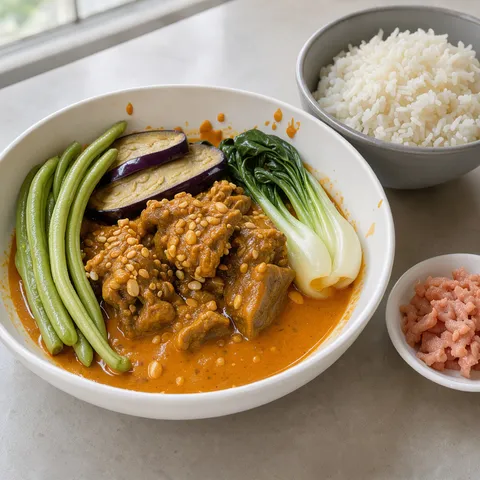 Filipino Oxtail Stew in Peanut Sauce3 hr 15 min · Main course
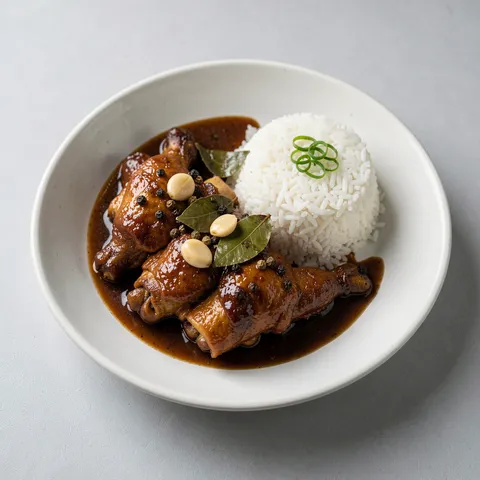 Filipino Chicken in Vinegar and Soy Sauce55 min · Main course
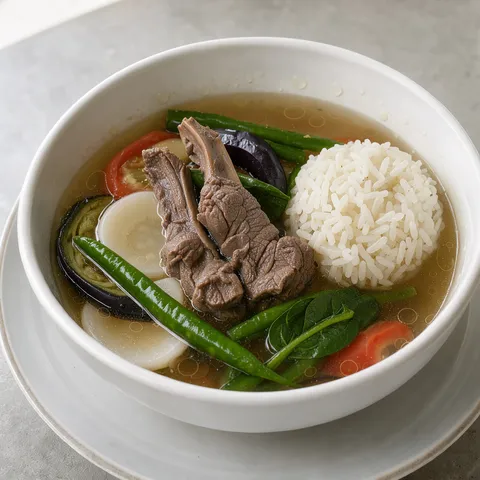 Sour Tamarind Beef Soup1 hr 20 min · Soup
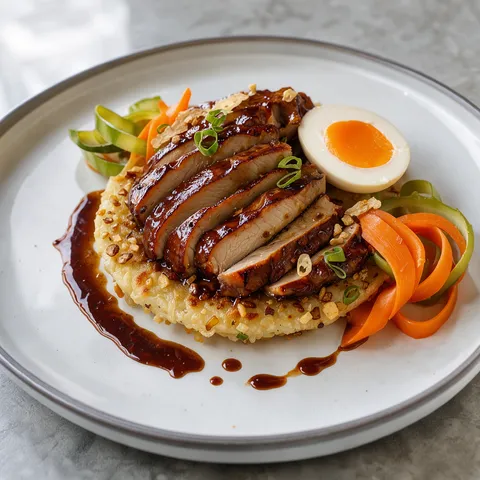 Chicken Adobo 2.01 hr 20 min · Main course
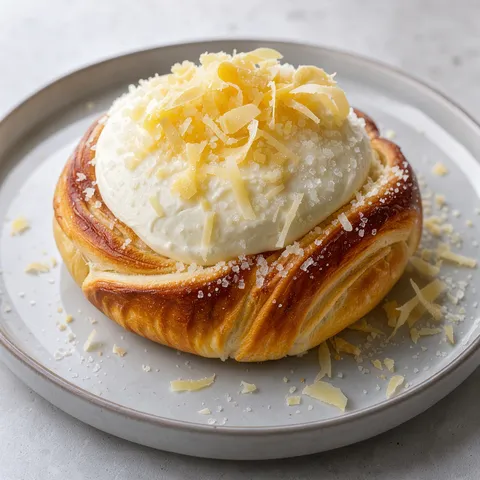 Filipino Butter and Cheese Buns4 hr 10 min · Bread & pastry
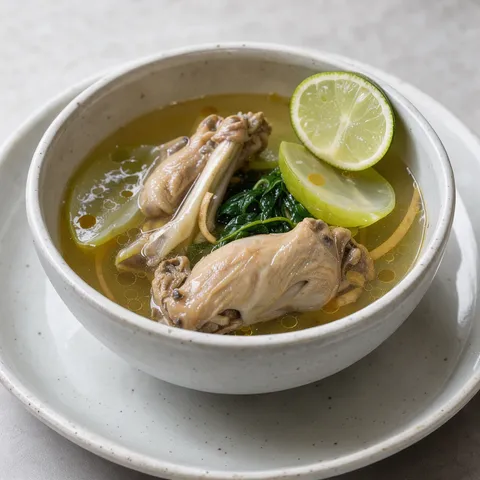 Filipino Ginger Chicken Soup1 hr 5 min · Soup
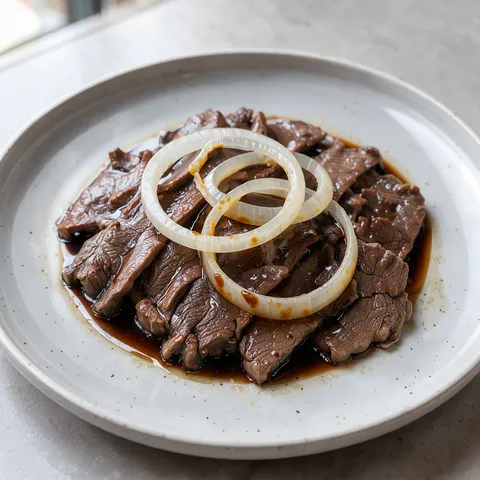 Filipino Beef in Calamansi and Soy45 min · Main course