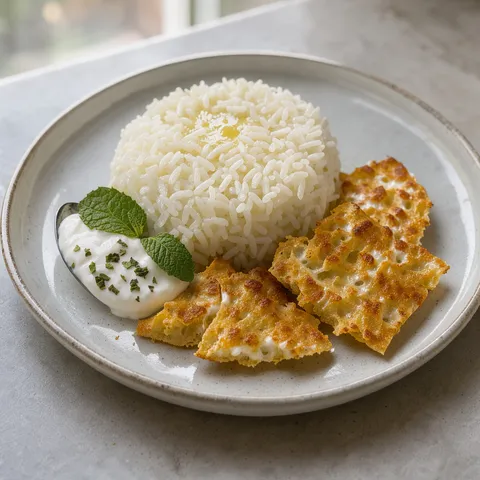
Persian Butter Rice with a Crisp Base Kateh
An Iranian side dish. Takes 30 min, Serves 4. Difficulty: easy.
At a glance
- Total time
- 30 min
- Serves
- Serves 4
- Difficulty
- Easy
- Cuisine
- Iranian cuisine
- Dish type
- Side dish
- Diet
- Vegetarian, Gluten-free
- Allergens
- Milk, Eggs
Ingredients
Pilaf
- 400 g basmati rice
- 600 ml water
- 1.5 tsp salt
- 50 g butter
- 2 tbsp sunflower oil
Tahdig
- 2 egg yolks (optional)
- 3 tbsp yoghurt
- a pinch of saffron (about 0.2 g) in 2 tbsp hot water
To serve
- 100 g strained yoghurt
- 1 tbsp dried mint
- a few sprigs fresh mint
Equipment
- Heavy-based saucepan
- Mixing bowls
- Balloon whisk
Method
- Wash the rice: Put the rice in a bowl and wash it 4 times in cold water, until the water runs clear. The starch makes the pilaf stick. Soaking for 20 min makes the grains longer, but in this recipe it is made without soaking (~3 min)
- Boil the water: Bring the water to the boil with the salt in a heavy-based pan with a lid. Add the rice to the boiling water and stir once. Rice cooked in this little water must absorb it completely, as excess water makes the pilaf mushy (~5 min)
- Boil: Keep the heat high and wait for the water to be absorbed down to the level of the grains. When holes appear on the surface of the rice, most of the water has been absorbed. This takes 6-8 min depending on the type of rice (~7 min)
- Prepare the base: Put the rice that has absorbed its water into a large bowl and turn the heat under the pan to the lowest. In a separate small bowl, whisk the saffron water, yoghurt and egg yolks and mix with a spoonful of rice. Pour the oil and half of the melted butter into the base of the pan and spread the saffron rice mixture over the base. Pour the rice from the bowl back on top in a fluffy mound (~3 min)
- Steam: Poke 5-6 holes in the pilaf with a spoon handle and drizzle with the remaining butter. Wrap the lid in a cloth, cover and steam over the lowest heat for 15 min. The cloth absorbs the steam, so the pilaf does not turn soggy and the grains stay separate. 15 min gives a golden crisp base (~15 min)
- Rest: Take the pan off the heat and stand it on a cold wet cloth for 3 min. The cold surface stops the steam and helps the tahdig come away from the pan easily (~3 min)
- Plate: Spoon the pilaf onto a wide serving plate, keeping it fluffy. Lift out the tahdig with a knife and either turn it over on top or arrange it alongside. Sprinkle the dried mint over the yoghurt and garnish with fresh mint leaves (~2 min)
Chef's note
Kateh is the everyday pilaf of Gilan and Mazandaran tables and, unlike chelow, it is not boiled and drained but cooked in a little water. The local rice in Gilan is the tarom variety, and basmati is a good alternative. The flavour of the pilaf lies in the butter, so use good butter. Leftover kateh the next day is fried in a dry pan and served again.
Frequently asked questions
- What is the difference between kateh and chelow?
- Kateh is cooked in a small amount of water that the rice absorbs. Chelow is boiled in plenty of water, drained and steamed.
- Is kateh sticky?
- A little stickiness is normal, but it should not be mushy. Wash the rice well and use 1.5 times its volume in water.
- How do I get the kateh crust out?
- Spread the oil and yoghurt mix on the base of the pot and cook for 15 minutes over a low heat. Standing the pot on a cold surface lets the layer release easily.
 Iranian Spinach and Egg Skillet27 min · Main course
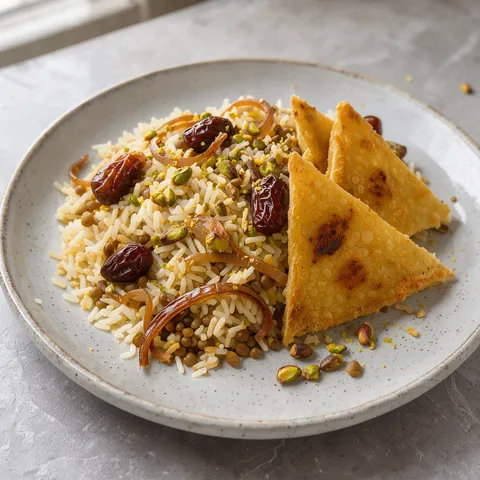 Iranian Lentil and Date Rice1 hr 43 min · Main course
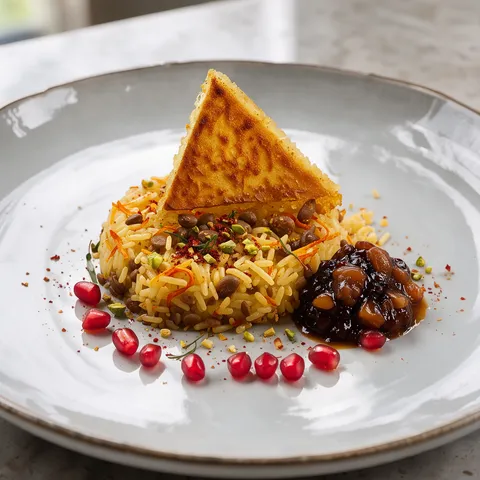 Adas Polo 2.01 hr 17 min · Main course
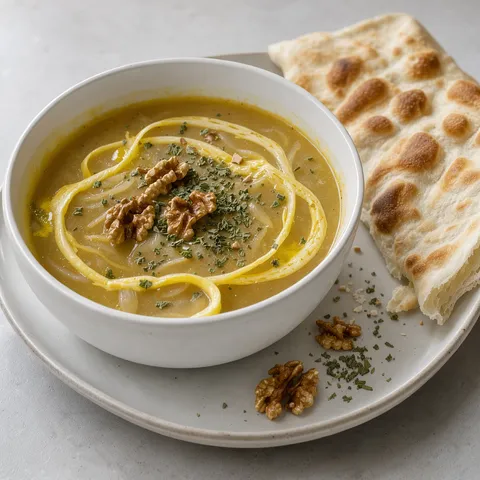 Iranian Onion and Fenugreek Soup27 min · Soup
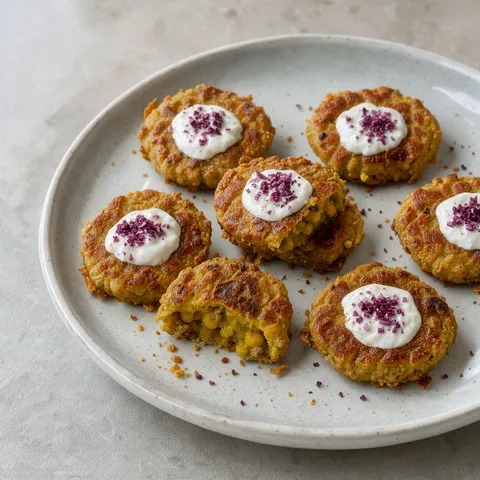 Gilan Chickpea and Beef Patties1 hr 32 min · Meze
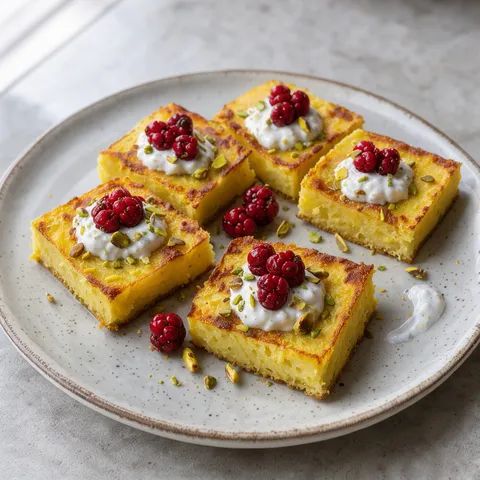 Iranian Potato Squares 5×5 cm1 hr 21 min · Meze