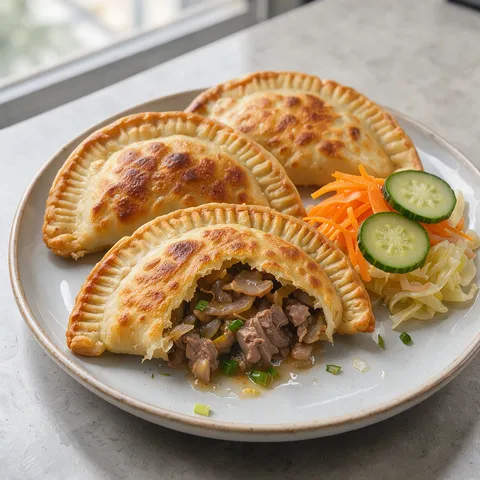
Mongolian Fried Lamb Pasties Khuushuur
A Mongolian bread & pastry. Takes 1 hr 40 min, 12 pieces (4 servings). Difficulty: medium.
At a glance
- Total time
- 1 hr 40 min
- Serves
- 12 pieces (4 servings)
- Difficulty
- Medium
- Cuisine
- Mongolian cuisine
- Dish type
- Bread & pastry
- Allergens
- Gluten
Ingredients
Dough
- 400 g plain flour
- 220 ml lukewarm water
- 1 tsp salt
Filling
- 500 g fatty lamb mince (about 20% fat, or 350 g lamb + 150 g beef mince)
- 1 large onion (finely grated)
- 2 garlic cloves (crushed)
- 1 tsp salt
- 1/2 tsp black pepper
- 1/2 tsp cumin
- 80 ml iced water
For frying
- 1 litre sunflower oil
Quick pickled salad to serve
- 2 carrots (coarsely grated)
- 1 cucumber (thinly sliced)
- 1/4 small white cabbage (finely shredded)
- 3 tbsp cider vinegar
- 1 tsp sugar
- 1/2 tsp salt
Equipment
- Mixing bowls
- Rolling pin / oklava
- Chef's knife
- Chopping board
- Box grater
- Cling film
- Saucepan
- Colander
- Baking tray
- Deep pan / deep-fat fryer (optional)
- Probe thermometer (optional)
Method
- Knead the dough: Put the flour and salt in a large bowl and add the lukewarm water a little at a time, bringing it together first with a spoon, then by hand. Knead on the work surface for 10 min until smooth and as firm as an earlobe. Khuushuur dough is unleavened and made with water: it needs to be firm so it gives a thin, crisp crust in the hot oil without puffing up
- Rest the dough: Put the dough in the bowl, cover with cling film and leave at room temperature for 30 min. During this time the gluten relaxes, so the dough does not spring back or tear when rolled thin
- Make the filling (in parallel): While the dough rests, put the mince in a large bowl. Add the grated onion with its juice, the garlic, salt, pepper and cumin. Add the iced water in three batches, kneading by hand for 1 min each time: the mixture should be a sticky, slightly wet paste. This water is the secret of Mongolian khuushuur: it turns to steam as they fry and keeps the filling juicy. This takes 10 min: keep the filling in the fridge until needed
- Divide and roll out the dough: Divide the dough into 12 equal balls (about 50 g each). On a floured work surface, roll each ball with a rolling pin into a round 15 cm across and 2 mm thick. Do not stack the rolled rounds, and cover them with a damp cloth so they do not dry out. This takes 15 min
- Fill and seal: Put 1 heaped tbsp (about 40 g) of filling on one half of each round and flatten it, leaving a 1 cm border. Fold the other half over to make a half-moon, pushing out the air with your hand. Press the edge with your fingers, then seal by crimping the edge into small pleats or pressing with a fork. Any air left inside makes them swell and burst as they fry. When all are filled, press each pasty lightly in your palm to flatten it to 1 cm thick, so the meat cooks evenly. This takes 15 min
- Heat the oil (in parallel): During the last 10 min of filling, heat the oil to 170°C in a wide, deep saucepan or deep-fat fryer. Without a thermometer, a small piece of dough dropped into the oil should rise to the surface at once with lively bubbles around it. In cooler oil the dough soaks up fat, and in hotter oil the outside burns while the inside stays raw
- Fry: Lower the pasties into the oil in three batches (4 at a time, without crowding the pan). Fry for 3-4 min on each side, 7 min in total, turning once, until deep golden and blistered. A thermometer pushed into the centre of a pasty should read at least 71°C, the safe limit for mince. Lift out with a slotted spoon and drain standing upright on a tray lined with kitchen paper. The three batches take about 21 min
- Make the pickled salad (in parallel): While they fry, put the carrots, cucumber and cabbage in a bowl and rub with the vinegar, sugar and salt. After 10 min the vegetables soften slightly and release their juices. The sour salad balances the rich pasties: in Mongolia khuushuur is almost always eaten with pickled vegetables
- Plate: Fan out three khuushuur on a large plate, slightly overlapping. Add a handful of pickled salad alongside and serve hot. Mongolians eat khuushuur by hand, sucking out the hot juices with the first bite before eating them. This step takes 5 min
Chef's note
Khuushuur is Mongolia's best-loved street and festival food, fried on every corner especially during the Naadam festival in July. It is traditionally made with mutton and plenty of tail fat: here easily available fatty lamb mince is used. Adding ice-cold water is the well-known way to keep the filling juicy, so do not skip it. Unfried pasties can be frozen on a tray and transferred to a bag, then fried from frozen in oil at 160°C for 10 min.
Frequently asked questions
- Why is the Khuushuur filling juicy?
- The iced water is added to the filling in three batches, kneading each time. The recipe says this water turns to steam as it fries and keeps the filling juicy.
- Does Khuushuur dough contain yeast?
- No, the dough is made with water and no yeast. It is kneaded firm so it gives a thin, crisp shell in hot oil without puffing up.
- Why do the pasties puff up and burst when frying?
- If air is left inside, they puff up and burst as they fry. After filling, push the air out by hand as you shape the half-moon, then press and crimp the edge to seal.
 Mongolian Steamed Lamb Dumplings1 hr 50 min · Bread & pastry
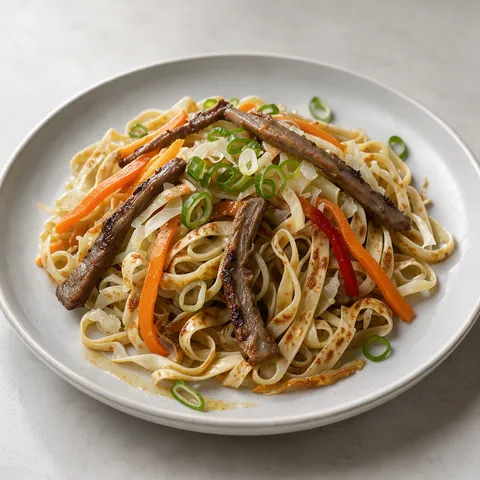 Mongolian Stir-Fried Noodles with Lamb1 hr 15 min · Main course
 Mongolian Salted Milk Tea30 min · Drink
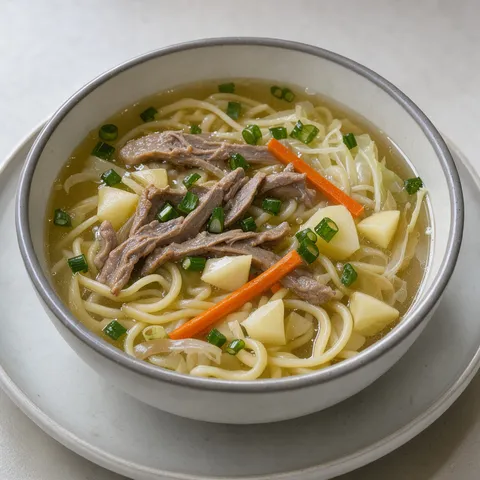 Mongolian Lamb Soup with Hand-Cut Noodles2 hr · Soup
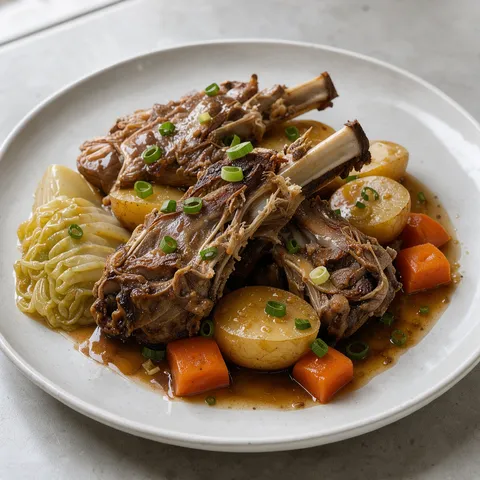 Mongolian Lamb on the Bone with Potatoes2 hr 20 min · Main course
 Mongolian Fried Rice with Beef1 hr 15 min · Main course