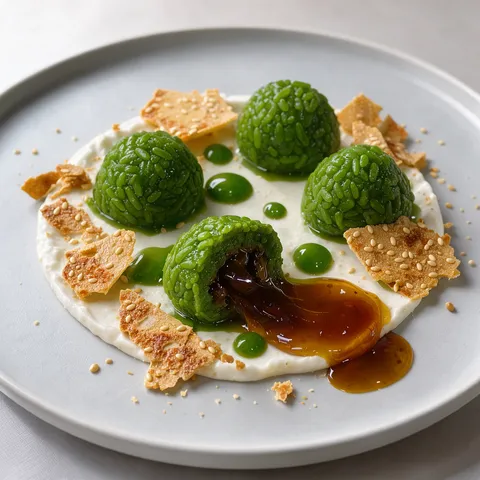
Klepon 2.0
An Indonesian dessert. Takes 1 hr 20 min, Serves 4. Difficulty: professional.
At a glance
- Total time
- 1 hr 20 min
- Serves
- Serves 4
- Difficulty
- Professional
- Cuisine
- Indonesian cuisine
- Dish type
- Dessert
- Diet
- Gluten-free
- Allergens
- Milk, Tree nuts, Sesame
Ingredients
Pandan juice
- 12 pandan leaves (about 35 g, chopped)
- 250 ml water
Runny palm sugar caramel
- 100 g palm sugar (gula jawa or gula melaka, finely chopped)
- 40 ml water
- 20 g butter
- a pinch of salt
Dough
- 180 g glutinous rice flour
- 20 g ordinary rice flour
- a pinch of salt
- about 150 ml pandan juice (from above)
Pandan syrup
- 50 ml pandan juice (from above)
- 50 g caster sugar
- 30 ml water
Salted coconut cream
- 250 ml unsweetened coconut milk
- 15 g rice flour
- 1/2 tsp salt
- 1 pandan leaf (knotted)
Coconut and sesame brittle
- 50 g caster sugar
- 40 g desiccated coconut
- 15 g white sesame seeds
- a pinch of salt
For boiling
- 2 litres water
Equipment
- Blender
- Fine sieve / chinois
- Saucepan
- Sugar thermometer
- Balloon whisk
- Silicone mould
- Baking paper
- Frying pan
- Mixing bowls
- Rolling pin / oklava
- Wooden spoon / spatula
- Colander
Method
- Extract the pandan juice: Blend the pandan leaves with the 250 ml water for 1 min and strain through a fine sieve, pressing down. You get about 200 ml of dark green juice: set aside 150 ml for the dough and 50 ml for the syrup. Having the same aroma in both holds the plate together
- Cook the caramel: Melt the palm sugar, 40 ml water and salt in a small saucepan over medium heat. When the edges foam, boil to 110°C on a sugar thermometer, about 4-5 min. Take off the heat and whisk in the butter. The caramel should be dark, glossy and the consistency of honey. In the classic, a solid piece of sugar melts during boiling, whereas here a pre-cooked butter caramel gives a much runnier, deeper centre
- Freeze the caramel: Pour the caramel into a 16-cavity silicone mould of 2.5 cm half-spheres (about 5 ml per cavity), or drop 16 teaspoonfuls (about 1 tsp each) onto baking paper. Freeze for 30 min, until hard enough to handle. Frozen caramel holds together while it is wrapped in the dough and melts again during boiling
- Make the brittle: While the caramel freezes, toast the coconut and sesame in a dry 24 cm frying pan over medium heat for 3-4 min until light golden, then transfer to a bowl. In the same pan, melt the sugar over medium heat without stirring. When it turns amber, add the toasted coconut, sesame and salt, stir quickly and spread thinly on baking paper. After cooling for 10 min, lay a second sheet of baking paper on top and press with a rolling pin to break it into coarse crumbs. The moist coconut coating of the classic becomes a crunchy brittle here
- Cook the pandan syrup: Bring the 50 ml pandan juice, sugar and 30 ml water to the boil in a small saucepan and reduce over low heat for 5-6 min, until the syrup thinly coats a spoon. Boiled for too long, it turns olive green, so take it off while still bright green and leave to cool
- Cook the salted coconut cream: Whisk the coconut milk, rice flour and salt in a small saucepan while cold and add the pandan. Cook over low heat for 5-6 min, whisking constantly, until it reaches a pudding consistency. Do not boil it, just let the edges tremble. Remove the pandan and leave to stand until warm. This salted cream carries the salty-sweet balance common in Javanese sweets
- Knead the dough: Put the glutinous rice flour, rice flour and pinch of salt in a bowl and knead by hand for 2 min, adding the 150 ml pandan juice a little at a time. The dough should be soft like an earlobe and bend without cracking. Adjust with 1 tsp water or flour if needed, and cover
- Fill the balls: Put the 2 litres water on to boil in a 24 cm saucepan. Divide the dough into 16 equal pieces (about 22 g each). Flatten each piece in your palm into a disc 6 cm across, put a frozen caramel in the centre and gather up the edges to seal. Roll it between your palms into a smooth 3.5 cm ball, leaving no cracks. Arrange the finished balls on a floured plate: you will boil them straight away, before the caramel melts
- Boil: Drop the balls into the boiling water in two batches of 8, stirring gently with a wooden spoon for the first 30 sec. Once they rise to the surface, boil for another 2.5 min: the caramel inside melts completely in this time. Lift out with a slotted spoon and drain for a few seconds. The first batch can be plated while the second cooks
- Plate: Spread 2 tbsp warm coconut cream in a shallow circle in the centre of each plate with the back of a spoon. Arrange 4 hot klepon on top. Put a drop of pandan syrup between and on top of the klepon and scatter generously with brittle crumbs. Serve immediately: the temperature contrast between the hot dough and the warm cream, and the caramel that flows when you bite, are the main idea of this plate
Chef's note
The three elements of klepon, the pandan dough, the palm sugar filling and the coconut coating, are kept and each is taken a step further: a runny butter caramel instead of solid sugar, a crunchy brittle instead of moist grated coconut, and underneath, the salted coconut cream often used in Javanese sweets. Pandan, glutinous rice flour and palm sugar are found in Asian supermarkets. If there is no pandan, colour the dough with a handful of spinach juice, add 1/2 tsp vanilla extract and make the syrup with plain sugar. Dark brown sugar can be used instead of palm sugar.
Frequently asked questions
- Why is the caramel inside the klepon frozen beforehand?
- Frozen caramel doesn't break up when wrapped in the dough. During boiling the caramel inside melts again.
- Why does the pandan syrup turn olive green?
- If you boil the syrup for long, it turns olive green. Take it off the heat and cool it while it is still bright green.
- What should the consistency of the klepon dough be?
- It should be as soft as an earlobe and bend without cracking. If necessary, adjust with 1 teaspoon of water or flour.
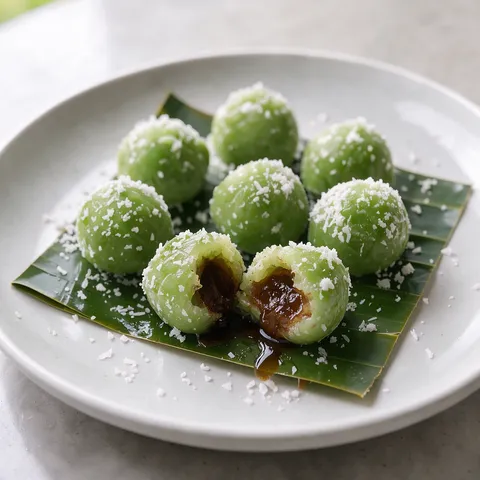 Pandan Glutinous Rice Balls Filled with Palm Sugar55 min · Dessert
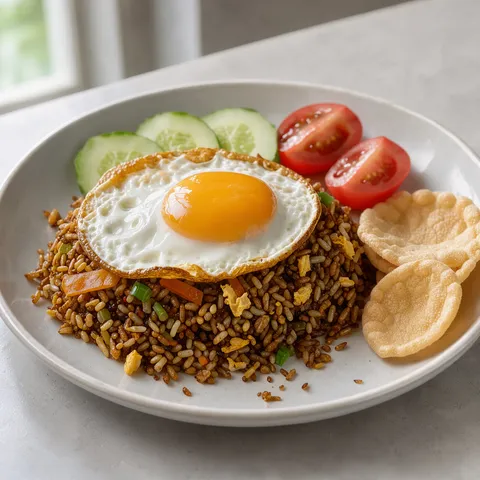 Nasi Goreng25 min · Main course
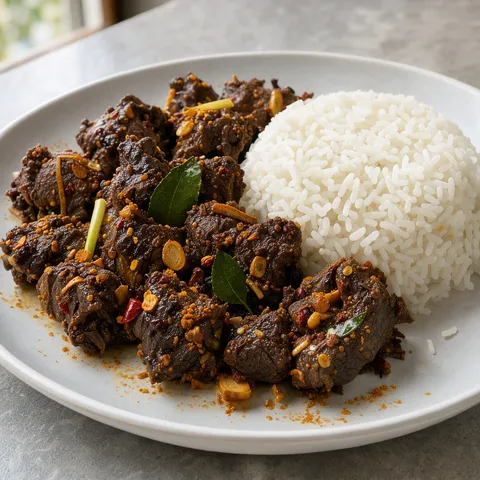 Beef Rendang1 hr 45 min · Main course
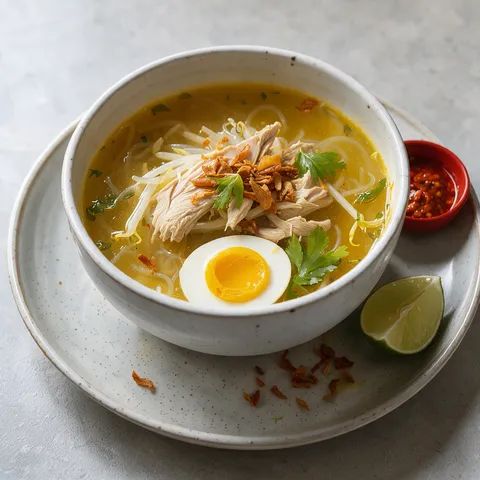 Indonesian Yellow Chicken Soup1 hr · Soup
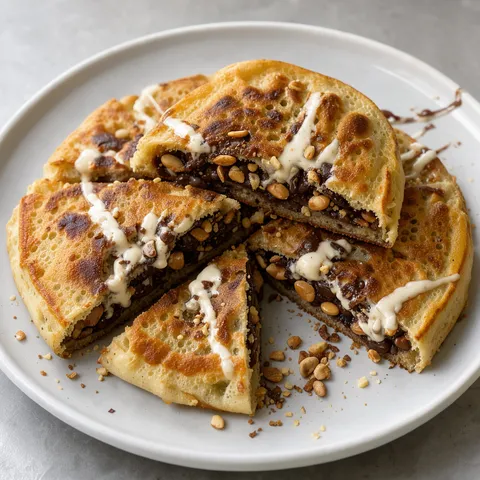 Indonesian Sweet Honeycomb Pancake35 min · Bread & pastry
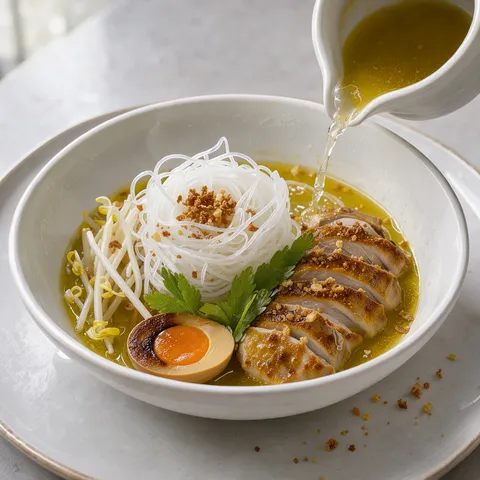 Soto Ayam 2.01 hr 20 min · Soup
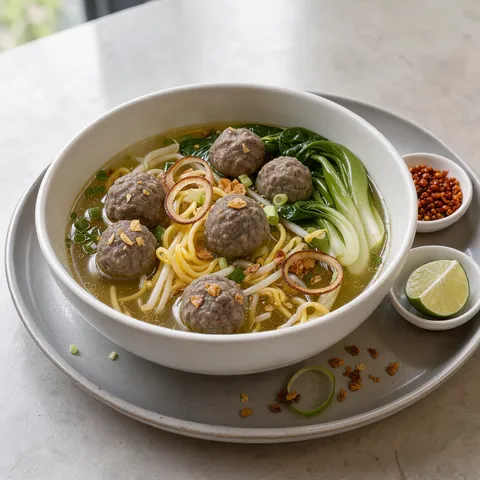 Indonesian Beef Meatball Soup2 hr 50 min · Soup