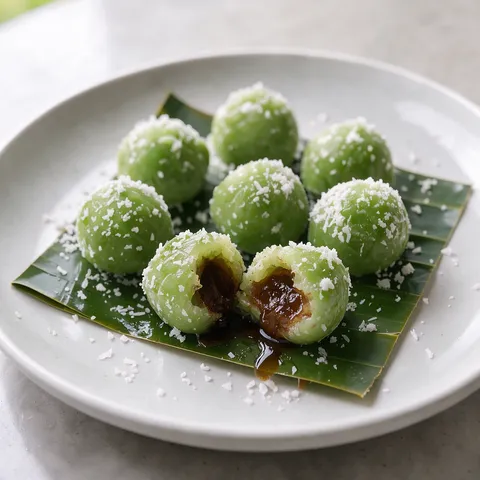
Pandan Glutinous Rice Balls Filled with Palm Sugar Klepon
An Indonesian dessert. Takes 55 min, Serves 4. Difficulty: medium.
At a glance
- Total time
- 55 min
- Serves
- Serves 4
- Difficulty
- Medium
- Cuisine
- Indonesian cuisine
- Dish type
- Dessert
- Diet
- Gluten-free
- Allergens
- Tree nuts
Ingredients
Pandan juice
- 10 pandan leaves (about 30 g, chopped)
- 180 ml water
Dough
- 200 g glutinous rice flour
- 20 g ordinary rice flour
- 1/4 tsp salt
- 160-170 ml pandan juice (from above)
Filling
- 70 g palm sugar (gula jawa or gula melaka, finely chopped)
Coating
- 120 g desiccated coconut
- 60 ml hot water
- 1/4 tsp salt
For boiling
- 2 litres water
Equipment
- Blender
- Fine sieve / chinois
- Steamer basket
- Baking paper
- Mixing bowls
- Chef's knife
- Chopping board
- Saucepan
- Wooden spoon / spatula
- Colander
Method
- Extract the pandan juice: Blend the pandan leaves with the 180 ml water for 1 min, then strain through a fine sieve, pressing down. You get a dark green, grassy-scented juice, about 170 ml. Keep it warm: the dough binds better with warm liquid
- Prepare the coating: Mix the desiccated coconut with the 60 ml hot water and 1/4 tsp salt, spread it on baking paper in a steamer and steam over boiling water for 10 min. The steam softens the coconut like freshly grated coconut, and the salt balances the sweetness. Spread it on a large plate to cool
- Knead the dough: Put the glutinous rice flour, rice flour and 1/4 tsp salt in a bowl. Knead by hand, adding the pandan juice a little at a time. The dough should be soft and pliable like an earlobe, not stick to your hands and bend without cracking. If it cracks, add 1 tsp water, and if it sticks, 1 tsp flour. After kneading for 2 min, cover it
- Prepare the filling: Finely chop the palm sugar on a chopping board with a chef's knife, leaving no large pieces. It should be almost a powder so it melts quickly as the balls boil
- Shape the balls: Pinch off 24 pieces of dough (about 16 g) and roll each one in your palm. Press a hollow into the centre with your thumb to make a small cup and put about 3 g sugar inside. Close the edges and roll again into a smooth ball 2.5 cm in diameter. If any cracks remain, the sugar leaks out during boiling, so seal them with a wet finger
- Boil: Bring the 2 litres water to the boil in a 24 cm saucepan. Drop in the balls in two batches of 12, stirring gently with a wooden spoon for the first 30 sec so they do not stick to the bottom. Once they rise to the surface, boil for another 2 min: the sugar inside melts completely in this time. Lift out with a slotted spoon and let the excess water drain for a few seconds
- Coat: Roll the hot balls straight away in the steamed coconut: the coating sticks well while the surface is tacky. Arrange on a plate
- Serve: Klepon is eaten warm or at room temperature, on the same day. Pop one in your mouth whole: when you bite, the liquid sugar bursts out
Chef's note
Klepon is known as a market sweet in Java and Bali, and in Malaysia a similar sweet is called onde-onde. Pandan leaves and palm sugar are easy to find in Asian supermarkets. If there is no pandan, you can colour the water with a handful of spinach and add 1/2 tsp vanilla extract, though the aroma will be different. Coconut sugar or dark brown sugar can be used instead of gula jawa. It hardens in the fridge, so make it fresh rather than storing it.
Frequently asked questions
- Why does the sugar inside the klepon leak out while boiling?
- If cracks are left in the balls, the sugar leaks out during boiling. When closing them, seal the cracks by wetting your finger.
- What should the klepon dough be like?
- The dough should be as soft as an earlobe, not sticky and able to bend without breaking. If it cracks, add 1 tsp of water, and if it sticks, add 1 tsp of flour.
- When should klepon be eaten?
- It is best eaten warm or at room temperature, on the same day. Roll the hot balls in the steamed coconut straight away, because the coating sticks best while the surface is tacky.
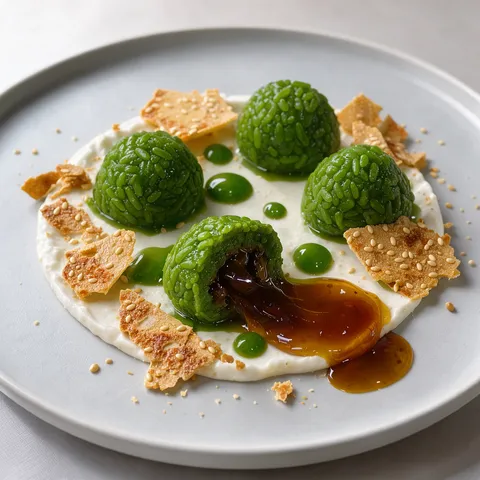 Klepon 2.01 hr 20 min · Dessert
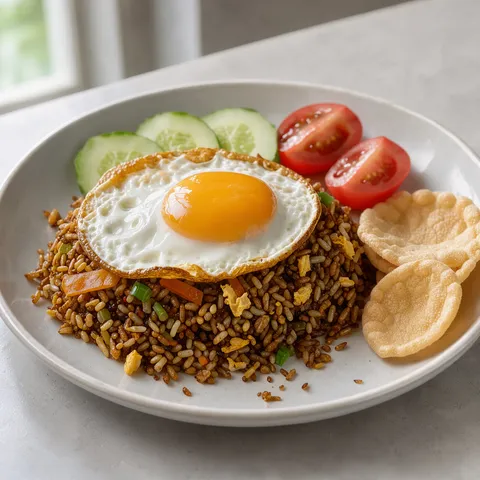 Nasi Goreng25 min · Main course
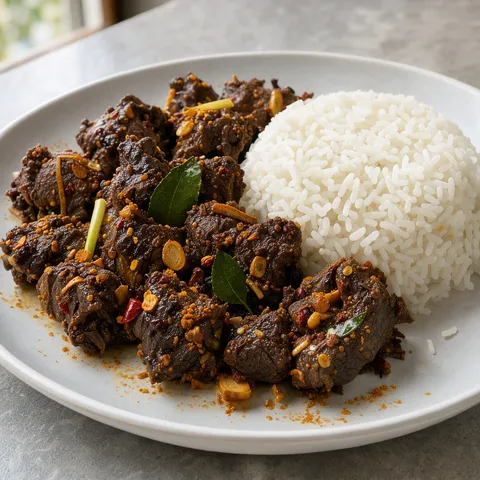 Beef Rendang1 hr 45 min · Main course
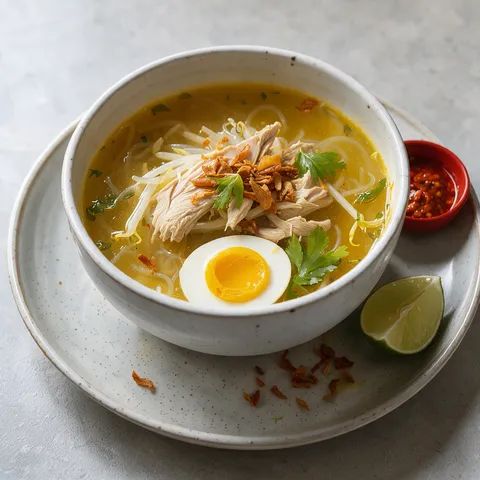 Indonesian Yellow Chicken Soup1 hr · Soup
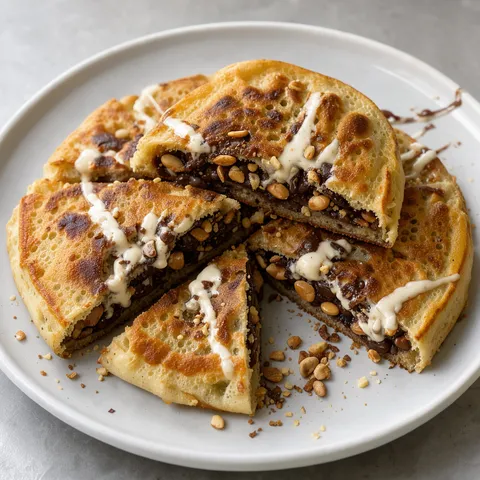 Indonesian Sweet Honeycomb Pancake35 min · Bread & pastry
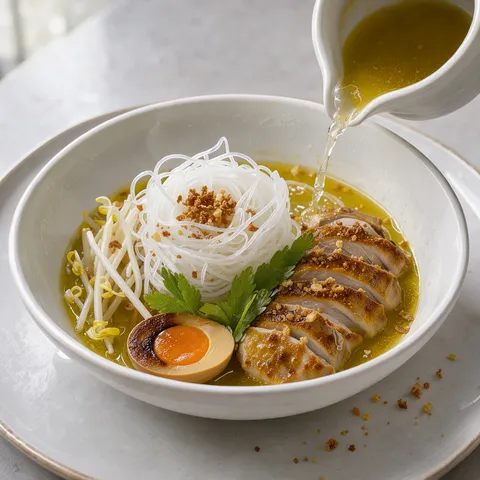 Soto Ayam 2.01 hr 20 min · Soup
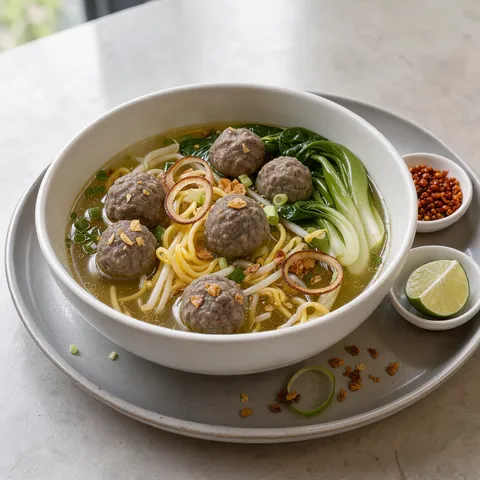 Indonesian Beef Meatball Soup2 hr 50 min · Soup