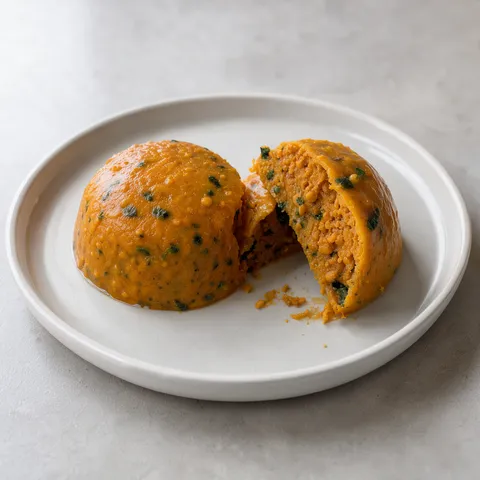
Cameroonian Steamed Black-Eyed Bean Pudding Koki
A Cameroonian meze. Takes 1 hr 55 min · +8 hr soaking, 4 servings (8 pieces). Difficulty: medium.
At a glance
- Total time
- 1 hr 55 min · +8 hr soaking
- Serves
- 4 servings (8 pieces)
- Difficulty
- Medium
- Cuisine
- Cameroonian cuisine
- Dish type
- Meze
- Diet
- Gluten-free
- Allergens
- Contains none of the 14 listed allergens
Ingredients
Batter
- 300 g dried black-eyed beans
- 1 small onion (about 60 g)
- 1 red chilli
- 1 tsp salt
- 180 ml lukewarm water
- 100 ml red palm oil (warmed until liquid, or if unavailable 100 ml sunflower oil + 1 tsp sweet paprika)
Greens
- 150 g fresh spinach (roughly chopped)
Moulds
- 8 heatproof 150 ml moulds (ramekins)
- 1 tsp sunflower oil
- foil to cover the moulds
Equipment
- Mixing bowls
- Blender
- Colander
- Wooden spoon / spatula
- Steamer basket
- Saucepan
- Chef's knife
Method
- Soak: Soak the beans in plenty of cold water for at least 8 hr or overnight. They're ready when they have doubled in size and the skins have wrinkled
- Skin the beans: Drain the water, put the beans in a large container and rub them hard between your palms for 2-3 min. Fill with water and gently pour off the skins that float to the surface along with the water. Repeat 4-5 times (about 20 min), then pick out by hand any beans that still have skins. Skinned beans give koki a fine, smooth texture
- Blend the batter: Put the drained beans, onion, chilli and salt in a blender. Blend for 3-4 min, gradually adding the 180 ml lukewarm water and scraping down the sides from time to time, until the batter is completely smooth and runs slowly off a spoon
- Beat in the palm oil: Transfer the batter to a bowl. Pour in the liquid palm oil in a thin stream while beating in one direction with a wooden spoon for 3-4 min. The batter should turn bright orange and absorb all the oil, with none left on the surface. The colour and soft texture of koki come from this generous amount of oil
- Add the spinach: Fold the chopped spinach into the batter. Don't cook the leaves beforehand: they release their liquid as they steam and blend into the batter
- Fill the moulds: Oil 8 moulds that will fit in the steamer basket. Divide the batter evenly between them, about 125 ml each, leaving 1.5 cm space at the top. Cover each mould tightly with foil, because if drops of steam fall on the surface the koki turns watery. If the basket won't take 8 moulds in a single layer, use a two-tier steamer and swap the tiers halfway through cooking
- Steam: Put 4 cm water in a large saucepan, set the steamer basket in place and, once the water boils, arrange the moulds in the basket. Cover and cook over a medium-low heat for 55 min, keeping a steady flow of steam. Check the water level every 20 min and top up with boiling water if it gets low. It's ready when a knife inserted in the centre comes out clean and the koki springs back when touched
- Rest: Take the moulds out of the pan and rest for 10 min without removing the foil. As it rests, the koki firms up and comes out of the mould in one piece
- Plate: Run a knife around the edge of each mould, invert onto a plate and tap gently. Put two koki on each plate. Serve hot or warm
Chef's note
Koki is a steamed pudding of black-eyed beans and plenty of palm oil, loved in Cameroon especially in the south and south-west. Traditionally it is wrapped in banana leaves and steamed for a long time; here easy-to-find small moulds are used and the cooking time is shorter. In Cameroon it is usually eaten with boiled plantain or cassava. Though it resembles the moi moi of Nigeria, koki is richer and denser and has greens folded in. Tinned black-eyed beans won't make a batter, so always use dried.
Frequently asked questions
- Why are the skins of the beans removed for koki?
- Skinless black-eyed beans give koki a fine, smooth texture. Rub the soaked beans between your palms, fill with water and pour off the skins that float up, repeating 4-5 times.
- Why does koki turn watery when steamed?
- Koki turns watery if steam droplets fall on the surface. So cover each mould tightly with foil.
- How do I know koki is cooked?
- It is ready if a knife pushed into the middle comes out clean and the koki springs back when touched. Rest the moulds for 10 minutes without opening the foil, as rested koki firms up and turns out whole.
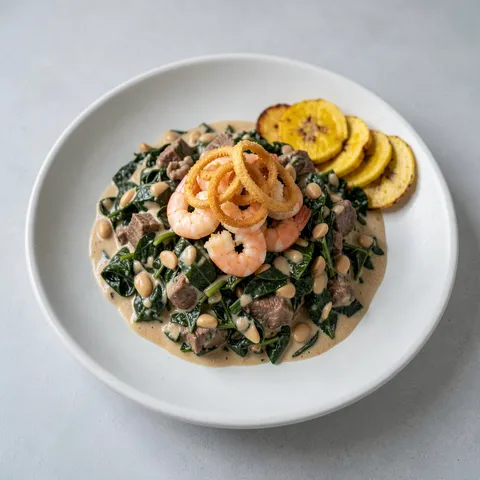 Cameroonian Bitter Leaf and Peanut Stew1 hr 50 min · Main course
 Chicken with Plantain and Vegetables1 hr 30 min · Main course
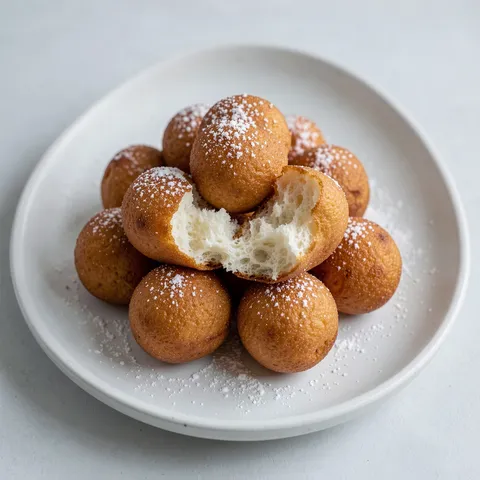 Cameroonian Fried Dough Balls50 min · Dessert
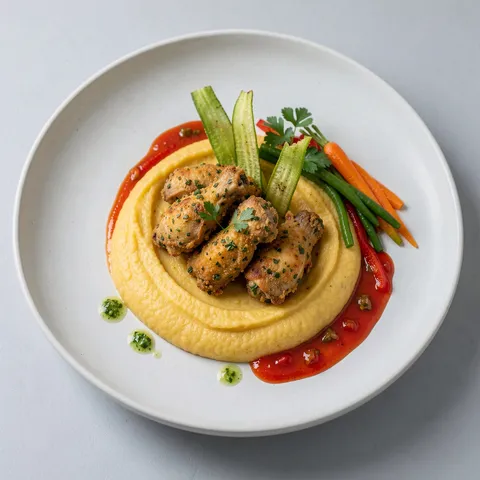 Poulet DG 2.01 hr 20 min · Main course
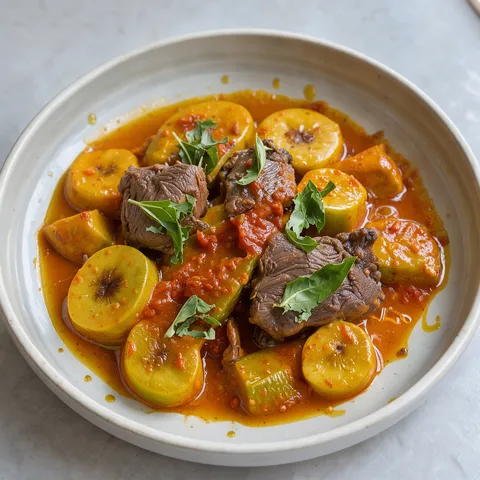 Cameroonian Beef and Green Plantain Stew1 hr 45 min · Main course
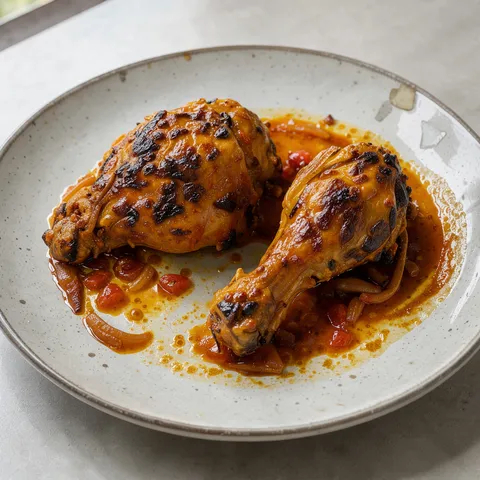 Cameroonian Charred Chicken Stew1 hr 30 min · Main course