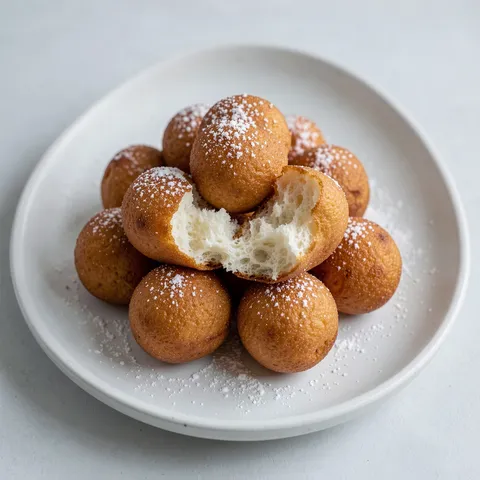
Cameroonian Fried Dough Balls Puff-Puff
A Cameroonian dessert. Takes 50 min · +1 hr rising, about 30 pieces (4 servings). Difficulty: medium.
At a glance
- Total time
- 50 min · +1 hr rising
- Serves
- about 30 pieces (4 servings)
- Difficulty
- Medium
- Cuisine
- Cameroonian cuisine
- Dish type
- Dessert
- Allergens
- Gluten
Ingredients
Makes
- about 30 (serves 4)
Dough
- 400 g plain flour
- 100 g caster sugar
- 7 g fast-action dried yeast
- 1/2 tsp salt
- 1/2 tsp freshly grated nutmeg
- 330-350 ml lukewarm water (37°C)
Frying
- 1.2 litres sunflower oil
To serve
- 2 tbsp icing sugar (optional)
Equipment
- Mixing bowls
- Wooden spoon / spatula
- Cling film
- Heavy-based saucepan
- Probe thermometer
- Colander
- Baking tray
Method
- Activate the yeast: Stir the yeast and 1 tsp sugar into 100 ml lukewarm water and leave for 10 min until the surface froths. If the water goes above 40°C the yeast dies, so check with a thermometer or your wrist
- Dry mix: Mix the flour, remaining sugar, salt and nutmeg in a large bowl. The salt should be dispersed through the flour so it doesn't come into direct contact with the yeast
- Beat the batter: Add the yeasted water and the remaining lukewarm water to the flour. Beat hard for 5 min with a wooden spoon or with your hand, fingers spread. The dough should not be firm enough to knead, but sticky and soft, running from the spoon in long elastic strands. Beating develops the gluten and gives the spongy texture inside
- Prove: Cover the bowl with cling film and leave in a warm place for 1 hr until doubled in size and the surface is full of bubbles. Stir once with a spoon to knock out a little of the air
- Heat the oil: Heat at least 6 cm of oil to 170°C in a deep, heavy-based saucepan, checking with a thermometer. In cooler oil puff-puff soak up oil and flatten, and in hotter oil they darken outside and stay doughy inside
- Shape the balls: Wet your hand, scoop up some dough in your palm and squeeze your fist to push out a walnut-sized ball between your thumb and index finger. Pinch it off with a wet spoon and drop it straight into the oil. In Cameroon this hand movement makes round, even balls. Alternatively, use two wet teaspoons
- Fry: Drop 8-10 balls into the pan at once, as crowding cools the oil. The balls sink, rise to the surface and mostly turn over by themselves. Fry for 3-4 min, turning with a slotted spoon, until evenly deep golden all over
- Drain and check: Lift out with a slotted spoon onto a tray lined with kitchen paper. Break the first one in half: it should be white, spongy and cooked through inside. If it's still doughy, lower the oil temperature by a few degrees and fry for longer
- Plate: Pile the puff-puff into a bowl or onto a plate while hot and dust with icing sugar if you like. Serve hot or warm
Chef's note
Puff-puff is a breakfast and street snack in Cameroon, and its most classic form is 'beignets haricots', a morning plate of puff-puff, spiced black-eyed bean stew and fried plantain. It is also much loved in Nigeria and Ghana, and in the French-speaking parts of Cameroon it goes by the name beignets. Nutmeg is the signature aroma, so don't overdo it.
Frequently asked questions
- Why do puff-puff go flat in the oil?
- If the oil isn't hot enough, below 170°C, the dough soaks up oil and goes flat. In oil that is too hot, the outside darkens and the inside stays doughy.
- When does the yeast die?
- The yeast dies if the water goes above 40°C. If the yeasted water isn't foamy on top after 10 minutes, the yeast isn't alive.
- How are the puff-puff balls shaped?
- With a wet hand, squeeze the dough through the ring of your fist between thumb and forefinger into a walnut-sized ball. Alternatively, use two wet dessert spoons.
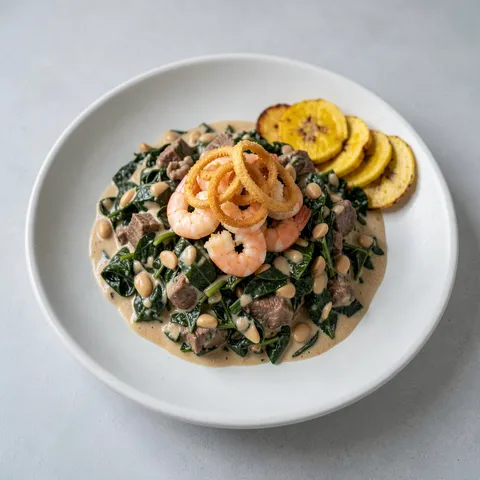 Cameroonian Bitter Leaf and Peanut Stew1 hr 50 min · Main course
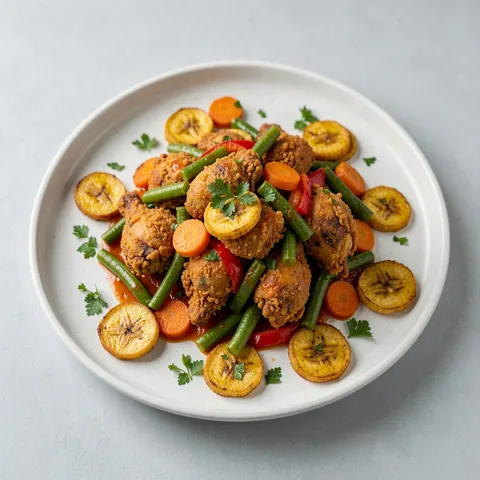 Chicken with Plantain and Vegetables1 hr 30 min · Main course
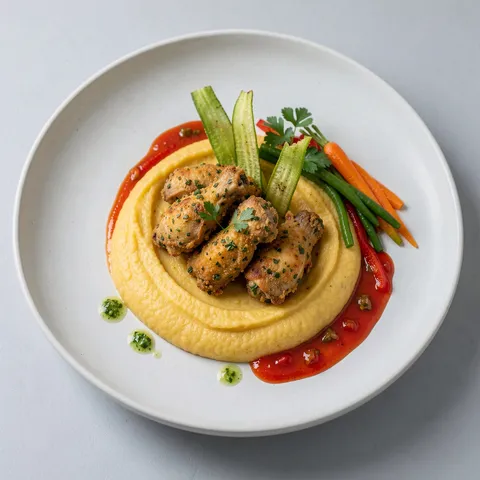 Poulet DG 2.01 hr 20 min · Main course
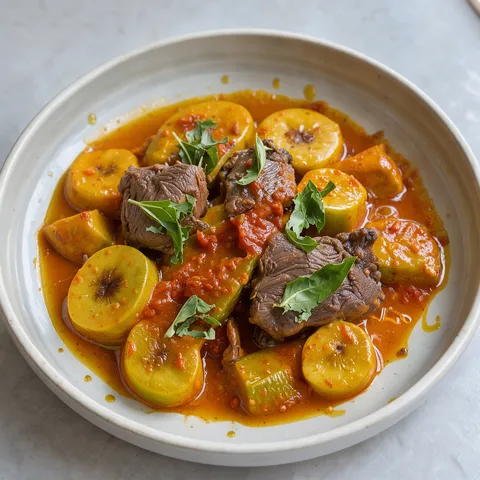 Cameroonian Beef and Green Plantain Stew1 hr 45 min · Main course
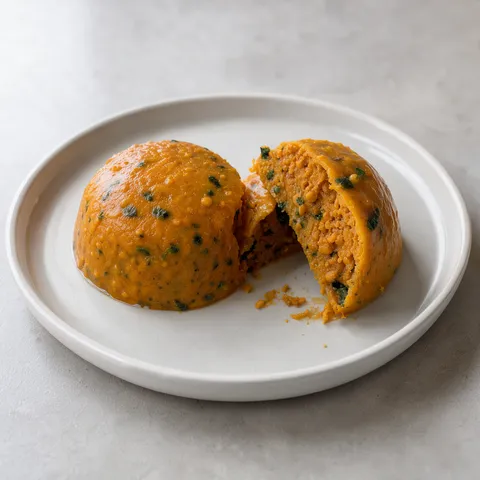 Cameroonian Steamed Black-Eyed Bean Pudding1 hr 55 min · Meze
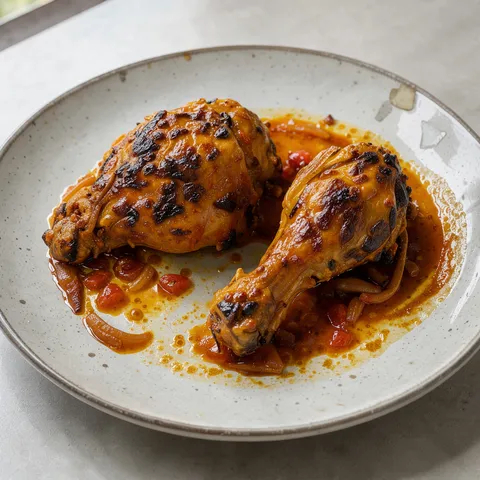 Cameroonian Charred Chicken Stew1 hr 30 min · Main course