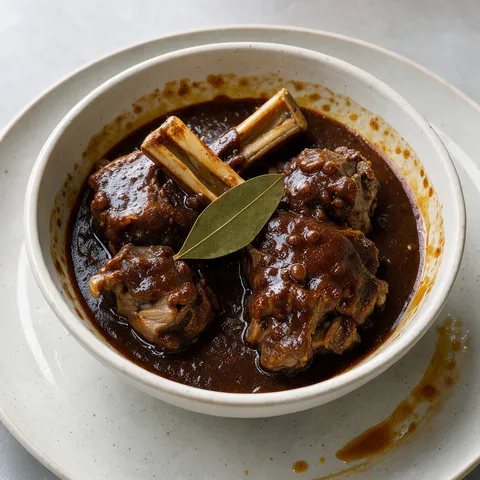
Slow-Fried Bengali Lamb Curry Kosha Mangsho
An Indian main course. Takes 2 hr · +1 hr marinating (pressure cooker: 1 hr 55 min), Serves 4. Difficulty: medium.
At a glance
- Total time
- 2 hr · +1 hr marinating (pressure cooker: 1 hr 55 min)
- Serves
- Serves 4
- Difficulty
- Medium
- Cuisine
- Indian cuisine
- Dish type
- Main course
- Diet
- Gluten-free
- Allergens
- Milk, Mustard, Sulphites
Ingredients
Meat and marinade
- 1 kg lamb on the bone (shoulder and neck, 5 cm pieces, goat in Bengal)
- 150 g plain yoghurt
- 1 tsp ground turmeric
- 1 tsp salt
- 1 tbsp mustard oil
Cooking
- 5 tbsp mustard oil (or sunflower oil if unavailable)
- 1 tsp sugar
- 4 green cardamom pods (lightly crushed)
- 4 cloves
- 4 cm cinnamon stick
- 2 bay leaves
- 3 medium onions (about 400 g, thinly sliced into half-moons)
- 6 garlic cloves and 4 cm piece of ginger (pounded in a mortar)
- 2 tsp ground cumin
- 2 tsp ground coriander
- 1 tsp sweet paprika (or Kashmiri chilli powder)
- 1/2 tsp hot chilli powder
- 3 tbsp water (for the spices)
- 300 ml hot water (350 ml for the pressure cooker)
- 1/2 tsp salt
To finish
- 1 tbsp Clarified Butter (Ghee) (Basics)
- 1/2 tsp garam masala from Five-Spice and Garam Masala (Basics)
Equipment
- Mixing bowls
- Cling film
- Pestle and mortar
- Heavy-based saucepan
- Wooden spoon / spatula
- Pressure cooker (optional)
Method
- Marinate the meat: Pat the lamb pieces dry with kitchen paper. In a bowl, rub them well with the yoghurt, turmeric, 1 tsp salt and 1 tbsp mustard oil, cover with cling film and leave in the fridge for at least 1 hr. The yoghurt softens the outside of the meat and stops it drying out during the long frying. Take it out of the fridge 20 min before cooking
- Make the pastes: Pound the garlic and ginger to a smooth paste in a pestle and mortar. In a small bowl, mix the cumin, coriander, sweet paprika and hot chilli powder with 3 tbsp water. Ground spices loosened with water fry in hot oil without burning
- Heat the oil and sugar: In a 28 cm heavy-based casserole, heat the 5 tbsp mustard oil over high heat until it starts to smoke, then reduce to medium heat and leave for 1 min. Add the sugar and leave for 20-30 sec, until it becomes a deep golden caramel. In Bengal this caramel is the basis of the dark colour and gentle sweetness of kosha
- Whole spices and onion: Add the cardamom, cloves, cinnamon and bay leaves and stir for 30 sec. Add the onions and fry over medium heat for 15 min, stirring often with a wooden spoon, until deep golden brown. The better the onions are browned, the darker and sweeter the sauce
- Fry the pastes: Add the garlic-ginger paste and stir for 2 min, until it loses its raw smell. Add the spice paste and fry for 2 min, until the oil separates at the edges
- Sear the meat: Add the meat with its marinade, increase the heat and stir constantly for 10 min. The yoghurt first releases its liquid, then it begins to evaporate
- Kosha (slow-frying) stage: Reduce to medium-low heat and cook uncovered for 40 min, stirring and scraping the bottom every 3-4 min. If it starts to catch, add 2-3 tbsp of the 300 ml hot water and scrape the bottom, using 100 ml in total at this stage. The kosha is done when the meat is coated in a dark brown, glossy sauce and the oil has separated completely on the surface. The dish takes its name from this patient frying
- Tenderise: Add the remaining 200 ml hot water and 1/2 tsp salt, cover and cook over the lowest heat for 30 min, until the meat comes away from the bone. If using a pressure cooker, transfer the browned meat and its sauce to a 6 litre pressure cooker and add the remaining 250 ml hot water (the 350 ml less the 100 ml used during the kosha stage) and the salt. Once it reaches pressure, cook for 15 min, carefully release the pressure via the valve after 5 min, then reduce the sauce uncovered for 5 min
- Finish and rest: The sauce should be thick and cling to the meat. If it is still runny, boil uncovered for 3-4 min. Stir in the ghee and garam masala, turn off the heat and rest, covered, for 5 min. Serve hot
Chef's note
Kosha mangsho is a Kolkata classic, especially for weekend lunches and festive meals, and is eaten with luchi (thin fried bread) or rice. Goat is used in Bengal, and lamb shoulder and neck give a similar gelatinous texture. Mustard oil is traditionally bought ready-made and is available in Indian and Asian shops. If unavailable, use sunflower oil. Do not rush: the colour of the sauce comes from the frying, not from food colouring or tomato paste.
Frequently asked questions
- Why is kosha mangsho fried for so long?
- The dish is named after this patient frying. Fry the meat with its marinade uncovered for 40 minutes, scraping the base. Kosha is ready when the meat is coated in a dark brown, glossy sauce and the oil separates on the surface.
- What can I use instead of lamb?
- The recipe is made with bone-in lamb shoulder and neck. In Bengal, goat meat is actually used.
- What if the sauce dries up and catches on the bottom?
- If it starts to catch, add 2-3 tablespoons of hot water from 300 ml and scrape the base. A total of 100 ml water is used at this stage.
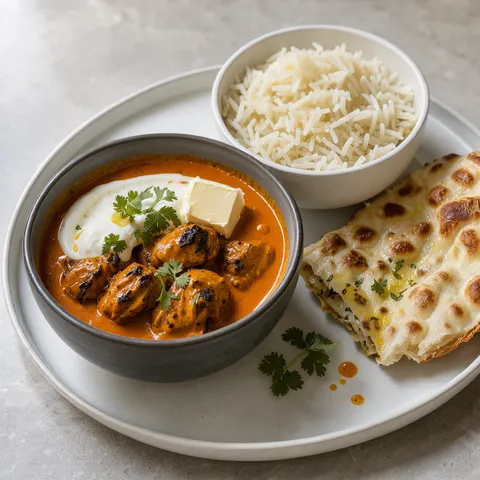 Indian Butter Chicken50 min · Main course
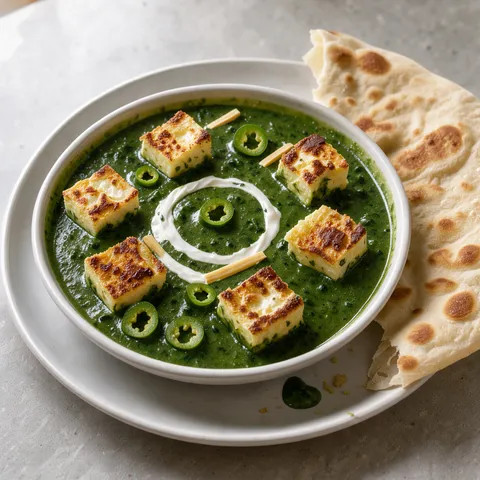 Spinach with Homemade Paneer45 min · Main course
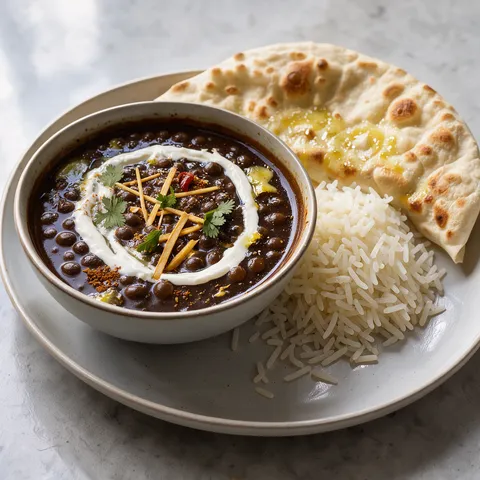 Black Lentil and Kidney Bean Stew1 hr 30 min · Main course
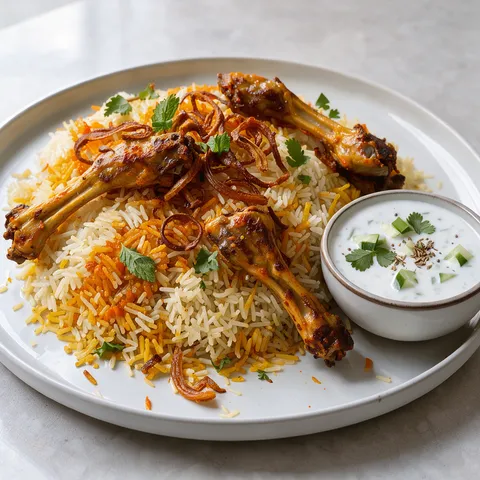 Chicken Dum Biryani1 hr 30 min · Main course
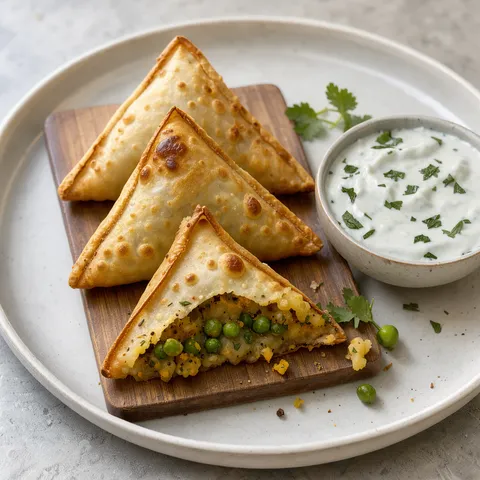 Indian Potato Pastries1 hr 30 min · Bread & pastry
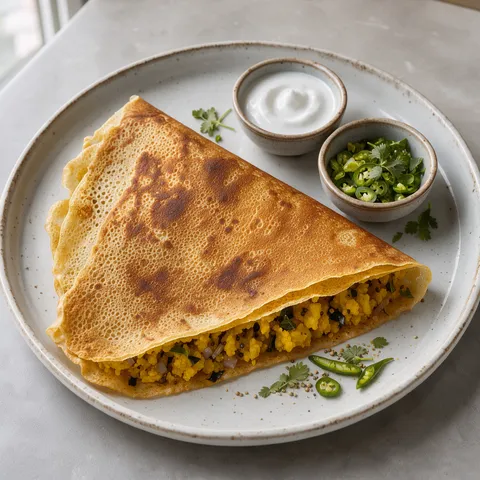 Fermented Rice Crêpes with Spiced Potato50 min · Bread & pastry