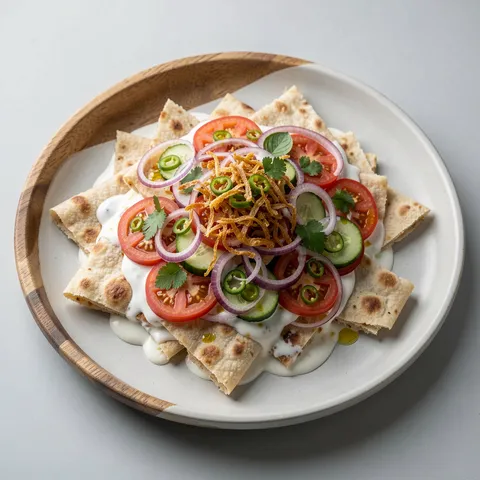
Tajik Layered Fatir Bread in Kurut Sauce Kurutob
A Tajik main course. Takes 1 hr 35 min · +1 hr soaking the kurut, Serves 4. Difficulty: challenging.
At a glance
- Total time
- 1 hr 35 min · +1 hr soaking the kurut
- Serves
- Serves 4
- Difficulty
- Challenging
- Cuisine
- Tajik cuisine
- Dish type
- Main course
- Allergens
- Gluten, Milk
Ingredients
Kurut sauce
- 200 g kurut (dried salted yoghurt balls)
- 700 ml lukewarm water
If kurut is unavailable
- 500 g strained (Greek-style) yoghurt
- 250 ml cold water
- 1 tsp salt
Fatir
- 400 g plain flour
- 230 ml lukewarm water
- 1 tsp salt
- 100 g soft butter (for the layers)
Fried onions
- 2 onions (thin rings)
- 80 ml sunflower oil
Fresh vegetables
- 3 ripe tomatoes
- 2 cucumbers
- 1 small red onion
- 1 long green pepper
- 1 bunch coriander
- 1/2 bunch purple basil (or basil)
Equipment
- Mixing bowls
- Rolling pin / oklava
- Baking tray
- Baking paper
- Oven
- Fine sieve / chinois
- Frying pan
- Chef's knife
- Chopping board
- Stick blender (optional)
Method
- Soak the kurut: Put the kurut balls in the lukewarm water and leave for 1 hr. The softened kurut should crush when pressed with a finger. If you are not using kurut, skip this step
- Knead the fatir dough: Mix the flour with the salt, add the lukewarm water and knead for 8 min. The dough should be soft, smooth and elastic. Cover and rest for 20 min: relaxed dough can be rolled out into layers. Start preheating the oven to 230°C
- Build the layers: Divide the dough in half. Roll each piece out on an oiled work surface with a rolling pin into a large sheet 2 mm thick and spread thinly with half the soft butter. Roll the sheet up tightly from the long side, coil the roll around itself like a snail and tuck the end underneath. Rest for 10 min: the butter cools and keeps the layers apart
- Shape and bake the fatir: Press the snails with your palm, then roll them lightly with a rolling pin into two flatbreads 1 cm thick and 22 cm across. Transfer to a tray lined with baking paper and prick the tops in a few places with a fork so they do not balloon. Bake at 230°C for 20-22 min, until the top is golden brown and the layers have opened when seen from the side. Let cool slightly for 10 min
- Make the kurut sauce: While the fatir bakes, dissolve the soaked kurut completely with its water, using a stick blender or crushing it by hand. Pass through a fine sieve: there should be no lumps. It should be between ayran and runny yoghurt in consistency, thin enough to coat a spoon lightly. Kurut is salty, so do not add salt. If you are using strained yoghurt, whisk it with the cold water and salt until smooth
- Fry the onions: Heat the oil in a frying pan over medium heat and fry the onion rings for 10-12 min, stirring, until evenly golden brown. Burnt onion makes the sauce bitter, so take it off the heat as soon as the colour starts to deepen. Keep the onion warm with its oil
- Chop the vegetables: Slice the tomatoes and cucumbers into thin half-moons, the red onion into very thin rings and the pepper into thin rings. Roughly chop the coriander and purple basil. Do not add salt: the kurut is salty enough
- Soak the fatir: Tear the warm fatir by hand into 3-4 cm pieces and spread them over a large, deep serving platter (traditionally a Tajik wooden platter, the tabak). Pour the kurut sauce evenly over the pieces and leave for 5 min: the bread should soak up the sauce and soften, but not fall apart completely
- Plate: Pile the tomato, cucumber, onion and pepper over the soaked fatir and scatter with the herbs. At the last moment, drizzle the fried onions with their hot oil over the centre of the platter: the oil should sizzle as it meets the sauce. As tradition has it, everyone eats from the shared platter with their right hand
Chef's note
Kurutob is considered the national dish of Tajikistan, and its name comes from the words kurut and water (ob). In Central Asia kurut is mostly bought ready-made at the market: making it at home means drying salted strained yoghurt in the sun for days. So ready-made kurut is used here, with a homemade version based on strained yoghurt given if it is unavailable. Tandoor bread can be used instead of fatir, but layered fatir holds the sauce better.
Frequently asked questions
- What do you use for Kurutob if you can't find kurut?
- The recipe suggests 500 g strained (Greek-style) yoghurt, 250 ml cold water and 1 tsp salt instead of kurut. Whisk the yoghurt with the cold water and salt until smooth. If you aren't using kurut, skip the soaking step.
- Why isn't salt added to the vegetables in Kurutob?
- Kurut is salty, so no extra salt goes on the vegetables or the sauce. Soaking the kurut balls in lukewarm water for 1 hour and mashing them in their liquid is enough to dissolve them. Pass the sauce through a fine sieve so no lumps remain.
- Does the fatir fall apart once it soaks up the sauce?
- Tear the warm fatir by hand into 3-4 cm pieces and leave it with the kurut sauce for 5 minutes. The bread soaks up the sauce and softens but doesn't fall apart completely. The fried onion is added at the last moment with its hot oil.
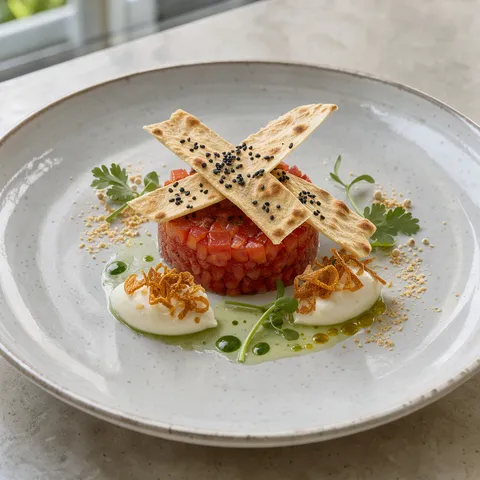 Kurutob 2.01 hr 25 min · Main course
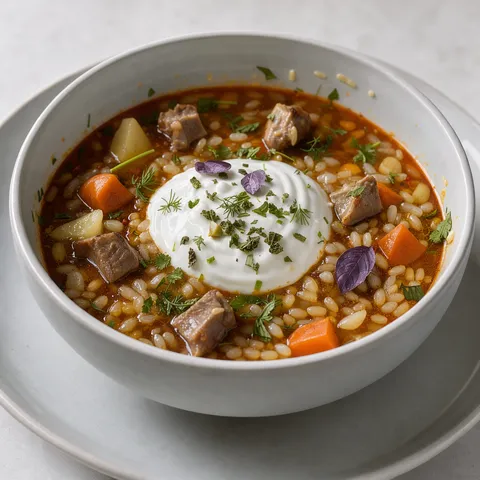 Tajik Meat and Rice Soup with Strained Yoghurt1 hr 40 min · Soup
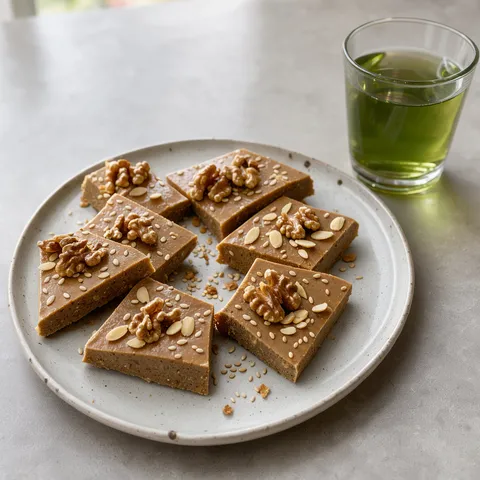 Tajik Milky Flour Halva40 min · Dessert
 Tajik Cold Strained Yoghurt Soup and Cucumber35 min · Soup
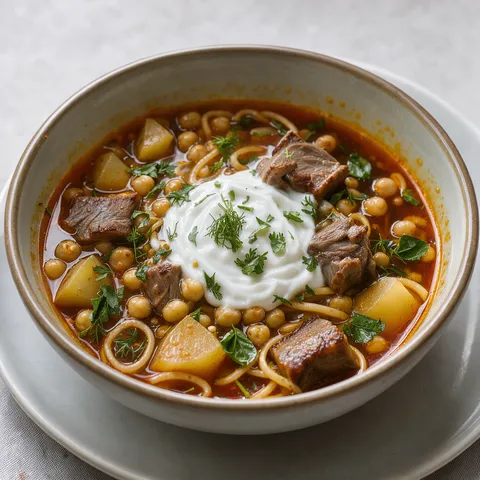 Tajik Lamb and Chickpea Soup with Noodles1 hr 50 min · Soup
 Tajik Baked Layered Samsa with Pumpkin2 hr · Bread & pastry
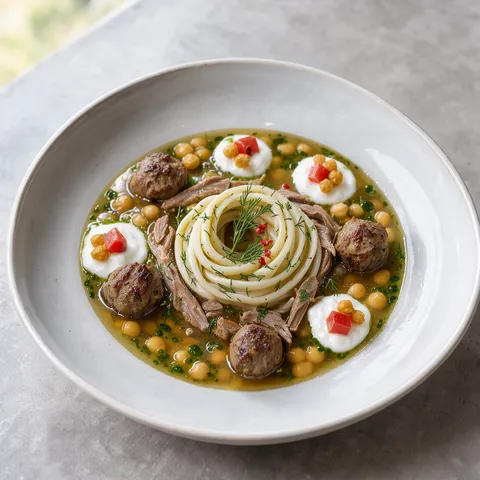 Oshi Burida 2.01 hr 25 min · Soup