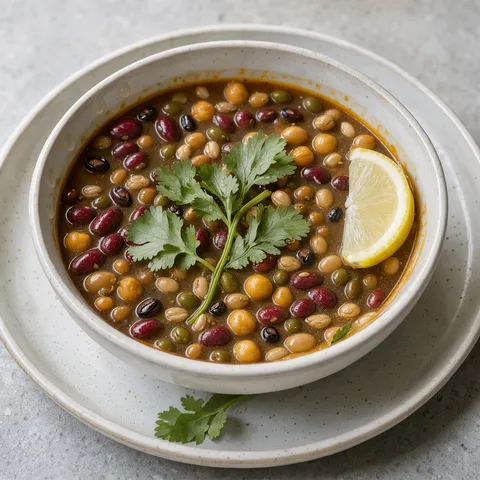
Newar-Style Nine-Bean Soup Kwati
A Nepalese soup. Takes 1 hr 10 min · +12 hr soaking (ordinary pan: ~2 hr), Serves 4. Difficulty: challenging.
At a glance
- Total time
- 1 hr 10 min · +12 hr soaking (ordinary pan: ~2 hr)
- Serves
- Serves 4
- Difficulty
- Challenging
- Cuisine
- Nepalese cuisine
- Dish type
- Soup
- Allergens
- Gluten, Milk, Fish, Soya, Mustard, Sulphites
Ingredients
Pulses (300 g in total)
- 50 g chickpeas
- 40 g borlotti beans
- 40 g dried black-eyed beans
- 40 g mung beans
- 30 g dried soya beans
- 30 g dried green peas
- 30 g whole black urad
- 20 g skinless dried broad beans
- 20 g green lentils
Tempering
- 2 tbsp mustard oil
- 1 tbsp clarified butter (ghee)
- 1/2 tsp ajwain (jwano)
- 1/2 tsp cumin seeds
- 1 bay leaf
- 1 dried red chilli
Sauce
- 1 large onion (finely chopped)
- 20 g ginger and 5 garlic cloves (pounded to a paste in a mortar)
- 1 tsp ground cumin
- 1 tsp ground coriander
- 1/2 tsp turmeric
- 1/2 tsp timur (Sichuan pepper, ground)
- 2 tomatoes (grated)
- 1.5 tsp salt
To cook
- 1.5 litres water
To finish
- 1/2 tsp garam masala
- 1/2 bunch coriander (chopped)
- 1 lemon (sliced)
Equipment
- Chef's knife
- Chopping board
- Mixing bowls
- Colander
- Pestle and mortar
- Box grater
- Pressure cooker
- Wooden spoon / spatula
- Ladle
- Heavy-based saucepan (optional)
Method
- Soak the pulses: Combine all the pulses in a bowl, wash them 3 times and soak in 4 times their volume of cold water for 12 hr. In traditional kwati the pulses are sprouted for 2-3 days after soaking: sprouting adds sweetness and makes them easier to digest. If you have time, drain them and sprout under a damp cloth for 2 days
- Drain and prep: Tip the pulses into a colander and rinse. If some of the soya and chickpea skins come off, you can discard them. Meanwhile, chop the onion, pound the ginger and garlic in a pestle and mortar for 2 min and grate the tomatoes
- Temper: Set a 6-litre pressure cooker over medium heat. Heat the mustard oil until it smokes lightly, then add the ghee. Add the ajwain, cumin, bay leaf and dried chilli and stir for 30-40 sec, until the seeds crackle and the aroma rises. Ajwain is the signature aroma of kwati and lightens the heaviness of the pulses
- Fry the onion: Add the onion and fry for 6 min, stirring with a wooden spoon, until golden brown at the edges. Well-browned onion gives the soup sweetness and a deep colour
- Add the aromatics: Add the ginger-garlic paste and fry for 2 min until it loses its raw smell. Add the cumin, coriander, turmeric and timur and stir for 30 sec: you can add a spoonful of water so the spices do not burn
- Cook the tomatoes: Add the tomatoes and salt and cook for 5 min, until the tomatoes break down and the oil separates at the edges. This separation of the oil shows the sauce is ready
- Toast the pulses: Add the drained pulses and stir for 3 min to coat them in the sauce. Brief toasting seals the surface of the pulses and stops them falling apart as they cook
- Pressure-cook: Add 1.5 litres water: the cooker should be no more than half full. Close the lid, bring up to pressure over medium-high heat (about 10 min), then lower the heat and cook for 20 min. Take off the heat and let the pressure release naturally (about 10 min). In an ordinary pan, simmer covered over low heat for 1 hr 30 min, adding hot water if needed
- Adjust the consistency: Open the lid. Crush one of each kind of pulse to check: the chickpeas and soya beans should also be completely soft. Press a handful of pulses against the side of the pan with a ladle, mash them and stir in: the kwati thickens slightly. Boil uncovered for 5 min and check the salt. The consistency should be somewhere between a soup and a stew
- Plate: Stir in the garam masala as you take it off the heat. Divide between bowls, scatter over the coriander and add a lemon slice alongside. It is traditionally eaten with plain rice, with fried meat or achar on the side
Chef's note
Kwati is a multi-bean soup cooked for the Janai Purnima (Gunhu Punhi) festival of the Newar community. The name is said to mean hot soup in the Newar language. If you cannot get all nine kinds, it can also be made with five or six. Timur is the Nepali spice closest to Sichuan pepper, and Sichuan pepper does the same job. Mustard oil is available in Indian shops. The time given is for a pressure cooker.
Frequently asked questions
- Do I have to sprout the pulses for Kwati?
- No. Traditional kwati is sprouted for 2-3 days after soaking, which adds sweetness and makes it easier to digest. If you have time, drain the pulses and sprout them under a damp cloth for 2 days. Otherwise, soaking for 12 hours is enough.
- Can Kwati be cooked without a pressure cooker?
- Yes, cook it in an ordinary pot with the lid on over low heat for 1 hour 30 minutes, adding hot water if needed.
- What consistency should Kwati have?
- Somewhere between a soup and a stew. If you press a handful of pulses against the side of the pot and mash them in, the soup thickens slightly. The chickpeas and soya beans should be completely soft too.
 Nepali Chicken Dumplings with Tomato Achar1 hr 15 min · Bread & pastry
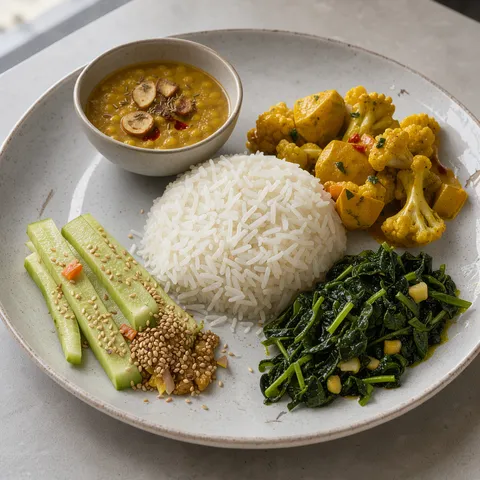 Dal Bhat Tarkari1 hr · Main course
 Nepali Ring-Shaped Rice Bread1 hr 5 min · Bread & pastry
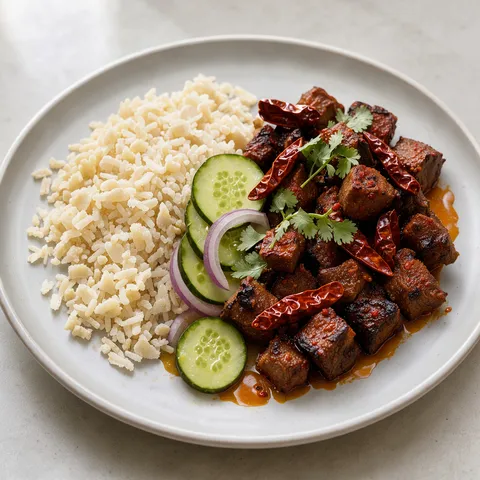 Newar-Style Charred Spiced Beef50 min · Meze
 Momo 2.01 hr 25 min · Bread & pastry
 Newar-Style Urad Dal Pancakes with Egg45 min · Bread & pastry