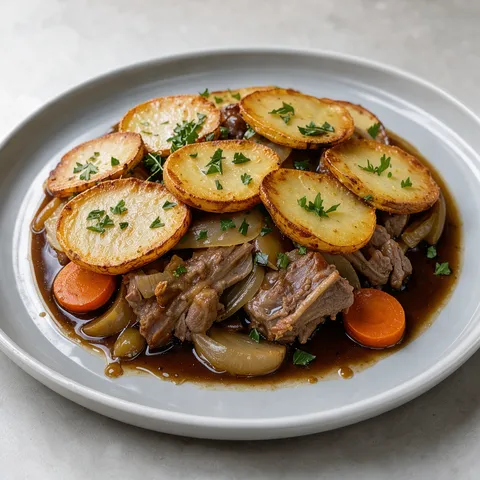
Lamb Stew under a Potato Lid Lancashire Hotpot
An English main course. Takes 3 hr 5 min (pressure cooker pre-cooking: ~2 hr 15 min), Serves 4. Difficulty: challenging.
At a glance
- Total time
- 3 hr 5 min (pressure cooker pre-cooking: ~2 hr 15 min)
- Serves
- Serves 4
- Difficulty
- Challenging
- Cuisine
- English cuisine
- Dish type
- Main course
- Allergens
- Gluten, Milk, Fish, Soya, Celery
Ingredients
Meat
- 800 g boneless lamb shoulder or neck (4 cm cubes)
- 2 tbsp plain flour
- 1 tsp salt
- 1/2 tsp black pepper
- 2 tbsp clarified butter (ghee) or melted beef suet
Vegetables and liquid
- 3 medium onions (about 400 g, thinly sliced into half-moons)
- 2 carrots (about 200 g, 1 cm rounds)
- 3 thyme sprigs
- 2 bay leaves
- 1 tbsp Worcestershire-Style Sauce (Basics)
- 500 ml Brown Beef Stock (Basics)
Potato lid
- 1 kg floury potatoes (peeled)
- 40 g butter (melted)
- 1/2 tsp salt
- 1/4 tsp black pepper
To serve
- 1/4 bunch flat-leaf parsley (finely chopped)
Equipment
- Cast-iron casserole
- Oven
- Chef's knife
- Chopping board
- Wooden spoon / spatula
- Mixing bowls
- Saucepan
- Pastry brush
- Ladle
- Mandoline (optional)
- Pressure cooker (optional)
Method
- Prepare the oven and meat (0-10 min): Preheat the oven to 160°C (conventional). Pat the lamb cubes thoroughly dry with kitchen paper. Mix the flour, salt and pepper in a bowl, toss the meat in it and shake off the excess flour. A dry surface browns in the pan. Wet meat steams and stays grey
- Sear the meat (10-25 min): Heat half the fat in a 26 cm cast-iron casserole over medium-high heat until almost smoking. Brown the meat in three batches, spacing the pieces so they don't touch, for 3-4 min on each side until deep brown, then transfer to a plate. If the pan is crowded the temperature drops, the meat releases its juices and no crust forms. The brown residue on the bottom is the flavour of the sauce, so don't let it burn
- Sweat the onions (25-35 min): Reduce the heat to medium, add the remaining fat and the onions with a pinch of salt. Cook for 10 min, scraping up the residue with a wooden spoon in the liquid the onions release, until soft and lightly golden
- Slice the potatoes (25-35 min, alongside the onions): Slice the potatoes into 3 mm rounds with a mandoline or a sharp chef's knife. Don't rinse them: the surface starch sticks the slices together and helps the lid brown in layers. Pat the slices dry with a clean tea towel
- Layer the hotpot (35-40 min): Transfer half the onions from the casserole to a bowl. Spread half the meat over the onions left in the casserole and add half the carrots, a thyme sprig and the bay leaves. Layer the reserved onions, the rest of the meat, the carrots and the thyme in the same order. Heat the stock with the Worcestershire sauce in a small saucepan and pour it in at the side. The liquid should sit just below the top layer of meat: if the potatoes sit in the liquid they boil, while above it they steam and then brown
- Cover with the potato lid (40-45 min): Arrange the potatoes in overlapping circles like fish scales, putting the broken and small slices underneath and the neatest ones on top. Sprinkle each layer with a little salt and pepper. Brush the top layer with half the melted butter using a pastry brush
- Cook covered (45-150 min): Put the lid on and cook in the 160°C oven for 1 hr 45 min. With this long, low heat the connective tissue in the lamb turns to gelatine and the meat becomes tender enough to break with a spoon. Pressure-cooker shortcut: the seared meat, onions, carrots, herbs and stock are cooked in a pressure cooker at high pressure for 25 min. With the pressure building and releasing naturally this takes about 40 min. The mixture is then transferred to the cast-iron casserole, covered with the potatoes and goes straight on to the next step, where the oven time becomes 40 min
- Uncover and brown (150-175 min): Lift off the lid, brush the potatoes with the remaining butter, raise the oven to 200°C and cook for another 25 min. The edges of the potatoes should be deep golden and crisp and the centres soft. The tip of a knife should pass through the potato layers without resistance. The sauce at the edges should thicken and bubble gently
- Rest (175-185 min): Take the casserole out of the oven and rest for 10 min. The sauce thickens slightly in this time and the first ladleful comes out without falling apart. Find and remove the bay leaves and thyme stalks at the edges
- Plate: Use a wide ladle to lift a piece of the potato lid with the meat and vegetables underneath into a warm, deep plate. Keep the lid on top, drizzle a little sauce around the edge and scatter with chopped parsley
Chef's note
In Lancashire, hotpot traditionally comes with pickled red cabbage, whose sharpness balances the fatty lamb. Old recipes use bone-in neck chops, as the bone gives the sauce body; if you use meat on the bone, increase the quantity to 1.1 kg. Allow about 200 g boneless meat per person. The potatoes must not sit in the liquid, otherwise the lid won't brown and turns soggy.
Frequently asked questions
- Why does the lamb turn grey instead of browning in a hotpot?
- Wet meat steams rather than browns. Pat the cubes dry with kitchen paper, coat them in flour and sear them in three batches with space between the pieces for a deep crust.
- What liquid level gives the potato lid a good colour?
- The liquid should sit just below the top layer of meat. If the potatoes sink into the liquid they boil, and if they sit too far above it they steam instead of browning.
- Can Lancashire Hotpot be shortened with a pressure cooker?
- Yes. Cook the meat, onions, carrots, herbs and stock under high pressure for 25 minutes. Then move the mixture to a casserole dish, top it with the potatoes and bake for 40 minutes.
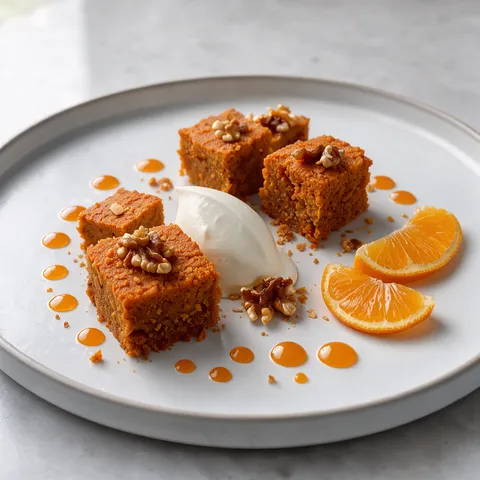 Deconstructed Carrot Cake1 hr 30 min · Dessert
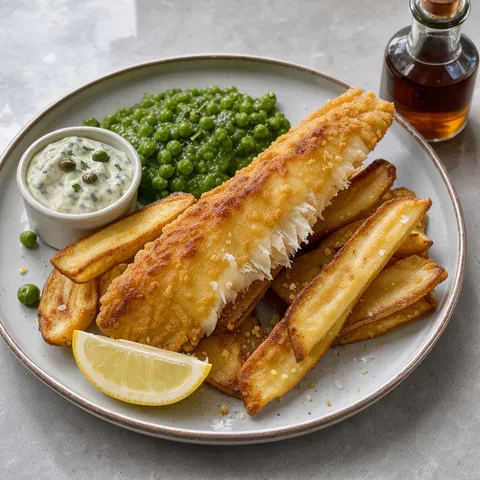 Fish and Chips1 hr 10 min · Main course
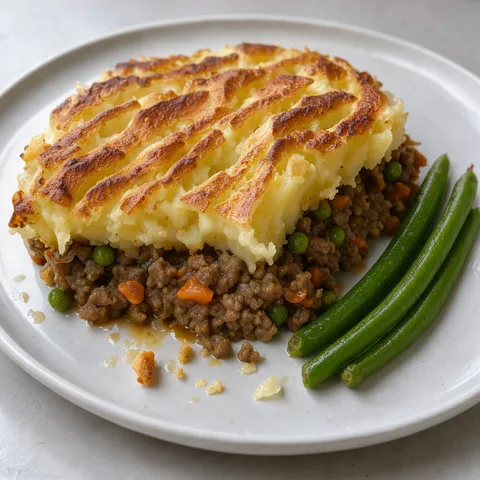 Shepherd's Pie1 hr 55 min · Main course
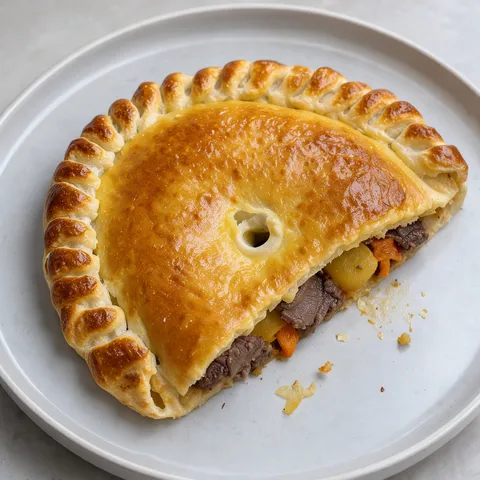 Cornish Pasty2 hr · Bread & pastry
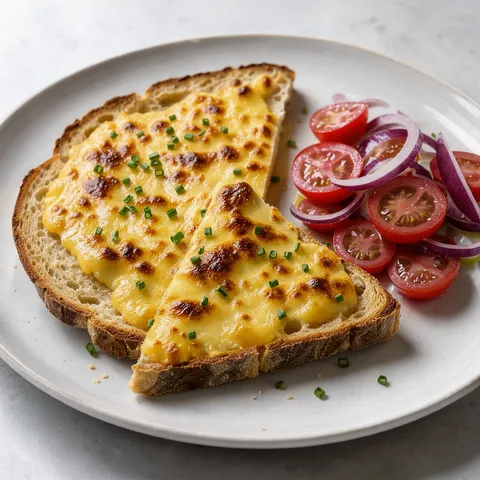 Welsh Rarebit35 min · Starter
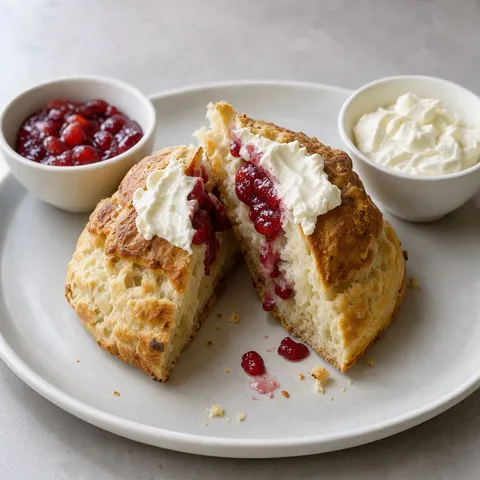 Scones with Clotted Cream and Strawberry Jam50 min · Patisserie