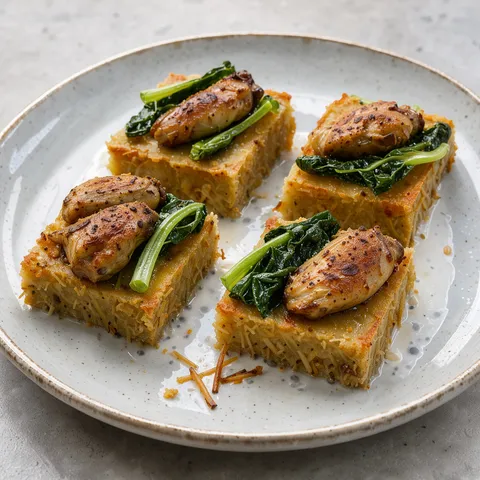
Vanuatu Grated Root Vegetable Pudding Laplap
A Vanuatu main course. Takes 1 hr 55 min, Serves 4. Difficulty: medium.
At a glance
- Total time
- 1 hr 55 min
- Serves
- Serves 4
- Difficulty
- Medium
- Cuisine
- Vanuatu cuisine
- Dish type
- Main course
- Allergens
- Gluten, Milk, Tree nuts
Ingredients
Dough
- 600 g floury potatoes (in place of taro and yam)
- 300 g sweet potatoes
- 60 g tapioca starch (in place of cassava)
- 200 ml coconut milk
- 1 tsp salt
Chicken
- 600 g boneless chicken thighs (4 cm pieces)
- 1/2 tsp salt
- 1/4 tsp black pepper
Layers
- 6 large chard leaves (in place of island cabbage)
- 1 onion (thin rings)
Top sauce
- 200 ml coconut milk
- a pinch of salt
Wrapping
- 2 sheets baking paper (about 40×50 cm)
- foil
Equipment
- Oven
- Mixing bowls
- Vegetable peeler
- Box grater
- Muslin
- Baking tray
- Baking paper
- Probe thermometer
- Chef's knife
Method
- Preheat the oven and salt the chicken: Preheat the oven to 190°C (conventional). Pat the chicken pieces dry, toss in a bowl with the 1/2 tsp salt and black pepper and leave while you prepare the dough
- Grate the root vegetables: Peel the potatoes and sweet potatoes with a peeler and grate on the fine side of the grater into a large bowl. In Vanuatu, yam, taro or cassava are grated in the same way with a grater made from a coconut shell or a tin and turned into a wet dough
- Squeeze out liquid and keep starch: Put the gratings in muslin and squeeze the liquid out firmly over another bowl. Leave the squeezed liquid undisturbed for 5 min, and white starch settles at the bottom. Pour off the brown liquid on top and fold the starch at the bottom back into the gratings. Potato has a lot of liquid, so it has to be squeezed, and returning the starch keeps the sticky, sliceable texture specific to laplap
- Knead the dough: Add the tapioca starch, 200 ml coconut milk and 1 tsp salt to the gratings and mix with your hand for 2 min. The dough should be thick, wet and fall heavily from a spoon. Tapioca gives the slightly rubbery pull that cassava gives when cooked
- Line the tin: Lay two sheets of baking paper in a cross over a 20×25 cm roasting tin at least 5 cm deep, with plenty overhanging at the sides. Cover the base with three of the chard leaves. Here the chard takes the place of the island cabbage layer under the banana leaf
- Layer: Pour the dough over the leaves and level to 2 cm thick with a wet spoon. Arrange the chicken pieces on the dough, pressing lightly, scatter the onion rings between them and cover with the remaining three chard leaves. In Port Vila, meat and greens are laid on the dough in this way
- Pour on the sauce and seal: Mix the 200 ml coconut milk with the salt and drizzle over the leaves. Bring the baking paper together in the middle and twist, then cover the tin tightly with a double layer of foil. As in the banana-leaf parcel of the earth oven, the moisture should stay inside
- Bake: Bake at 190°C for 1 hr 20 min. Check by opening one corner, and the dough should be firm at the edges, slightly springy when pressed with a finger in the middle and completely opaque. The chicken should read 74°C on a thermometer. If not, cook covered for another 10 min
- Rest and cut: Take the tin out of the oven and rest, still sealed, for 10 min. Laplap is very soft when hot and can be cut after resting. Open the foil and paper and cut into 8 squares with a knife
- Serve: Put two squares on each plate and spoon over some of the coconut liquid from the bottom of the tin. Laplap is eaten by hand or with a spoon, usually with nothing else alongside
Chef's note
Laplap is the national dish of Vanuatu and carries this name in Bislama, while the local languages of the islands have different names for it. Grated yam, taro, cassava, breadfruit or banana is mixed with coconut milk, wrapped in banana leaf and cooked in an earth oven on hot stones, and it is mostly made on Sundays and special occasions. Here a home oven replaces the earth oven, baking paper and foil replace banana leaf, potato and sweet potato replace yam and taro, and tapioca starch replaces cassava.
Frequently asked questions
- Why do I add the starch back after squeezing the grated potato?
- The white starch that settles at the bottom of the squeezed liquid is added back to the grated mixture. This keeps the sticky, sliceable texture that is typical of laplap.
- Can I slice the laplap as soon as it comes out of the oven?
- Laplap is very soft when hot. After resting for 10 minutes in the covered tin it can be sliced, and it is cut into 8 squares.
- What is used instead of banana leaves in laplap?
- The recipe uses baking paper and double-layer aluminium foil. The base and top of the tin are lined with chard leaves, and the tin is sealed tightly so the moisture stays in.
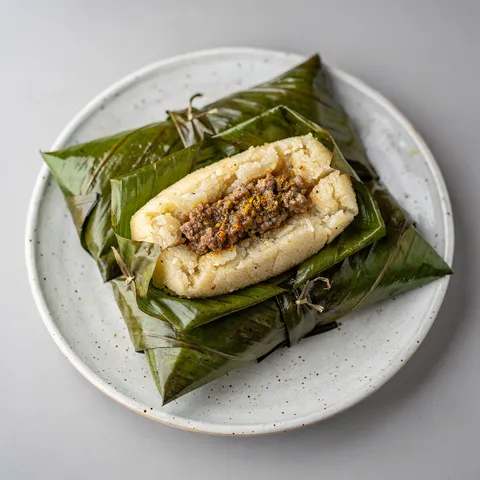 Vanuatu Steamed Root Vegetable Parcels1 hr 30 min · Main course
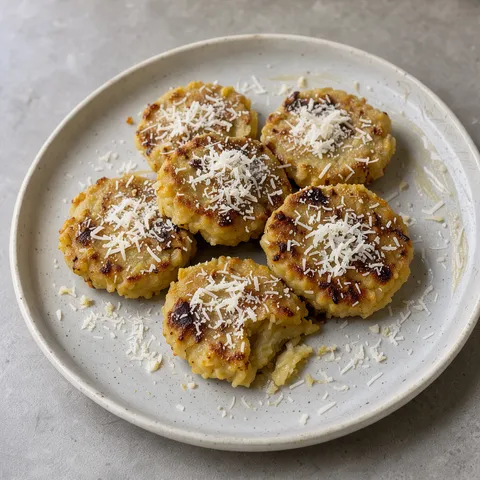 Pounded Charred Banana and Potato50 min · Meze
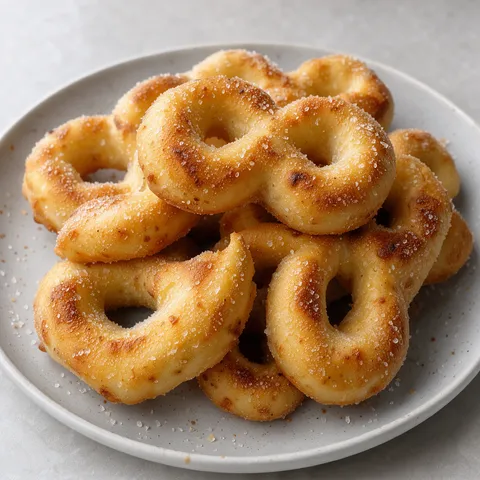 Fried Yeasted Figure-Eight Doughnuts1 hr · Bread & pastry
 Vanuatu Beef Curry2 hr · Main course
 Vanuatu Beef Curry 2.01 hr 15 min · Main course
 Gâteau Huit 2.01 hr 20 min · Dessert